
What Is the Sciatic Nerve?
The sciatic nerve is the body’s largest nerve, formed by nerve roots in the lower spine. It travels through the pelvis and buttock before branching down each leg. The sciatic nerve carries signals that help control leg movement and sensation. Irritation or pressure along this pathway can cause sciatic pain.
Quick Facts About Sciatic Nerve
Category
Peripheral nerve
Used for
Leg movement and sensation
Common confusion
A nerve is not the same as a spinal disc
Also called
Ischiadic Nerve, Ischial nerve
Often discussed with
Sciatica Treatment
Key Takeaways About Sciatic Nerve
- The sciatic nerve is the body’s largest nerve.
- Pain may follow its path from the back into the leg.
- Sciatic nerve pain is not the same as ordinary muscle soreness.
How Sciatic Nerve Works
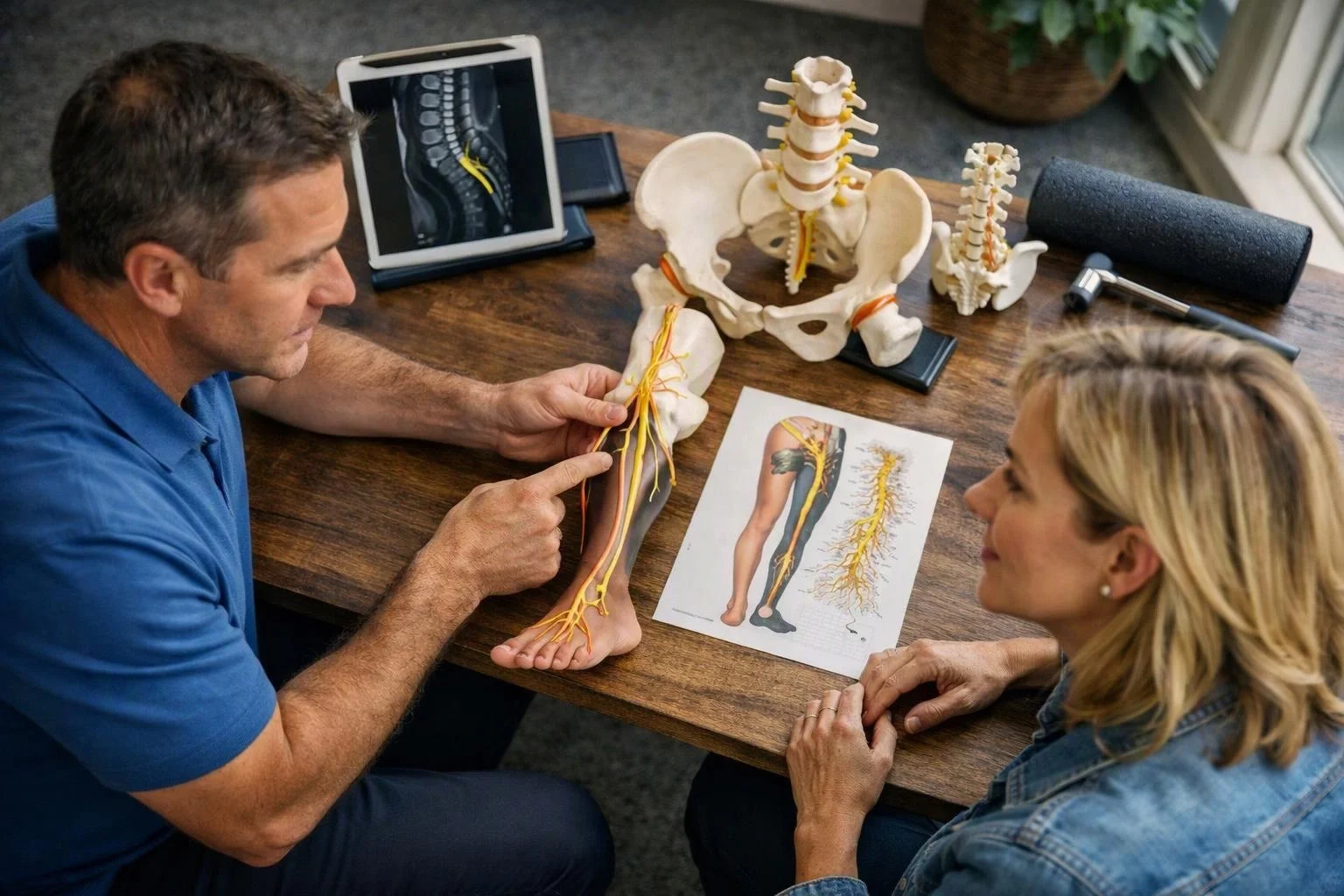
The sciatic nerve begins from several nerve roots in the lower spine. It passes through the buttock and runs down the back of the leg. Near the knee, the nerve divides into branches that reach the lower leg and foot.
Related glossary terms: Lumbar Radiculopathy, Nerve Flossing, Straight Leg Raise.
The nerve carries movement signals from the spine to the leg muscles. It also carries sensation signals back to the spine and brain. Pressure or irritation near the spine can affect these signals and create pain, tingling, numbness, or weakness along the nerve’s path.
A lumbar radiculopathy affects a nerve root near the lower spine. Sciatic nerve symptoms may also involve nearby tissues, so an exam helps identify the likely source.
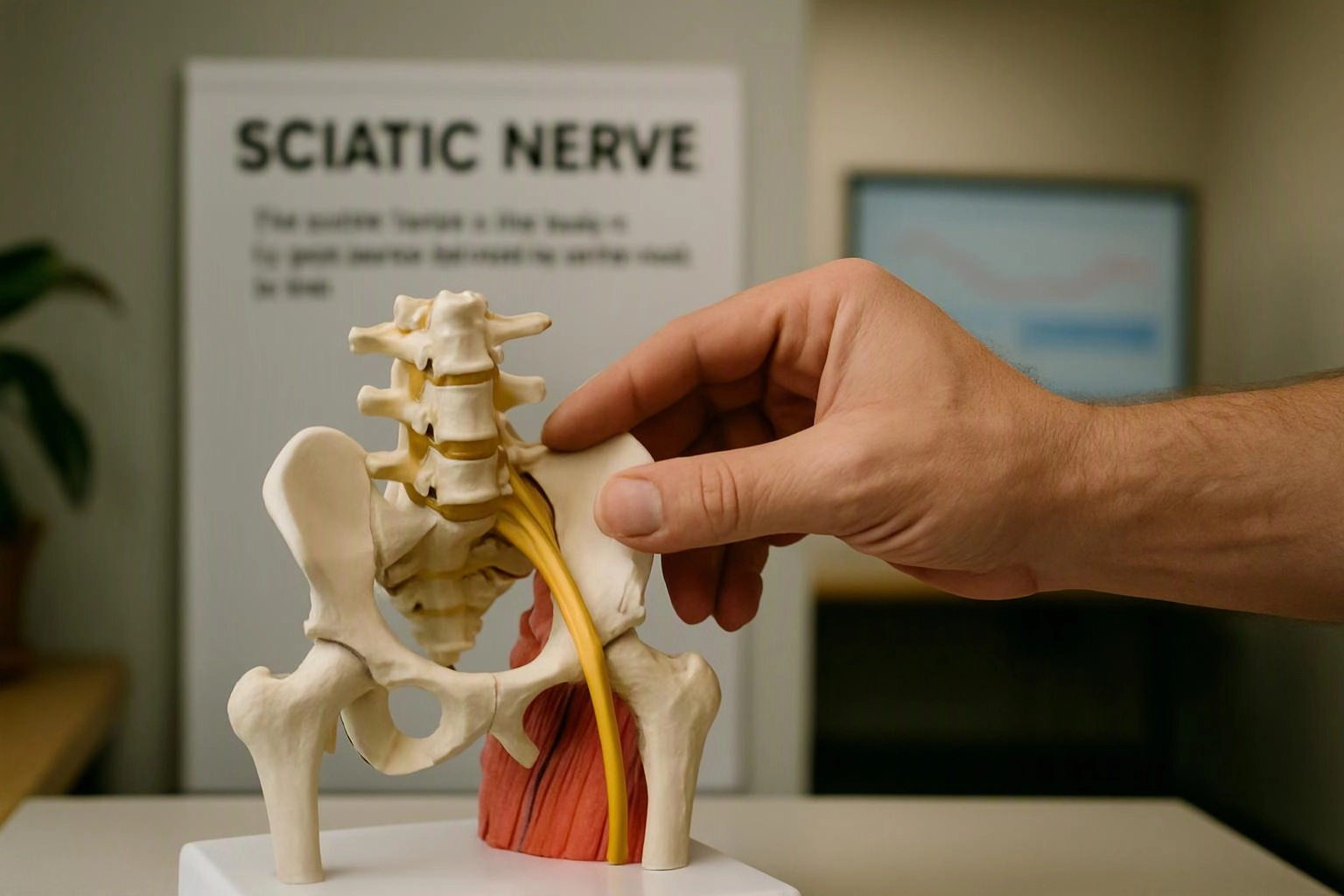
From the Advanced Injury Care Clinic team
When we assess sciatic nerve concerns, we check the lower back, hip, leg symptoms, movement, and nerve responses. We also look for patterns that may point to spinal nerve root irritation or another source of leg pain. Our findings guide the plan for Sciatica Treatment.
Sciatic Nerve in Practice: A Real-World Example
A person with lower back pain may feel burning or tingling through the buttock and back of the leg. During Sciatica Treatment, the care plan may address movement limits and signs that the sciatic nerve is irritated.
Related Services
Related Terms
Lumbar Radiculopathy
Lumbar Radiculopathy is a condition in which a nerve root in the lower spine becomes irritated…
Nerve Flossing
Nerve Flossing is a gentle movement method that helps a nerve and nearby tissues move more…
Straight Leg Raise
A Straight Leg Raise is a physical examination test that checks how symptoms respond when a…
Referred Pain
Referred Pain is a discomfort felt in one body area even though the source lies elsewhere…
Advanced Injury Care Clinic
Have Questions About Sciatic Nerve?
Contact Advanced Injury Care Clinic for practical guidance on Sciatic Nerve and related chiropractor work in Brentwood.