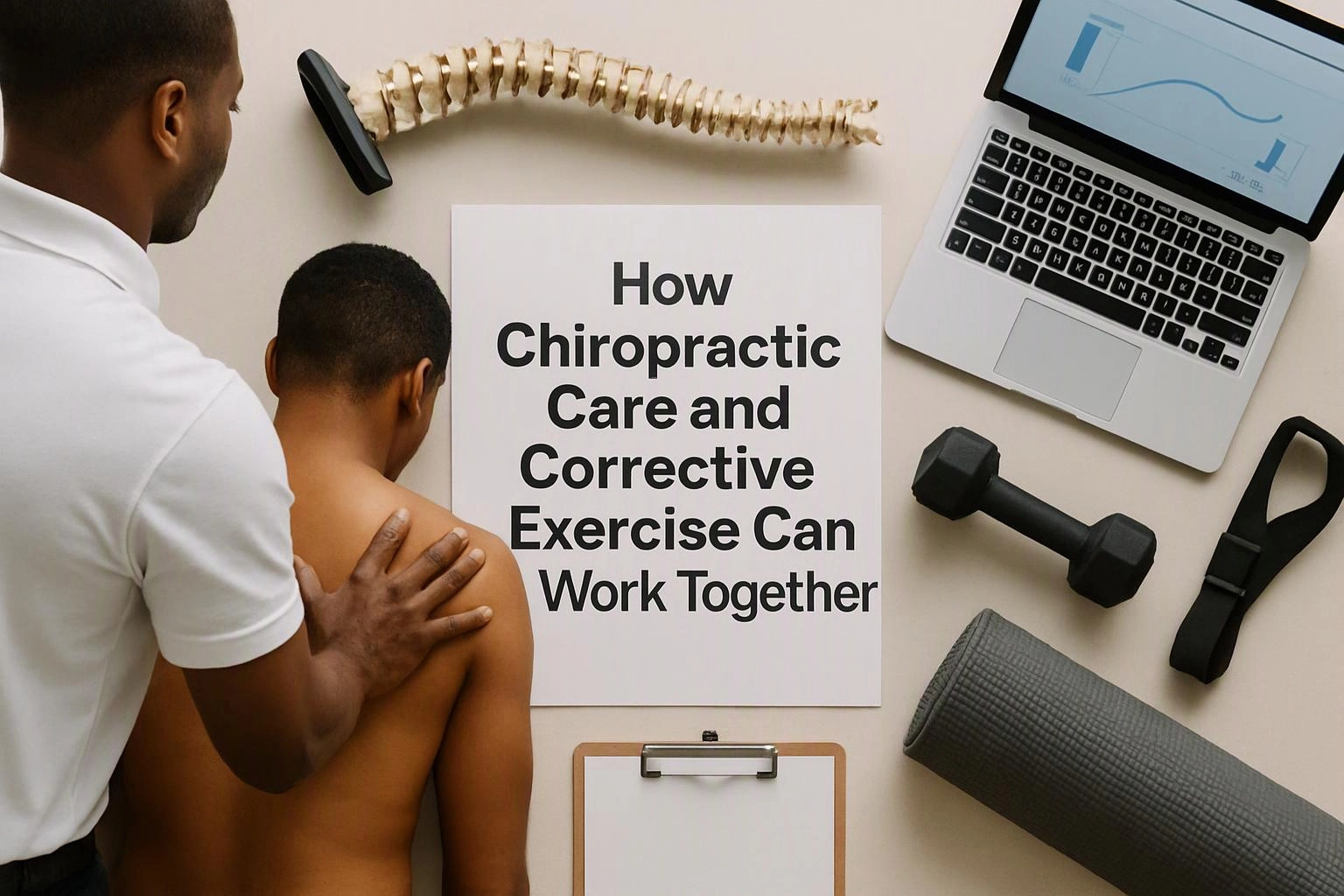
How Chiropractic Care and Corrective Exercise Can Work Together
Chiropractic care and corrective exercise can work together by addressing joint motion and movement control in one plan. At Advanced Injury Care Clinic, we connect hands-on care with guided exercises that support lasting functional progress.
Request an EstimateCan Chiropractic Care and Corrective Exercise Be Used Together?
Yes, chiropractic care and corrective exercise can be used together when the plan matches the person's symptoms, movement limits, and goals.
Chiropractic care can address joint restriction and support joint mobility. Corrective exercise therapy can then build muscle activation, motor control, and confidence with movement.
We may use a chiropractic adjustment to support motion, then select exercises that help the person use that motion safely. Our approach considers movement quality, symptom response, and functional goals.
Learn more about our Chiropractic Adjustment service and how it can fit within conservative care.
When Do People Need Both Services Together?
People may need both services when restricted movement and weak or poorly controlled movement affect the same body area.
We review the full movement pattern before combining services. These situations may call for a connected plan:
The right combination depends on irritability, exercise tolerance, and daily function. We adjust the care plan when symptoms or movement quality change.
What Does Corrective Exercise Therapy Do?
Corrective exercise therapy is a guided movement program that improves strength, mobility, and control around a problem area.
Corrective exercise therapy may include mobility training, strengthening exercises, and movement retraining. Each exercise has a purpose, such as improving flexibility, posture, or muscle strength.
We use exercise selection to address how the body moves, not only where symptoms are felt. We also watch motor control, coordination, and body mechanics during each task.
Good exercise progression begins with movements the person can perform with control. We then build challenge as movement quality and exercise tolerance improve.
How Do Chiropractic Care and Exercise Support Each Other?
Chiropractic care and corrective exercise support each other by combining movement assessment, hands-on care, and active training in a connected plan.
We connect the two services in several practical ways:
We explain upfront pricing during the planning process and outline what the recommended care includes. The exact quote depends on the person's needs and selected services.
What Might a Combined Care Plan Include?
A combined care plan starts with an assessment, then connects appropriate adjustments and exercises to the person's movement needs.
Our process may include these steps:
We also explain the care plan and its cost drivers before care begins. Upfront pricing helps clarify what the recommended services include.
Which Exercises May Support Mobility and Strength?
The most useful exercises depend on the person's restricted movement, strength needs, control, and tolerance.
The table shows common exercise categories and the goals they may support. We choose the exact movement after reviewing the person's movement assessment.
| Exercise category | Main purpose | What we check |
|---|---|---|
| Mobility exercises | Support joint motion and flexibility | Smooth motion and symptom response |
| Strength exercises | Build support around a problem area | Control, fatigue, and exercise tolerance |
| Core stability exercises | Improve trunk control during movement | Breathing, alignment, and coordination |
| Balance exercises | Support control during standing and walking | Steadiness and safe body mechanics |
| Postural exercises | Build awareness and support from postural muscles | Position, muscle activation, and daily function |
Exercise categories can overlap during rehabilitation exercise. We progress movements when the person shows better control without an unwanted symptom increase.
How Can Progress With Corrective Exercise Be Measured?
Progress with corrective exercise can be measured through changes in movement, strength, symptom response, and daily activities.
Range of motion may improve, but motion alone doesn't show the full result. We also assess movement quality, muscle strength, and control during useful tasks.
Pain response matters during and after exercise. We look for improved tolerance and steadier daily function, while watching for symptoms that signal the plan needs adjustment.
Progress review helps us decide whether to continue, change, or advance an exercise. The goal is functional movement that fits the person's daily life.
How We Connect Chiropractic Adjustment With Corrective Exercise
At Advanced Injury Care Clinic, we connect chiropractic adjustment with corrective exercise after reviewing movement, symptoms, and functional goals.
Our team uses movement assessment to identify joint mobility limits, strength needs, and movement compensation. We then build an individual care plan that links hands-on care with active training.
We explain why each service is included and how progress will be reviewed. This decision-based approach keeps the plan focused on safe movement and daily function.
Contact Advanced Injury Care Clinic to discuss your movement goals and request an individual care plan. Contact our team.
Get a Free EstimateQuestions About Chiropractic Care and Corrective Exercise
Should corrective exercises be done before or after a chiropractic adjustment?
Advanced Injury Care Clinic chooses the exercise timing based on symptoms, movement control, and the care plan. Some people may perform gentle movement before an adjustment, while others may use exercises afterward to practice improved control.
Can corrective exercise help maintain mobility between chiropractic visits?
Corrective exercise can help maintain practiced mobility and movement control between visits when the exercises match the person's needs. We provide a home exercise plan and review how the body responds.
What should someone do if an exercise increases symptoms?
Stop the exercise and contact our team if symptoms increase or movement becomes less controlled. We can review the symptom response and adjust the exercise selection, intensity, or care plan.