Jaw Pain and Clicking: When to Get a TMJ Evaluation
Chiropractic care for TMJ can assess jaw pain, clicking, limited movement, and related muscle tension to decide whether conservative care fits. Advanced Injury Care Clinic evaluates the jaw and surrounding areas and explains when medical or dental follow-up is needed.
Request an Estimate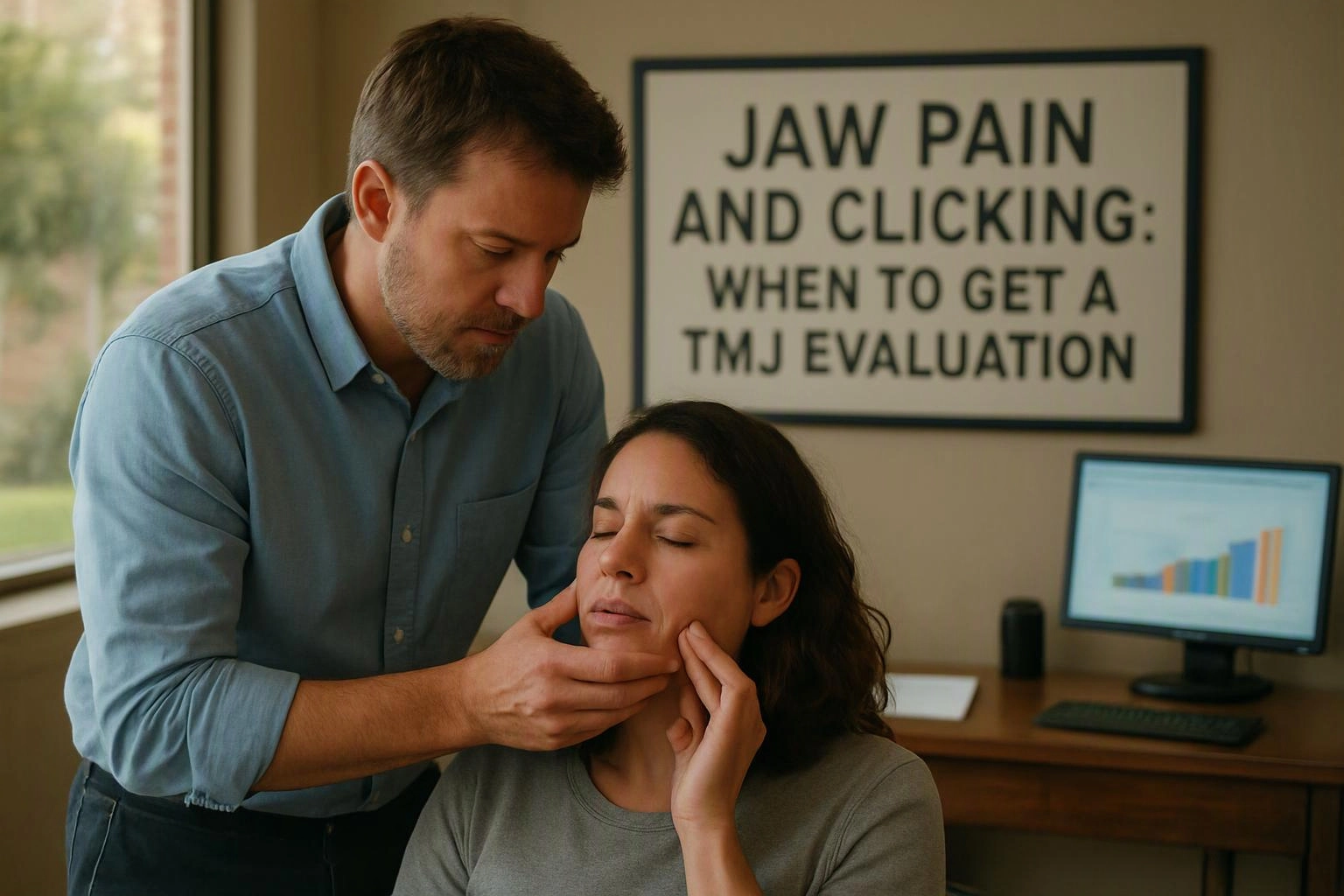
What Do Jaw Pain and Clicking Mean?
Jaw pain and clicking can point to irritation or dysfunction in the temporomandibular joint, jaw muscles, or nearby tissues.
The temporomandibular joint connects the jawbone to the skull and guides jaw movement. A TMJ disorder can affect chewing, speaking, yawning, and relaxed jaw position.
Clicking or popping doesn't always mean serious damage. We look at the sound, pain level, movement pattern, and related muscle tension during a chiropractic evaluation.
What Are Common Symptoms of TMJ Problems?
Common TMJ symptoms include changes in jaw movement, facial discomfort, and pressure near the ear.
These signs can appear alone or together:
Jaw pain when chewing deserves attention when it changes how you eat. We also ask whether facial pain or neck tension appears with the jaw symptoms.
What Causes TMJ Pain and Clicking?
TMJ pain and clicking can develop from repeated strain, injury, muscle tension, or joint irritation.
Stress may increase clenching, while neck posture can add strain around the jaw. We connect these patterns to your symptoms before recommending care.
When Should Jaw Pain Be Evaluated?
Jaw pain should be evaluated when symptoms persist, worsen, limit eating or speaking, or cause locking, swelling, or major movement changes.
Persistent jaw pain can signal a joint, muscle, dental, or injury-related problem. Worsening symptoms, limited jaw opening, and repeated locking also need focused attention.
We perform an initial assessment when conservative care may fit. A dental evaluation may be needed for tooth problems, bite changes, or signs of infection. We explain when medical referral is the safer next step.
Which TMJ Symptoms Need Prompt Medical or Dental Attention?
Prompt medical or dental attention is needed when jaw symptoms suggest infection, serious injury, or a problem beyond routine muscle tension.
The pattern below can help guide your next step.
| Warning sign | Recommended direction |
|---|---|
| Jaw locking or a sudden major movement change | Seek prompt evaluation so the cause can be identified. |
| Facial swelling or fever | Contact medical or dental care promptly. |
| Recent trauma to the jaw or face | Medical evaluation may be needed to check for injury. |
| Tooth infection signs or severe tooth pain | Arrange a dental evaluation. |
| New weakness, numbness, confusion, or other neurological symptoms | Seek urgent medical attention. |
How Does a Chiropractor Evaluate TMJ Problems?
A chiropractor evaluates TMJ problems by reviewing symptoms and checking jaw motion, muscle tenderness, posture, and related neck movement.
Our team starts with your health history and symptom pattern. We ask when the pain began, what triggers it, and whether clenching, grinding, injury, or bite changes are involved.
We assess jaw range of motion, jaw alignment, facial muscles, neck posture, and tenderness. These findings help us decide whether conservative care fits or whether dental evaluation or medical referral should come first.
Our approach to TMJ Treatment focuses on the jaw and connected areas. We explain each finding in plain language and build recommendations around your symptoms.
What Can TMJ Treatment Address?
TMJ treatment can address jaw muscle tension, neck tension, and movement patterns that contribute to discomfort.
We may use conservative care when the evaluation supports it. Care can focus on comfortable movement, muscle relaxation, posture, and habits that reduce strain.
How Can You Reduce Common TMJ Triggers?
Simple habit changes can reduce common TMJ triggers while you arrange an evaluation.
These steps support comfort but don't replace care for severe or worsening symptoms.
What Happens During a TMJ Evaluation?
A TMJ evaluation reviews your symptoms, examines jaw movement, and identifies the safest next step.
Our team answers questions during the visit and explains what each finding means. You leave with a clear care direction based on your symptoms.
Is a Chiropractor for TMJ the Right Starting Point?
Yes, a chiropractor for TMJ may be a suitable starting point for muscle tension, movement limits, and related neck or jaw symptoms after urgent concerns are ruled out.
Chiropractic care can help assess the jaw joint, jaw muscles, and neck movement together. A dental evaluation is more appropriate when tooth infection, significant bite changes, or tooth damage may be involved.
Medical care should come first for serious trauma, facial swelling, fever, or neurological symptoms. We help identify when TMJ Treatment fits and when another type of care is needed.
What Questions Should You Ask About Jaw Pain?
Useful questions help connect your symptom history with practical treatment goals and referral needs.
Ask whether your jaw clicking is linked with pain, whether your opening has changed, and whether clenching or grinding may contribute. Ask what the care plan will address and what signs would require dental evaluation or medical referral.
You can also ask how jaw movement, facial muscles, and neck posture will be checked. Clear answers make it easier to choose the next safe step.
Questions About Jaw Pain and Clicking
Can TMJ cause jaw clicking or locking?
Yes, TMJ can cause jaw clicking or locking when joint motion or surrounding muscle control changes. Advanced Injury Care Clinic checks the movement pattern and looks for signs that need dental or medical follow-up.
Can TMJ symptoms include headaches or ear pressure?
Yes, TMJ symptoms can include headaches or ear pressure when jaw and nearby muscles become tense. Other causes can create similar symptoms, so an evaluation helps guide the next step.
Should I see a dentist or chiropractor for TMJ pain?
Choose dental care first when tooth pain, infection, or major bite changes may explain the symptoms. Chiropractic care may fit muscle tension, movement limits, and related neck symptoms after urgent concerns are ruled out.
Can jaw pain come from neck or facial muscle tension?
Yes, jaw pain can relate to neck or facial muscle tension. We check these connected areas during the evaluation and explain when another referral is needed.
Contact Advanced Injury Care Clinic for a focused TMJ evaluation and clear guidance on your next step.