Dry Needling vs Chiropractic Adjustment: Comparing Treatment Options
Dry needling targets tight muscle and trigger points, while chiropractic adjustment focuses on joint movement and mechanics. Advanced Injury Care Clinic compares both options and may combine them with corrective exercise when the examination supports it. Your treatment choice depends on muscle tension, joint mobility, pain patterns, safety, and functional goals.
Request an EstimateHow Do Dry Needling and Chiropractic Adjustment Differ?
Dry needling targets sensitive muscle bands, while chiropractic adjustment targets restricted or poorly moving joints. Both are forms of conservative care for musculoskeletal pain and movement limitations.
Dry needling uses thin needles near muscle trigger points. A chiropractic adjustment uses controlled manual force to support joint mobility and range of motion. Our clinical examination helps show whether muscle tension, joint restriction, or both may contribute to your symptoms.
Our team may also use corrective exercise therapy after hands-on care. You can learn more about our Dry Needling approach when muscle findings are part of the treatment plan.
Dry Needling vs Chiropractic Adjustment at a Glance
The better option depends on whether the examination finds a mainly muscular problem, a joint movement problem, or both. The table also shows practical cost factors, treatment timing, maintenance needs, and trade-offs.
| Factor | Dry Needling | Chiropractic Adjustment | Key Fit or Trade-Off |
|---|---|---|---|
| Treatment target | Tight muscle tissue and trigger points | Restricted spinal or extremity joints | Findings guide the choice |
| Technique | Thin sterile needles | Controlled manual force | Both require patient consent |
| Cost factors | Needling services, regions treated, and plan complexity | Adjustment services, regions assessed, and plan complexity | We explain quote details before care |
| Treatment timeline | Depends on symptoms and response | Depends on movement findings and goals | Plans can change after reassessment |
| Maintenance | Movement retraining may help maintain changes | Exercise may support ongoing joint mobility | Home strategies matter |
| Best use | Muscle-driven pain and movement limits | Joint-driven mechanical pain and stiffness | Combined care may fit mixed findings |
What Does Dry Needling Involve?
Dry needling is a treatment that uses thin sterile needles to affect tight or painful muscle tissue. Our team first reviews your symptoms, medical history, and movement pattern.
Needles may be placed near trigger points or tight muscle bands. A local twitch response can occur, and post-treatment soreness is possible. We explain expected sensations and monitor your response throughout care.
What Does a Chiropractic Adjustment Involve?
A chiropractic adjustment is a hands-on treatment that applies controlled force to a restricted joint to support movement. The joint may be part of the spine or an extremity.
We assess joint restriction, posture, and range of motion before selecting a manual adjustment. Our goal is to match the technique to your findings, comfort, and functional goals.
What Are the Advantages of Dry Needling?
Dry needling may fit people whose symptoms are linked to tight, tender, or overactive muscles. It can be one part of a broader plan for pain relief and movement improvement.
Best for: Dry needling is best for muscle-related pain, trigger points, and movement limits linked to muscle tension.
What Are the Advantages of Chiropractic Adjustment?
Chiropractic adjustment may fit people whose symptoms are linked to restricted joint motion or mechanical stress. We use movement assessment to decide whether an adjustment matches the problem.
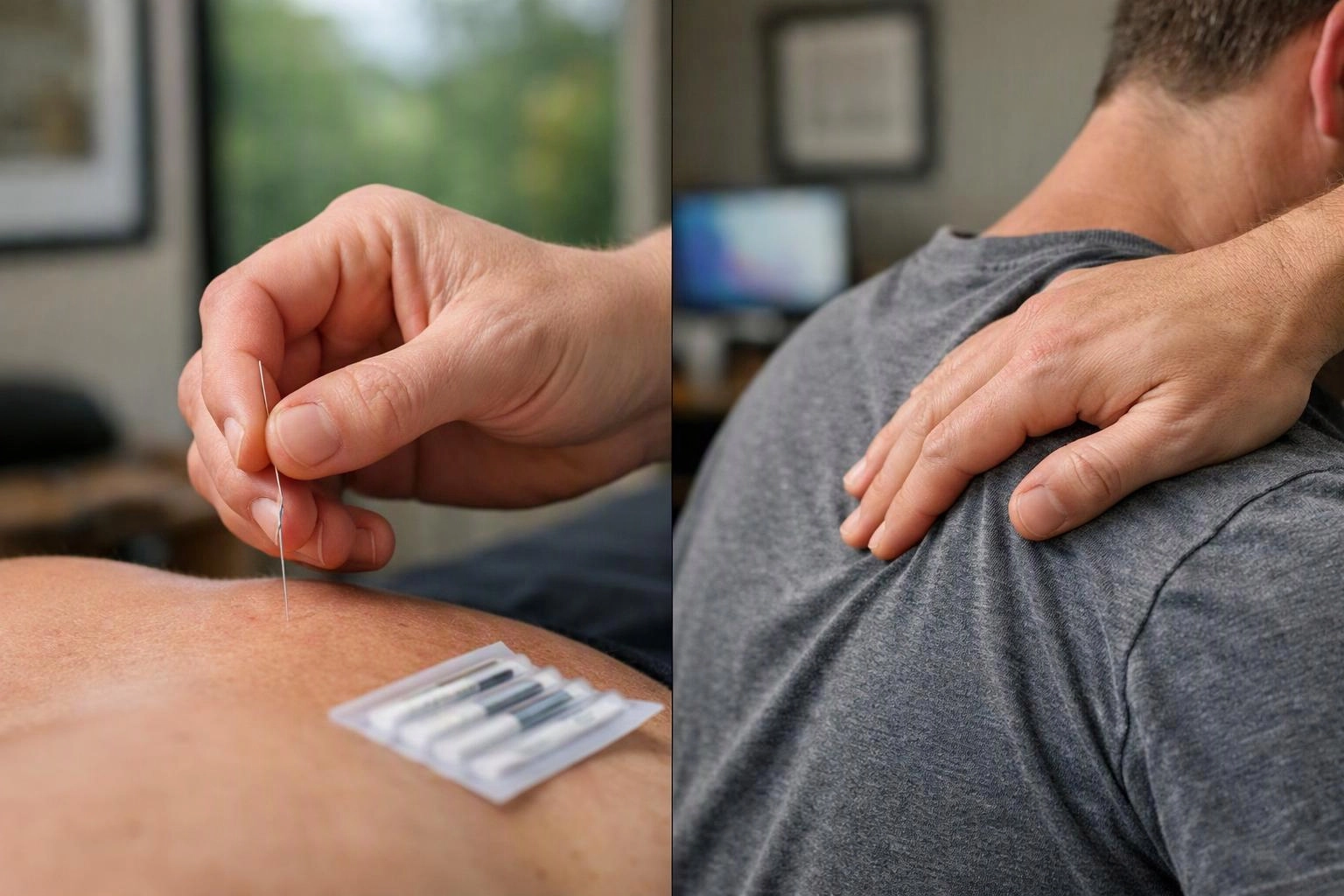
Best for: Chiropractic adjustment is best for joint restriction, mechanical pain, and movement-related stiffness.
Which Treatment Is Better for Your Symptoms?
Neither treatment is always better; the examination determines which approach matches the main source of symptoms. We review your pain pattern, muscle tension, joint mobility, and functional goals.
Neurologic symptoms can change the care decision and may require further clinical attention. We also consider your medical history, comfort, and patient safety before selecting treatment.
A movement limitation may involve more than one structure. Our treatment plan can change when your findings or response to care changes.
Can Dry Needling and Chiropractic Care Be Used Together?
Yes, dry needling and chiropractic care can be combined when each treatment addresses a different finding from the examination. Combined care may pair muscle treatment with joint mobility work.
We plan treatment sequencing around your symptoms and response. Corrective exercise therapy and movement retraining can help you use new movement patterns after hands-on care.
Our team may adjust the plan if soreness, pain, or other symptoms change. You can ask about the goal of each treatment before agreeing to care.
What Should You Ask Before Agreeing to Dry Needling?
Before dry needling, ask what problem the treatment targets, what you may feel, and how the plan will be adjusted if symptoms change. Clear answers support informed patient consent.
We answer these questions before treatment begins. Tell our team about changes in symptoms, new health concerns, or discomfort during care.
How We Build a Treatment Plan
We review your symptoms and movement before choosing dry needling, chiropractic adjustment, corrective exercise therapy, or a combination. Advanced Injury Care Clinic connects each service to a clinical finding and a functional goal.
Our team explains the planned services and quote details before treatment begins. Free Consultations are available for discussing your care needs.
What Can Change the Cost of Treatment?
Treatment cost depends on the services selected, the areas assessed, and the care plan; we explain what the quote includes before treatment begins. Dry needling and chiropractic adjustment can have different cost factors because they use different techniques.
We consider the treatment type, number of regions treated, plan complexity, and whether corrective exercise therapy is included. Insurance coverage may also affect your personal responsibility.
Ask our team for an exact quote based on your examination and planned services. We explain each included service before care starts.
Questions About Dry Needling and Chiropractic Adjustment
Is dry needling the same as acupuncture?
Dry needling isn't the same as acupuncture because the treatment goals and clinical framework differ. Advanced Injury Care Clinic uses dry needling to address selected muscle findings, such as trigger points and muscle tension.
Does dry needling hurt?
Dry needling can cause brief sensations during needle placement or muscle treatment. Some people may notice post-treatment soreness, and we monitor comfort throughout the session.
What are common after-effects of dry needling?
Common after-effects can include local soreness or temporary changes in muscle comfort. Tell our team if symptoms feel severe, unexpected, or different from what we explained.
Can chiropractic adjustment help with tight muscles?
Yes, chiropractic adjustment may help when tight muscles are linked to restricted joint movement or mechanical stress. We assess the joint and muscle findings before choosing an adjustment or adding dry needling.
Should corrective exercises be part of chiropractic care?
Corrective exercises should be included when the movement assessment shows that exercise can support your functional goals. Our team selects exercises that match your treatment plan and movement retraining needs.
Choose the Treatment That Matches Your Findings
Dry needling and chiropractic adjustment address different parts of musculoskeletal pain. Advanced Injury Care Clinic can review your symptoms, movement, and goals before building a focused plan.
Contact us to discuss your options and request an exact quote for the services recommended by our team.
Get a Free EstimateRelated Resources
Numbness and Tingling: Signs You Should Get Evaluated
Everything About ItDry Needling: How It Works, Possible Benefits, and Safety Questions
Everything About ItChoosing a Chiropractor in Tennessee: Licensing, Scope, and Patient Questions
Brand vs BrandSports Chiropractor vs General Chiropractor: What to Compare Before Choosing