
What Is Nerve Impingement?
Nerve Impingement is a condition in which nearby tissue places pressure on a nerve, disrupting normal nerve signaling. The pressure may involve a spinal disc, joint, muscle, or narrowed passageway. Symptoms can follow the affected nerve and may include pain, tingling, numbness, or weakness in a nearby region of the body.
Quick Facts About Nerve Impingement
Category
Neuromusculoskeletal condition
Used for
Describing nerve-related symptoms
Common confusion
Muscle soreness or referred pain
Also called
Nerve compression, Pinched nerve
Often discussed with
Chiropractic Rehabilitation
Key Takeaways About Nerve Impingement
- Pressure on a nerve may change sensation, strength, or movement.
- Symptoms often follow the path of the affected nerve.
- Nerve impingement is not the same as ordinary muscle soreness.
How Nerve Impingement Works
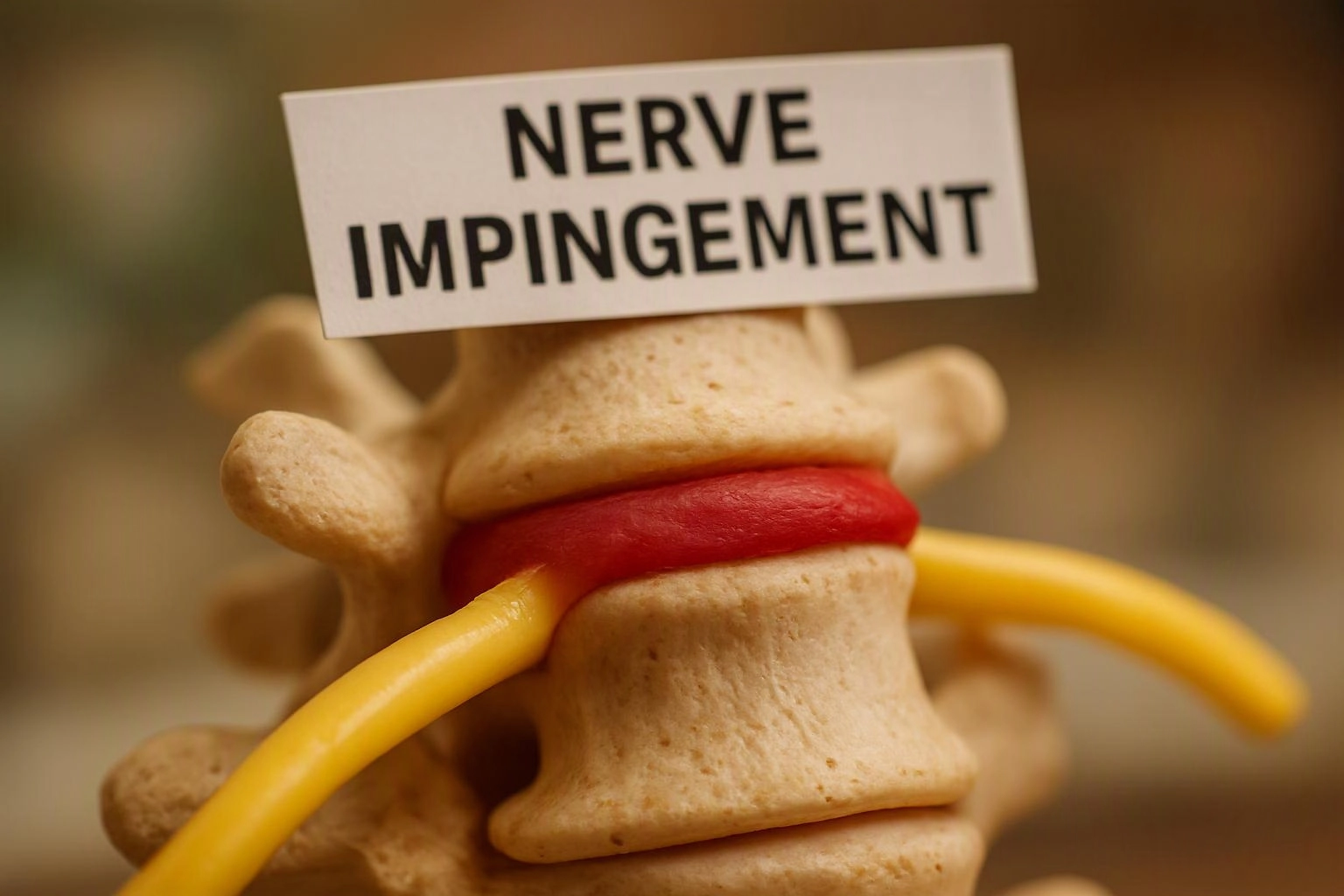
Nerve Impingement develops when a nerve has less room or receives pressure from nearby structures. A disc, joint, muscle, or bone can affect that space. The affected nerve may send altered signals along its pathway, so symptoms can appear away from the original source.
Related glossary terms: Cervical Radiculopathy, Lumbar Radiculopathy, Disc Herniation.
Clinicians consider the symptom pattern, strength, sensation, reflexes, posture, and movement during an assessment. Cervical Radiculopathy describes nerve-root irritation in the neck, while Lumbar Radiculopathy describes a similar process in the lower back. These terms identify the region and nerve pathway involved.
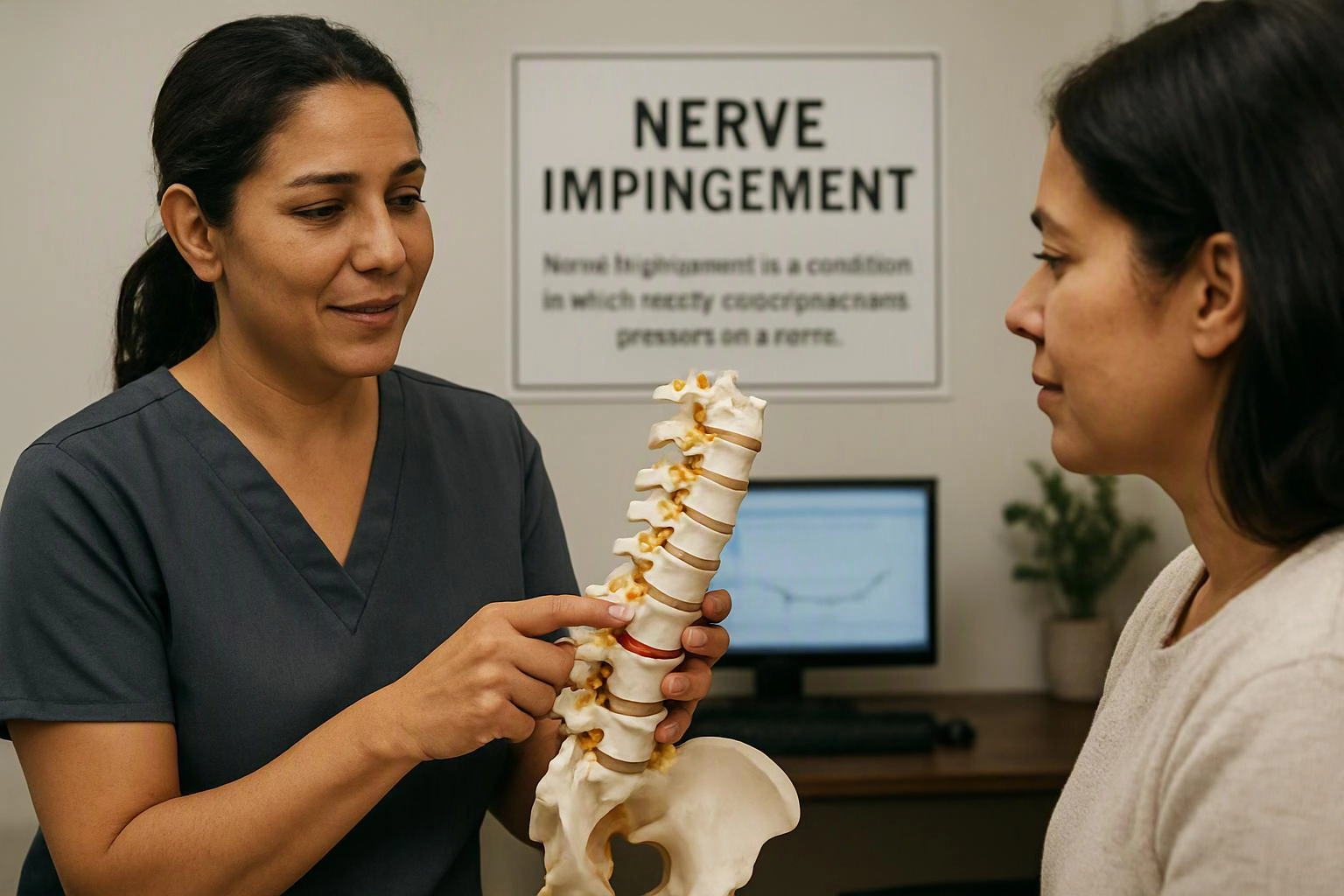
From the Advanced Injury Care Clinic team
When we assess nerve impingement during Chiropractic Rehabilitation, we review the symptom pattern alongside movement, strength, sensation, and functional limits. Our team uses those findings to guide exercise selection and monitor how the body responds during rehabilitation.
Nerve Impingement in Practice: A Real-World Example
A person with a lower-back injury may notice pain, tingling, or weakness extending into the leg during walking or lifting. Chiropractic Rehabilitation may address movement control, trunk strength, and activity tolerance while the care team monitors the nerve-related pattern.
Related Services
Related Terms
Cervical Radiculopathy
Cervical Radiculopathy is a neck-related nerve condition that occurs when a nerve root near the cervical…
Lumbar Radiculopathy
Lumbar Radiculopathy is a condition involving irritation or compression of a nerve root in the lower…
Disc Herniation
Disc Herniation is a condition in which the soft inner material of a spinal disc pushes…
Spinal Stenosis
Spinal Stenosis is a narrowing of the spaces within the spine that can reduce room for…
Advanced Injury Care Clinic
Have Questions About Nerve Impingement?
Contact Advanced Injury Care Clinic for practical guidance on Nerve Impingement and related chiropractor work in Brentwood.