
What Is the Temporomandibular Joint?
Temporomandibular Joint is the paired jaw joint that connects the lower jaw to the skull on each side of the face. Each joint helps the jaw open, close, slide, and move from side to side. The joint works with nearby muscles, ligaments, teeth, and nerves during chewing, speaking, and swallowing.
Quick Facts About Temporomandibular Joint
Category
Jaw joint
Used for
Jaw movement
Common confusion
TMJ names the joint, not one specific disorder
Also called
TMJ, Jaw joint
Often discussed with
TMJ Treatment
Key Takeaways About Temporomandibular Joint
- Each side of the jaw has its own temporomandibular joint.
- The joint supports opening, closing, sliding, and side-to-side jaw movement.
- TMJ may refer to the joint or to jaw-related symptoms.
How Temporomandibular Joint Works
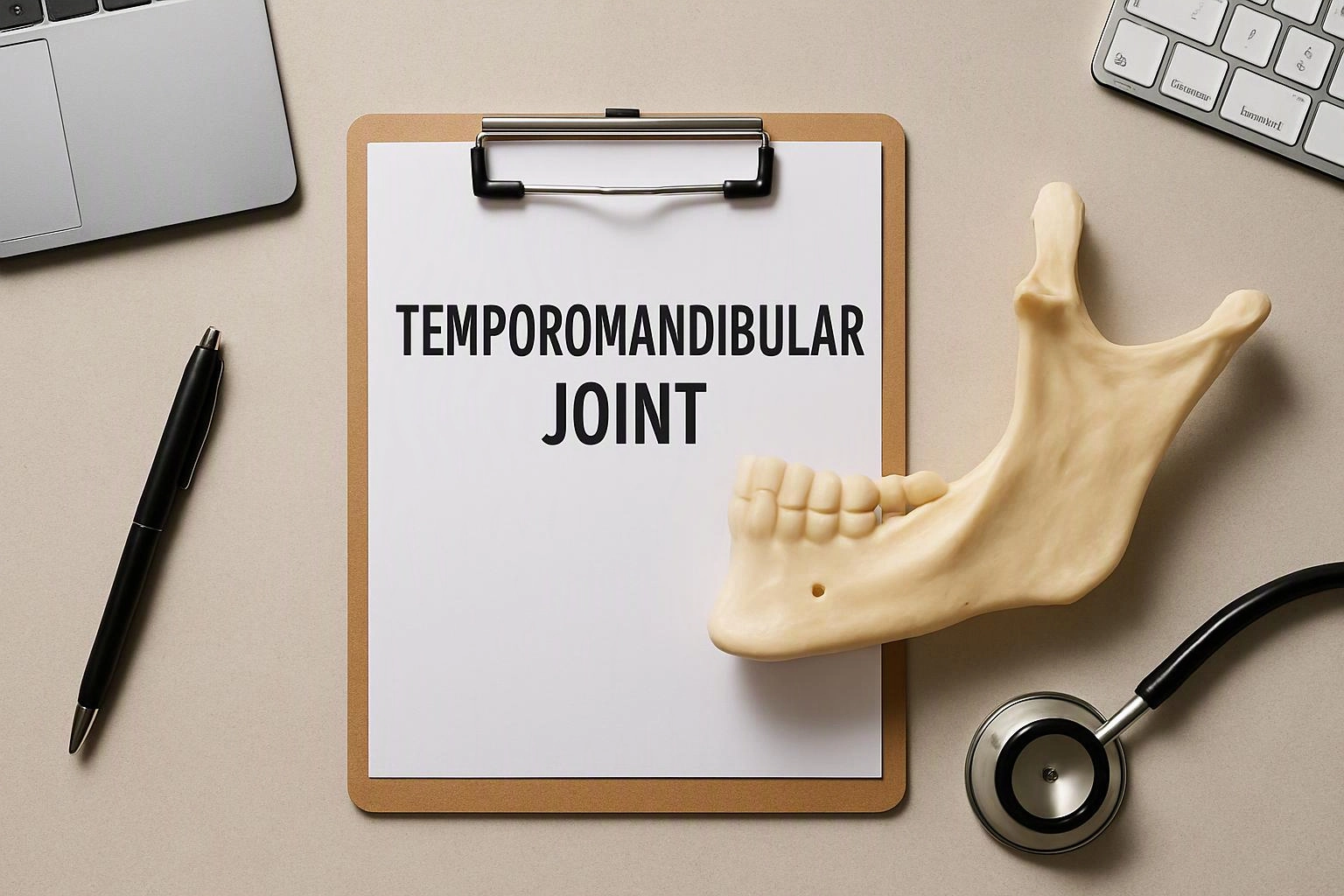
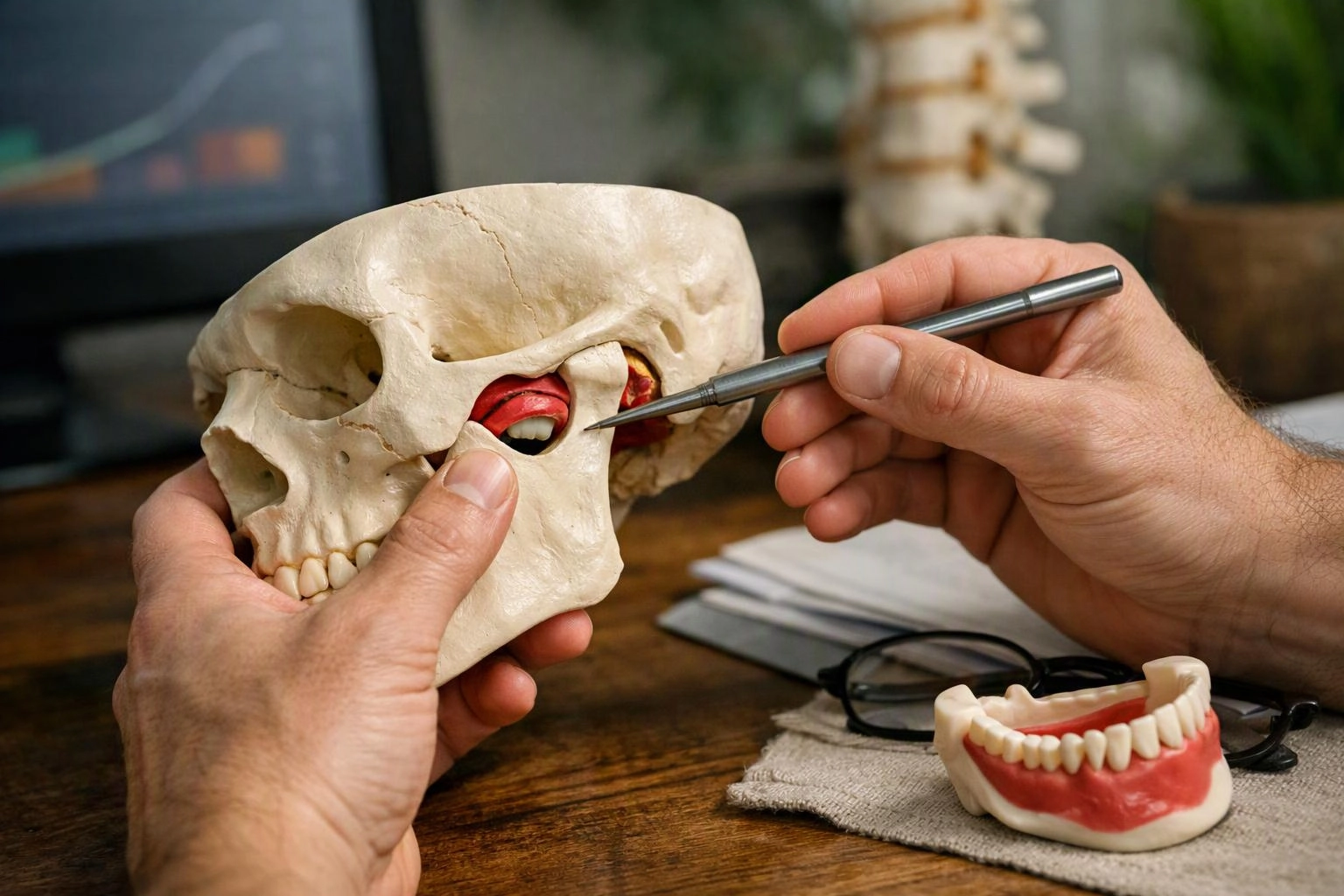
The temporomandibular joint links the lower jaw with the temporal bone of the skull. A small disc helps the joint move smoothly as the jaw opens and closes. The joint also supports forward, backward, and side-to-side motion.
Related glossary terms: Joint Mobilization, Muscle Spasm, Range of Motion.
Jaw movement depends on the joint, chewing muscles, ligaments, and nearby tissues working together. A health professional may observe how the jaw opens, listen for sounds, and check nearby muscles for tenderness or tightness. These findings help describe how the jaw moves and where symptoms may begin.
TMJ and TMD
Temporomandibular disorders, often called TMD, describe problems involving the jaw joint or related muscles. TMJ refers to the joint itself, while TMD refers to a group of conditions affecting that area.
From the Advanced Injury Care Clinic team
When we assess the temporomandibular joint during TMJ Treatment, we look at jaw motion and the surrounding muscles. We also ask about chewing, speaking, clenching, and symptoms near the jaw, face, neck, or ears. Our team uses these findings to guide the care plan.
Temporomandibular Joint in Practice: A Real-World Example
A person may notice jaw tightness while chewing and hear a click near one side of the face. During TMJ Treatment, the clinician may check jaw motion and nearby muscle tension to understand the pattern.
Related Services
Related Terms
Joint Mobilization
Joint Mobilization is a hands-on technique that gently moves a joint through a controlled part of…
Muscle Spasm
Muscle Spasm is a sudden, involuntary tightening of muscle tissue that can cause pain, stiffness, or…
Range of Motion
Range of Motion is the available movement at a joint, such as bending, straightening, turning, or…
Trigger Point
A Trigger Point is a sensitive spot within a tight muscle band that may cause local…
Advanced Injury Care Clinic
Have Questions About Temporomandibular Joint?
Contact Advanced Injury Care Clinic for practical guidance on Temporomandibular Joint and related chiropractor work in Brentwood.