
What Is Range of Motion?
Range of Motion is the amount a joint can move through its available directions. Clinicians assess movement such as bending, straightening, rotating, or lifting. The assessment may describe active motion, which you perform yourself, or passive motion, which another person guides. Findings can help track movement changes during rehabilitation.
Quick Facts About Range of Motion
Category
Movement assessment
Used for
Tracking joint movement during rehabilitation
Common confusion
Movement capacity is different from strength or stability
Also called
ROM, Joint range of motion
Often discussed with
Chiropractic Rehabilitation
Key Takeaways About Range of Motion
- It describes movement at a joint, not muscle strength.
- Active and passive assessments provide different information.
- Range of Motion is not the same as joint stability.
How Range of Motion Works
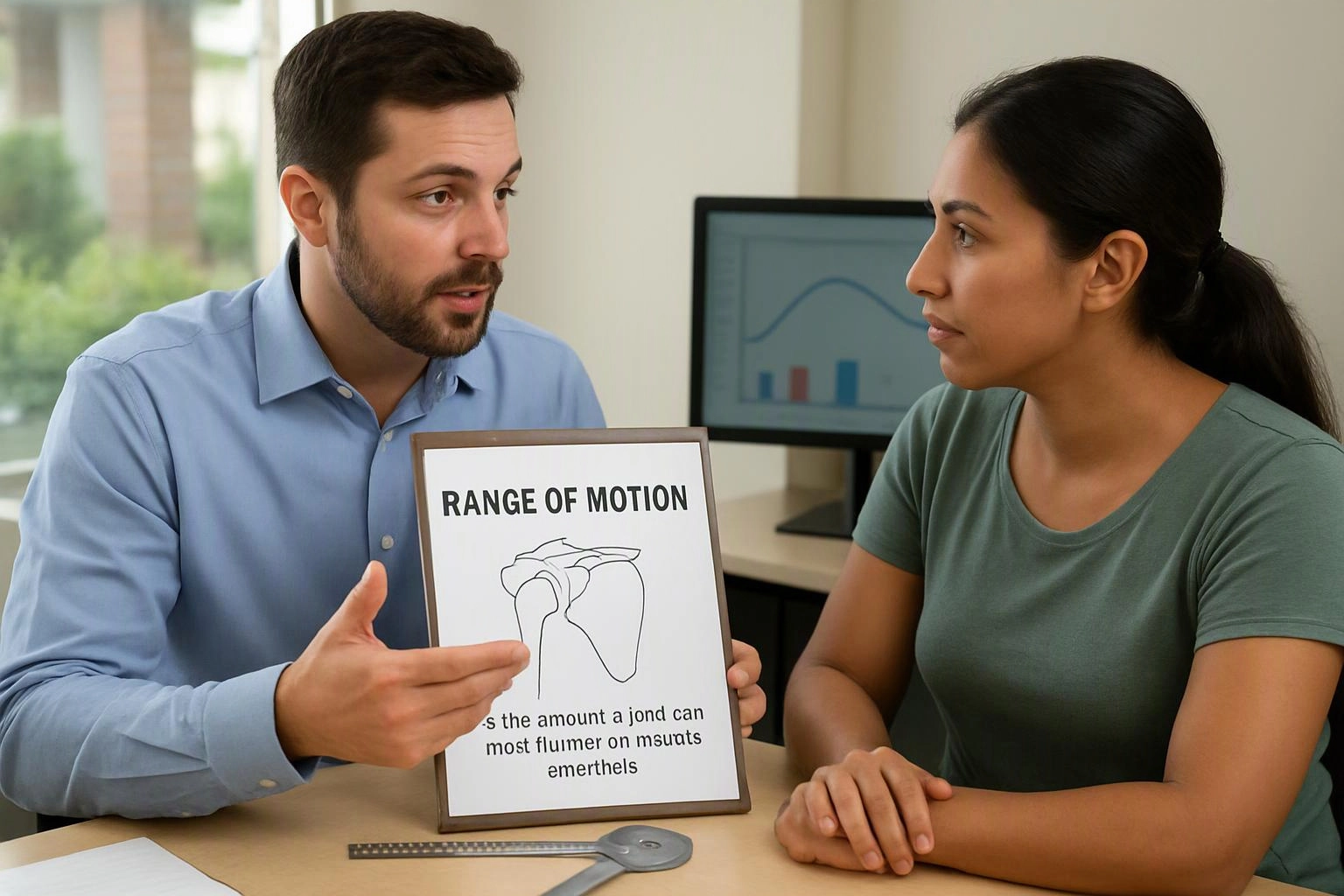
Range of Motion describes how far a joint moves in a particular direction. A provider may observe active movement as you perform it, then assess passive movement through guided motion. The two observations can differ because pain, muscle control, stiffness, or protective tension may affect how you move.
Related glossary terms: Joint Mobility, Biomechanics, Posture Assessment.
During Chiropractic Rehabilitation, movement is considered alongside posture, coordination, and strength. A provider may compare one side with the other and note whether movement feels smooth, limited, or uncomfortable. These observations help the care team select exercises and monitor changes over time. Joint mobility refers to the movement available at a joint, while Range of Motion describes the movement observed during an assessment.
From the Advanced Injury Care Clinic team
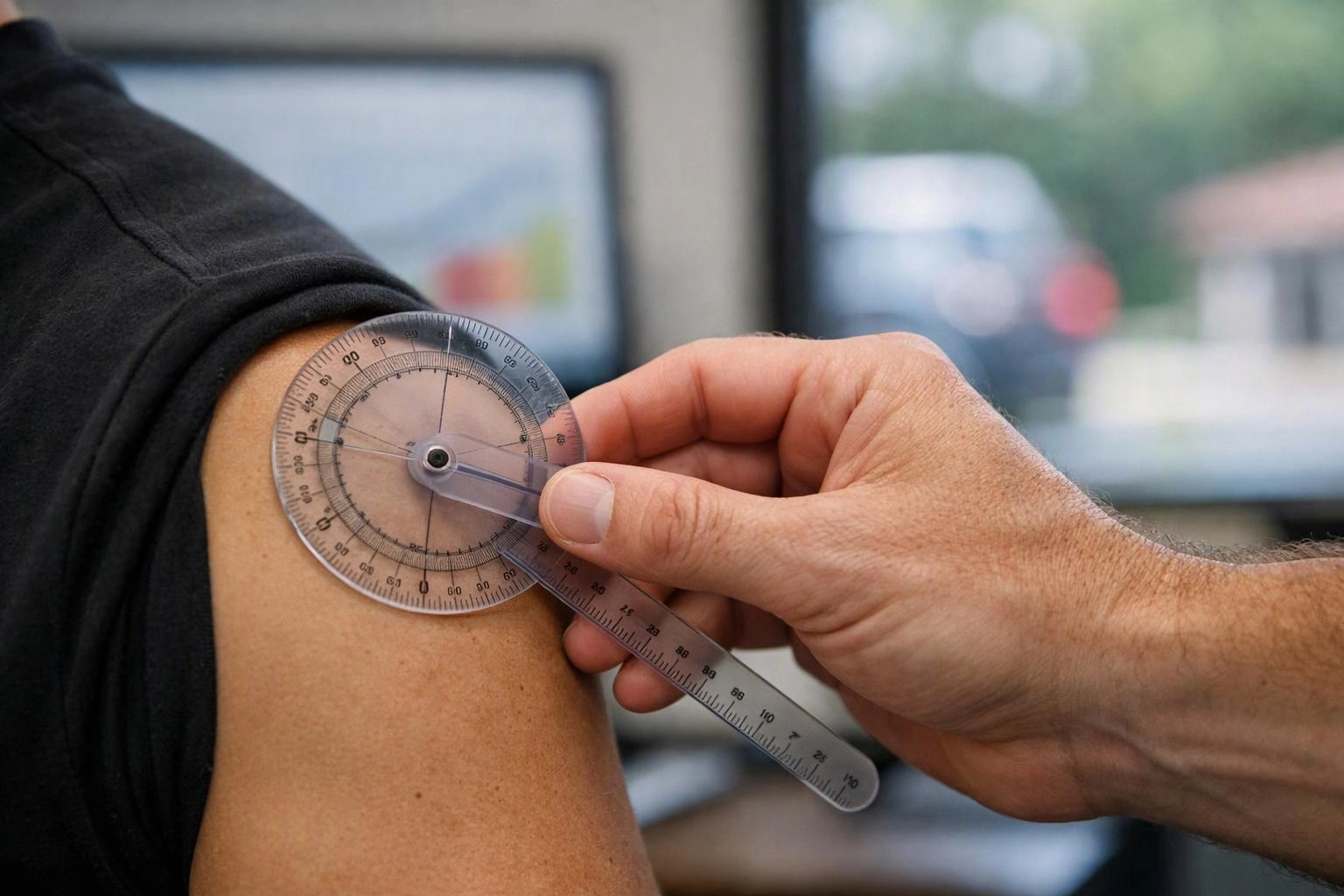
When we assess Range of Motion, we observe how a person moves and note differences between active and guided motion. We consider the joint involved, movement quality, and related findings during Chiropractic Rehabilitation. We use those observations to track progress and adjust rehabilitation activities when appropriate.
Range of Motion in Practice: A Real-World Example
A person recovering from a neck strain may turn the head less comfortably toward one side. During Chiropractic Rehabilitation, the team can observe active rotation, compare it with guided movement, and record changes across visits.
Related Services
Related Terms
Joint Mobility
Joint Mobility is the available movement at a joint and the ease with which that joint…
Biomechanics
Biomechanics is the study of how living bodies move and respond to force. It examines the…
Posture Assessment
Posture Assessment is a structured review of how your body aligns and moves during standing, sitting…
Advanced Injury Care Clinic
Have Questions About Range of Motion?
Contact Advanced Injury Care Clinic for practical guidance on Range of Motion and related chiropractor work in Brentwood.