
What Is Vertebral Subluxation?
Vertebral Subluxation is a chiropractic term for altered movement or position in a spinal joint. A chiropractor may identify it through a history, physical examination, posture review, and motion testing. The term describes a functional finding used to guide care, and it does not have the same meaning as a medical dislocation.
Quick Facts About Vertebral Subluxation
Category
Chiropractic assessment term
Used for
Guiding a chiropractic adjustment
Common confusion
Not the same as spinal dislocation
Also called
Subluxation
Often discussed with
Chiropractic Adjustment
Key Takeaways About Vertebral Subluxation
- It describes altered spinal joint movement or position.
- A chiropractor checks movement, posture, and related physical signs.
- It is not the same as a dislocated vertebra.
How Vertebral Subluxation Works
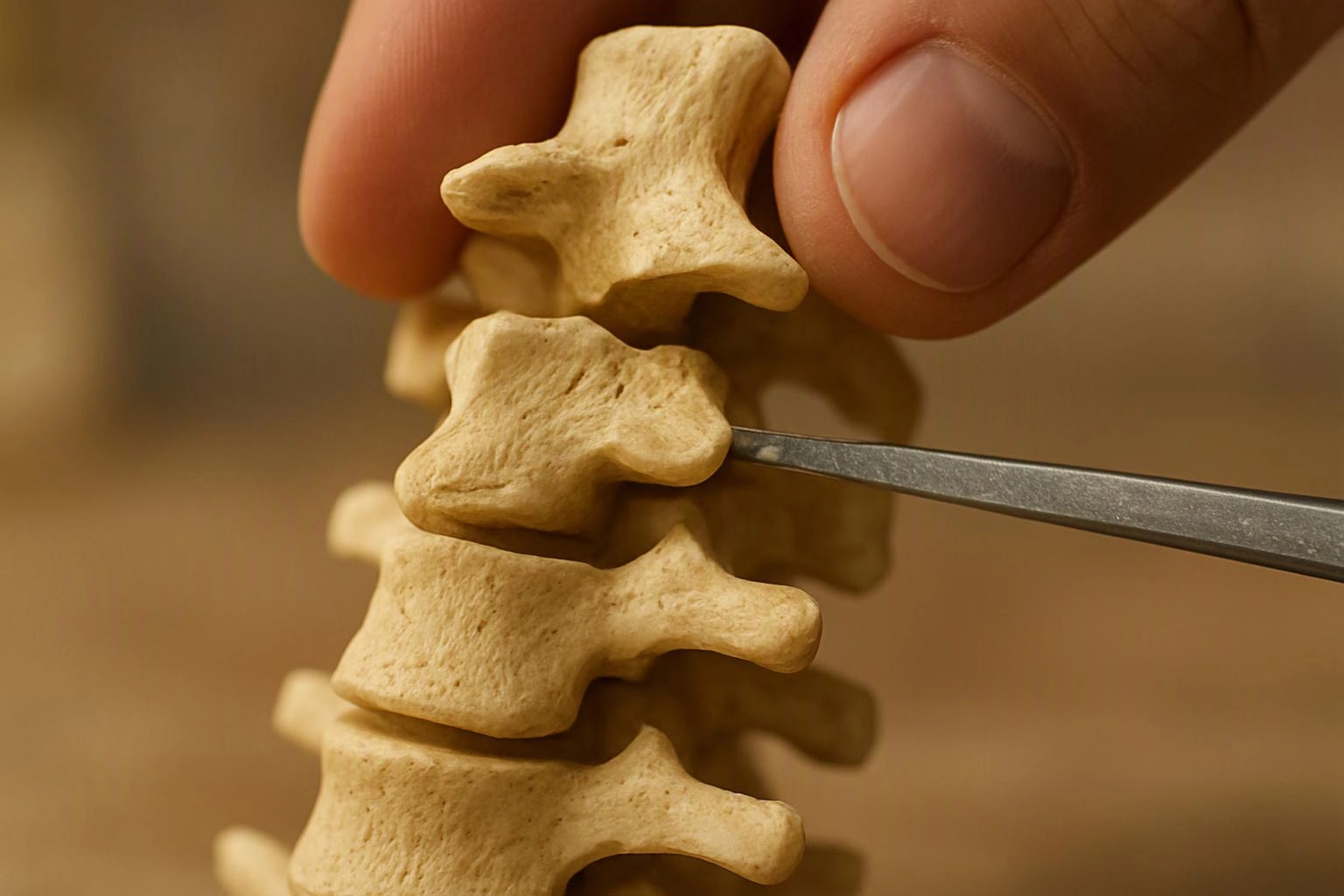
Vertebral Subluxation refers to a finding involving how a spinal joint moves or lines up. A chiropractor may check joint motion, muscle tension, posture, tenderness, and movement patterns. These findings help show whether a joint moves differently from nearby areas.
Related glossary terms: Facet Joint, Joint Mobilization, Neurological Exam.
A chiropractic adjustment applies a controlled force to a selected joint. The goal is to influence joint motion and related body mechanics. The term does not describe a bone that has fully left its joint. Severe trauma, visible deformity, or major loss of movement calls for medical evaluation.
Practical distinction
Vertebral subluxation is a chiropractic care term, while medical subluxation usually describes a partial joint dislocation seen through clinical evaluation or imaging. The meaning depends on the profession and the context.
From the Advanced Injury Care Clinic team
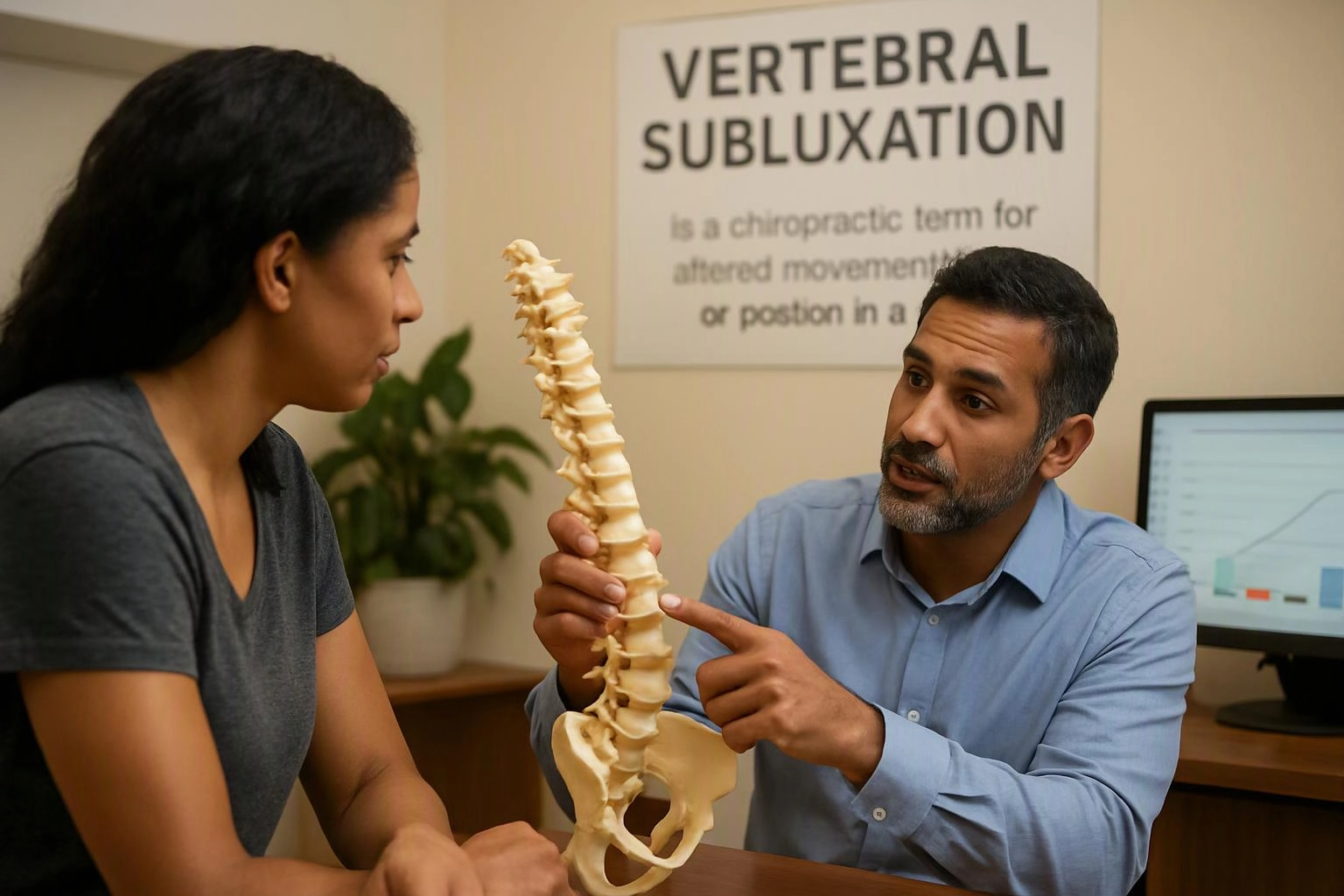
When we assess Vertebral Subluxation, we review your history and examine spinal motion, posture, muscle tension, and tenderness. We use those findings to choose the focus and method of a Chiropractic Adjustment. We also consider symptoms and other clinical signs before adjusting.
Vertebral Subluxation in Practice: A Real-World Example
A person with neck stiffness may show reduced motion at one spinal joint and increased muscle tension nearby. During a Chiropractic Adjustment, the chiropractor may focus on that joint after reviewing the examination findings.
Related Services
Related Terms
Facet Joint
A facet joint is a small joint at the back of the spine that connects nearby…
Joint Mobilization
Joint Mobilization is a hands-on technique that gently moves a joint through a controlled part of…
Neurological Exam
A Neurological Exam is a clinical assessment of nerve and brain function. It checks sensation, muscle…
Postural Assessment
Postural Assessment is a structured review of how your body aligns and moves during standing, sitting…
Advanced Injury Care Clinic
Have Questions About Vertebral Subluxation?
Contact Advanced Injury Care Clinic for practical guidance on Vertebral Subluxation and related chiropractor work in Brentwood.