Chiropractic Adjustments vs Corrective Exercise: Comparing Care Plans
Chiropractic adjustments focus on joint movement, while corrective exercise therapy builds strength, control, and lasting movement habits. Advanced Injury Care Clinic compares how each approach fits assessment, posture correction, maintenance, and care planning.
Request an EstimateWhat Is the Difference Between an Adjustment and Corrective Exercise?
Chiropractic adjustments use hands-on care to address joint motion, while corrective exercise therapy uses guided movement to improve strength, control, and movement habits.
A chiropractic adjustment focuses on joint mobility, including motion around a spinal joint. Corrective exercise therapy focuses on movement control, muscle strength, and the way your body performs a task.
We may use either approach after reviewing your symptoms and movement. Our Chiropractic Adjustment service can also be part of a broader movement-based care plan.
Chiropractic Adjustments vs Corrective Exercise Therapy at a Glance
Neither option suits every goal. The better fit depends on the movement problem, symptoms, examination findings, and ability to follow an exercise plan.
Cost drivers include the care-plan scope, assessment needs, treatment methods, exercise instruction, and follow-up care.
| Factor | Chiropractic Adjustment | Corrective Exercise Therapy | Best Fit |
|---|---|---|---|
| Main goal | Support joint motion and range of motion. | Build strength, control, and movement habits. | The choice follows the clinical assessment. |
| Cost drivers | Assessment, adjustment method, and follow-up care. | Assessment, exercise instruction, and home program support. | A combined plan may have a broader scope. |
| Timeline | Care follows symptoms and examination findings. | Progress follows practice, control, and tolerance. | Reassessment guides the next phase. |
| Maintenance | May include follow-up care based on the care plan. | Often includes maintenance exercises and movement practice. | The plan should match daily demands. |
What Chiropractic Adjustments Can Do?
A chiropractic adjustment is manual therapy that supports movement in a spinal joint. We assess joint motion and related symptoms before choosing an adjustment approach.
Hands-on care may support range of motion and pain management when joint movement is part of the problem. We also consider how the joint interacts with nearby muscles and daily movement.
Adjustments don't build muscle strength by themselves. Our team may pair them with exercise instruction when movement control needs more support.
Advantages of Chiropractic Adjustments
Chiropractic adjustments can be useful when examination findings point to limited joint motion. We select care based on your symptoms, goals, and response.
Best for: goals focused on joint motion, comfort, and supported movement.
What Corrective Exercise Therapy Can Do
Corrective exercise therapy is guided movement that develops muscle strength, motor control, and safer movement habits.
We choose exercises that match the movement pattern found during assessment. Exercise instruction may include controlled mobility, stability, strengthening, or movement-control exercise.
A home exercise program helps you practice between visits. We adjust the program when your control, tolerance, or functional goals change.
Advantages of Corrective Exercise Therapy
Corrective exercise therapy can support lasting changes when strength and control affect daily movement. We teach each exercise and explain how it supports your care-plan goals.
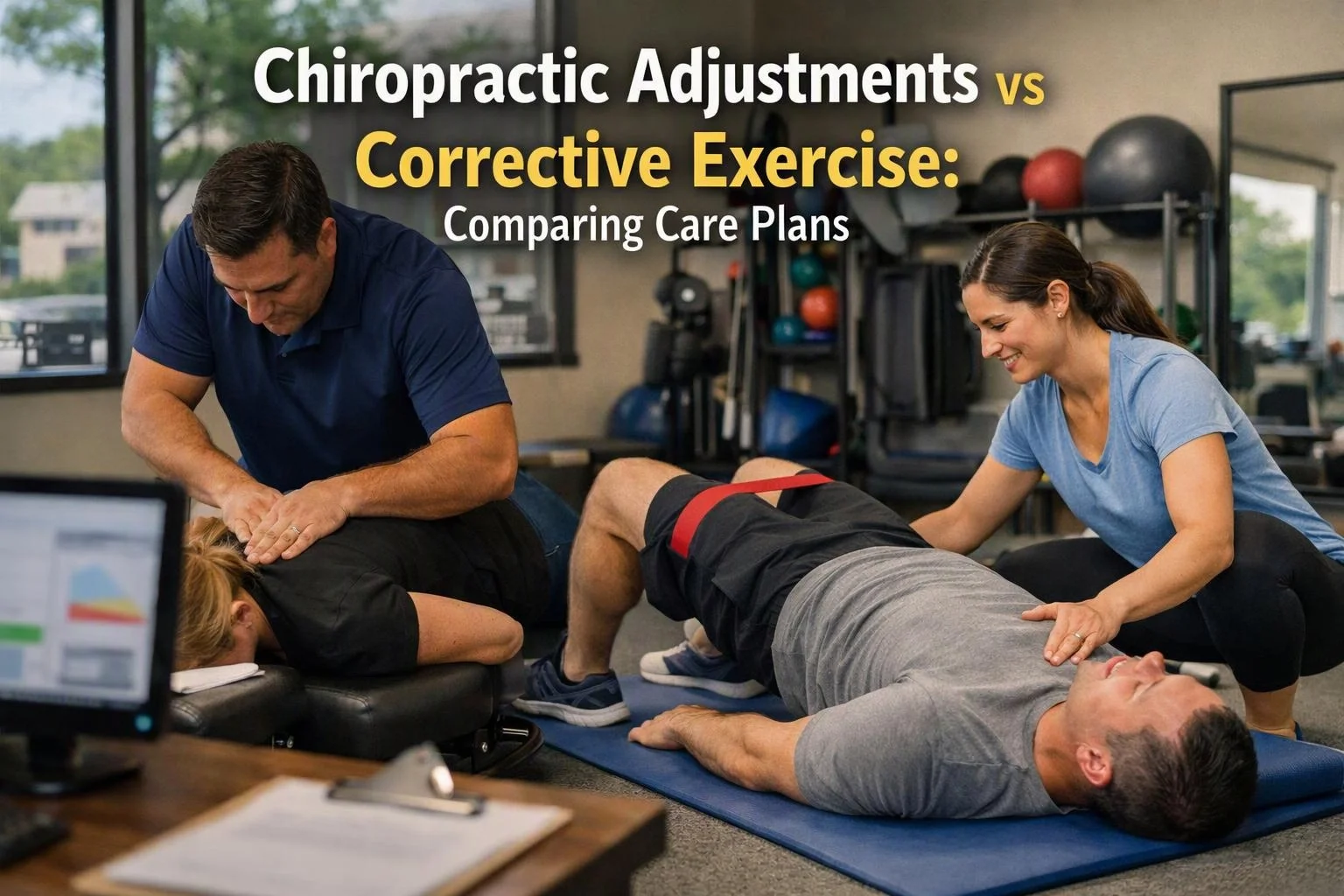
Best for: goals focused on strength, movement habits, posture support, and daily function.
Which Care Plan Fits Your Goals?
Chiropractic adjustments may fit goals centered on joint movement, while corrective exercise therapy may fit goals centered on strength, control, and movement habits.
Your care-plan goals should reflect your symptom pattern and functional goals. We use a clinical assessment to decide whether adjustment, exercise, or combined care makes sense.
Patient participation matters most when the plan includes home exercise. We explain each step so you can take part with clear expectations.
Does Chiropractic Care Include Posture Correction Exercises?
Yes, a chiropractic care plan can include posture correction exercises when assessment shows that strength, control, or daily movement habits need support.
Posture correction isn't only about holding the spine in one position. We look at spinal alignment, ergonomics, muscle control, and the movement habits that shape your posture.
Our team may use postural exercise and movement retraining when they support your goals. We then reassess how those changes affect daily function.
How We Build and Reassess a Care Plan
Our care-plan assessment connects your health history with movement findings and practical goals. We use the results to select the right mix of care.
Reassessment should happen when your symptoms, movement, or goals change. We use follow-up findings to guide maintenance care or further exercise instruction.
What Changes the Cost of a Chiropractic Care Plan?
Care-plan cost depends on the assessment, selected services, treatment scope, exercise instruction, and follow-up needs. We explain what the plan includes, provide upfront pricing, and offer Free Consultations.
Adjustment-only care may have a different scope from a combined plan with exercise instruction and home program support. The cost also reflects the amount of assessment and follow-up care needed.
We review these cost drivers before care begins. To obtain an exact quote, contact Advanced Injury Care Clinic so our team can discuss your needs and explain the plan.
How to Choose Between an Adjustment, Exercise, or Both
A chiropractic adjustment, corrective exercise therapy, or a combined care plan can fit different functional goals. The clinical assessment should guide the choice.
Choose an adjustment when joint movement is the main concern. Choose exercise when strength, control, posture correction, or movement habits need more attention.
Choose combined care when joint mobility and movement control both affect function. We explain the reason for each part and reassess the plan as your needs change.
Advanced Injury Care Clinic can review your goals during a Free Consultation. Contact our team to discuss your care plan.
Related Resources
Numbness and Tingling: Signs You Should Get Evaluated
Everything About ItChoosing a Chiropractor in Tennessee: Licensing, Scope, and Patient Questions
Brand vs BrandSports Chiropractor vs General Chiropractor: What to Compare Before Choosing
What Goes With ItHow Chiropractic Care and Corrective Exercise Can Work Together