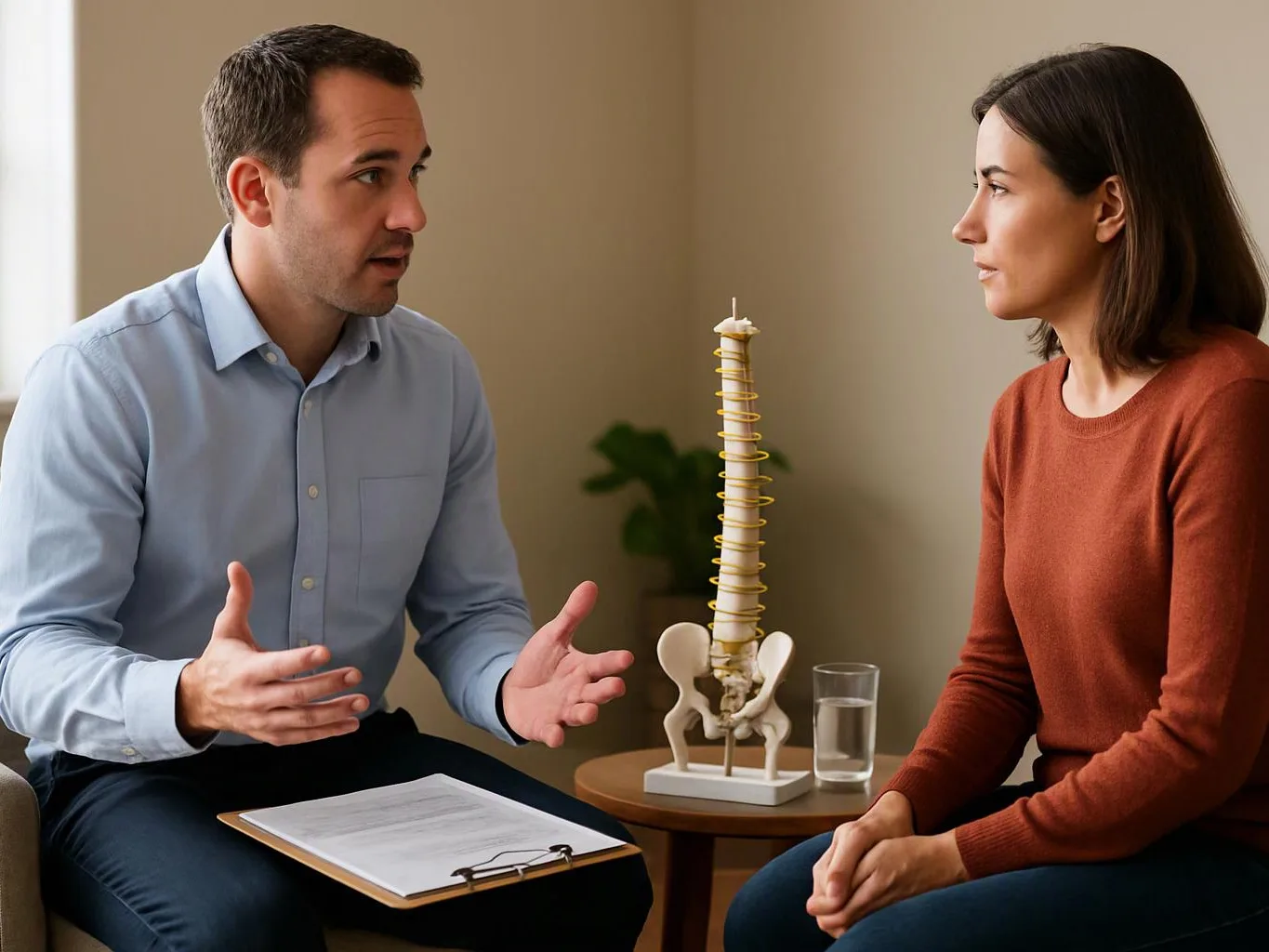
Corrective Exercise and Chiropractic Rehabilitation: What Comes After Treatment?
Corrective exercises after chiropractic treatment help reinforce mobility and movement changes, and Advanced Injury Care Clinic connects chiropractic rehabilitation with exercises selected for your goals and response to care. Free Consultations are available to help you discuss the next step.
Request an Estimate
What Comes After Chiropractic Treatment?
Corrective exercise therapy and chiropractic rehabilitation follow treatment by helping the body practice controlled movement, build capacity, and apply improvements to daily activities.
Chiropractic treatment may reduce movement restrictions and improve comfort during a chiropractic adjustment. Corrective exercises then help you use that improved mobility during functional movement, posture changes, and daily activities.
Our team connects treatment with rehabilitation exercises that match your movement assessment, goals, and symptom response. The plan may change as your strength, stability, and coordination improve.
When Do You Need Chiropractic Rehabilitation and Corrective Exercise Together?
Chiropractic rehabilitation and corrective exercise work well together when treatment needs to carry over into movement, activity, and daily function. We look for patterns that show whether active exercise should be part of your care plan.
Common situations include:
How Chiropractic Care and Corrective Exercises Work Together
Chiropractic care addresses movement restrictions while corrective exercise reinforces usable strength and control; the combined plan depends on examination findings, goals, and response to treatment, which also shape the cost.
Our team may use a chiropractic adjustment to address joint or spinal movement concerns, then use exercise to help you control that movement. A mobility assessment guides the starting point, while your response guides the next change.
How We Build a Corrective Exercise Plan After Treatment
Our movement assessment determines which exercises fit your current ability and how we will measure progress. We use symptom response and functional goals to keep the plan clear and practical.
What Types of Exercises May Support Chiropractic Rehabilitation?
Corrective exercises after chiropractic treatment may include mobility exercises, stability exercises, strengthening exercises, and balance exercises. The right combination depends on your movement assessment and the task you want to perform more comfortably.
Mobility work supports joint motion, while stability and strengthening exercises build control around that motion. Balance exercises can address coordination and postural control when those skills affect walking or activity.
Breathing mechanics may help you organize rib, trunk, and core movement during exercise. Movement retraining then connects those skills to functional goals such as lifting, reaching, walking, or returning to activity.
How Do You Know When Exercises Are Helping?
Corrective exercises are helping when movement becomes more controlled and daily or activity-specific tasks become easier without worsening symptoms.
We monitor movement quality, exercise tolerance, symptom behavior, and progress toward functional goals. Better control may appear before strength improves, so we look at how the whole task feels and performs.
Useful signs include smoother movement, improved balance, better posture, and greater confidence with daily activities. Progress monitoring also helps us decide whether the exercise progression should continue, change, or pause.
What Should You Do If an Exercise Increases Symptoms?
Stop or modify an exercise that increases symptoms and contact Advanced Injury Care Clinic so our team can reassess the movement and adjust the rehabilitation plan.
Pain response can change when form, range of motion, resistance, or activity level changes. Our team reviews your exercise technique and may use activity modification to reduce the demand while keeping the plan useful.
Clinical reassessment is important when symptoms persist, spread, or interfere with normal function. Do not push through a movement that feels sharply different from the response we discussed during care.
How Advanced Injury Care Clinic Connects Treatment With Your Next Rehabilitation Step
Our individualized care plan connects corrective exercise therapy, chiropractic rehabilitation, patient education, and care progression in a clear sequence.
We explain what each exercise is meant to improve and how to recognize a useful response. That education helps you practice safely and carry movement changes into work, home, and recreation.
Advanced Injury Care Clinic reviews your findings and goals before changing the plan. Contact us through our contact page to discuss your next rehabilitation step.
Questions About Corrective Exercise After Chiropractic Treatment
Can corrective exercises replace chiropractic treatment?
Corrective exercises do not always replace chiropractic treatment because each addresses different parts of movement. Advanced Injury Care Clinic determines whether exercise, chiropractic treatment, or both fit your examination findings and goals.
Should I do corrective exercises at home after chiropractic care?
Yes, you may do corrective exercises at home after chiropractic care when our team includes them in your home exercise program and explains the technique. Follow the recommended form and contact us if your symptom response changes.
What exercises are commonly used in chiropractic rehabilitation?
Chiropractic rehabilitation may use mobility, stability, strengthening, balance, breathing, and motor control exercises. Exercise selection depends on your movement assessment, symptom response, and functional goals.
How are corrective exercises adjusted when symptoms change?
Corrective exercises are adjusted by changing the movement range, technique, activity demand, or progression when symptoms change. Our team uses clinical reassessment and symptom monitoring to select the safest next step.
Related Resources
Benefits of Corrective Exercise Therapy for Posture, Strength, and Lasting Pain Relief
When You Need ItWhen Back Pain Needs a Chiropractic Evaluation: Warning Signs
When You Need ItSigns Poor Posture Is Causing Neck Pain and Needs Correction
What It SolvesWhat to Do After a Slip and Fall Injury