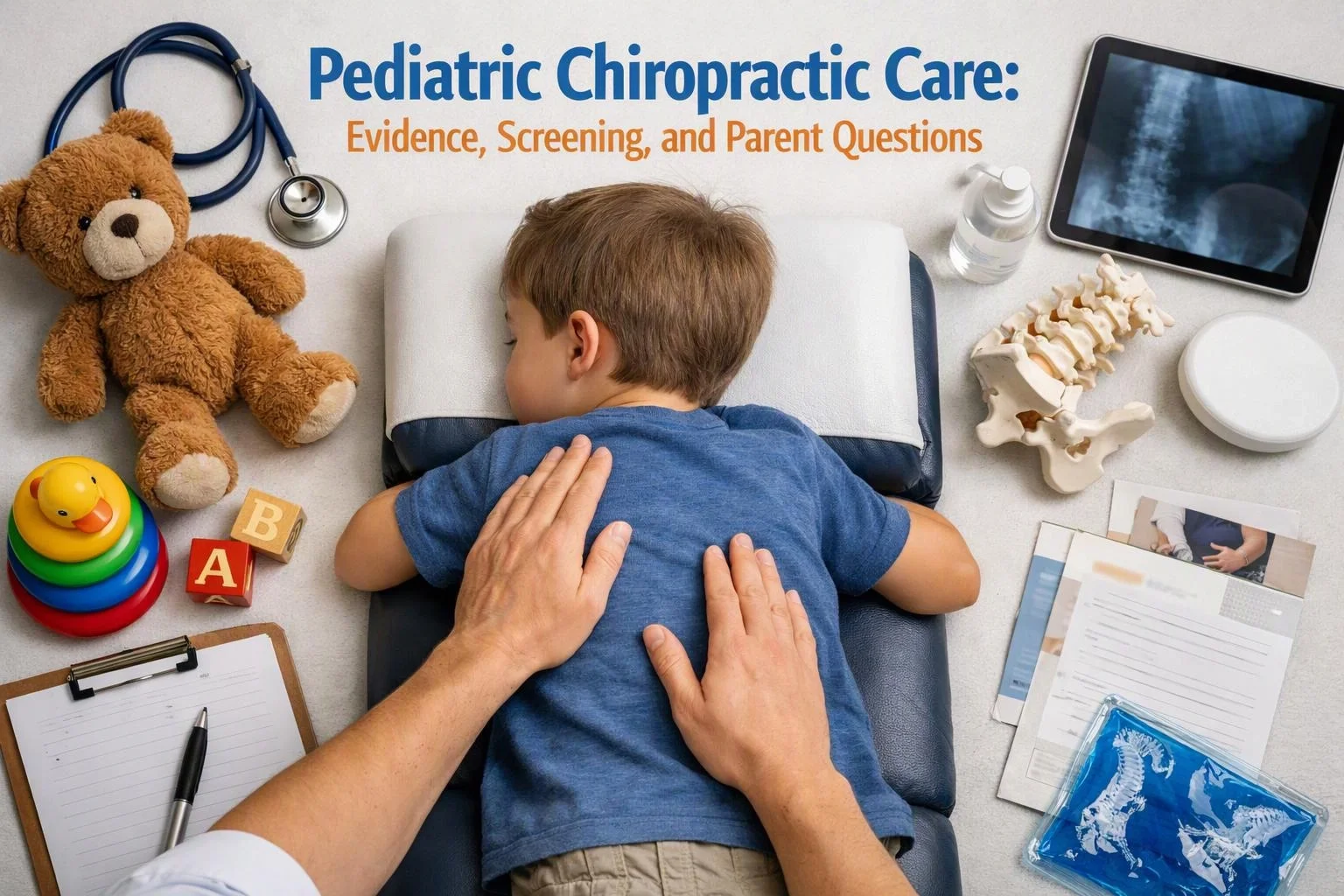
Pediatric Chiropractic Care: Evidence, Screening, and Parent Questions
Pediatric chiropractic care safety depends on a careful health history, appropriate screening, gentle age-matched care, and clear communication about evidence and limits. Advanced Injury Care Clinic can explain what we assess and which questions parents should ask before care begins.
Request an EstimateIs Pediatric Chiropractic Care Safe for Children?
Pediatric chiropractic care can be considered when screening supports care and the approach matches the child’s needs. Safety depends on the child’s health history, the reason for care, and techniques suited to the child’s age and condition.
We review concerns with the parent or guardian before care begins. Informed consent means parents understand the proposed goal, possible risks, alternatives, and referral options.
Our team explains the scope of care in clear terms. Families can also review our Pediatric Chiropractic Care service before deciding whether an appointment fits their child.
How We Screen a Child Before Chiropractic Care
Clinical screening helps us decide whether chiropractic care is suitable for the child. We use the screening process to understand the concern and identify signs that call for medical referral.
Parents can share medical records, imaging reports, and relevant school or sports information. We use those details to support careful clinical reasoning.
How Chiropractic Techniques Are Adapted for Children
Pediatric chiropractic techniques are adapted to the child’s age, size, development, comfort, and clinical needs. A pediatric adjustment should not be treated as a smaller version of adult care.
We choose a gentle technique based on the child’s anatomy and the reason for care. Our team watches the child’s response and adjusts the approach when comfort or cooperation changes.
Children, infants, and adolescents may communicate discomfort in different ways. We pause when a child becomes distressed, explain each step in simple language, and keep parent involvement central.
What Conditions Do Parents Ask About?
Parents often ask about chiropractic care for musculoskeletal concerns that affect movement or comfort. The appropriate scope of care depends on screening and the child’s treatment goals.
The table below shows common questions and the careful focus we bring to each concern.
| Parent concern | What we consider |
|---|---|
| Back pain | The symptom pattern, movement limits, injury history, and need for medical evaluation. |
| Neck pain | The cause, severity, physical findings, and whether care fits the child’s age. |
| Sports-related strain | The activity, injury mechanism, recovery needs, and safe return goals. |
| Posture concerns | Comfort, movement habits, development, and whether symptoms are present. |
| Infant and child health concerns | The child’s full health history and whether medical care is the right first step. |
Chiropractic care does not cover every childhood health concern. We explain our scope of practice and refer families when another form of medical evaluation is more appropriate.
What Evidence Supports Chiropractic Care for Children?
Clinical evidence for pediatric chiropractic care varies by condition and treatment goal. Parents should ask which outcome the care targets and how strong the supporting research is.
Research quality can differ across conditions, age groups, and treatment methods. Evidence may be more useful for some musculoskeletal symptoms than for broad claims about general child health.
We discuss evidence limitations before recommending care. Our team avoids promises and connects the plan to a clear, measurable treatment goal that fits the child.
When Should a Child Be Referred for Medical Care?
Medical evaluation is important when a child has red flags or symptoms that fall outside chiropractic care. We do not continue conservative care when the findings suggest serious illness or a need for urgent assessment.
Parents should seek emergency help for severe or rapidly worsening symptoms. We can coordinate a medical referral when screening shows that another evaluation is needed.
Questions Parents Should Ask Before Care
Parents should ask direct questions about the goal, screening, technique, and safety of proposed care. Clear answers support informed consent and shared decision-making.
Parents can also ask how progress will be reviewed. We use follow-up care to discuss comfort, response, and whether the treatment plan still makes sense.
How Advanced Injury Care Clinic Explains Pediatric Chiropractic Care to Parents
Advanced Injury Care Clinic explains pediatric chiropractic care through parent education, careful screening, and shared decision-making. We start by listening to the child and family before discussing treatment.
Our team connects each recommendation to the child’s symptoms, development, comfort, and treatment goals. We explain possible benefits, possible risks, alternatives, and the point at which medical referral is needed.
Follow-up helps us review the child’s response and adjust the treatment plan when appropriate. Families can contact Advanced Injury Care Clinic to discuss their questions and request a consultation.
Questions About Pediatric Chiropractic Safety
Can children receive chiropractic care for back or neck pain?
Yes, children can receive chiropractic care for some back or neck pain after appropriate screening. Advanced Injury Care Clinic reviews the cause, symptoms, development, and need for medical referral before discussing care.
What should parents bring to a pediatric chiropractic visit?
Parents should bring a health history, a list of medicines, and details about the child’s symptoms or injury. Relevant medical records, imaging reports, and sports information can also help us understand the concern.
How can parents tell whether a treatment goal is appropriate?
An appropriate treatment goal names a clear symptom or function and matches the child’s screening findings. Parents should understand how progress will be reviewed and what alternatives are available.
What happens if a child is uncomfortable during care?
Care should pause when a child is uncomfortable or distressed. We explain the concern, reassess the approach, and discuss whether another option or medical referral is more suitable.
Can pediatric chiropractic care replace medical treatment?
No, pediatric chiropractic care should not replace medical treatment when a child has serious symptoms, red flags, or a condition needing medical evaluation. We explain the scope of care and recommend referral when appropriate.