
What Is Benign Paroxysmal Positional Vertigo?
Benign Paroxysmal Positional Vertigo is an inner-ear condition that causes brief spinning sensations when your head changes position. Small calcium crystals move into a balance canal where they disrupt motion signals. Common triggers include rolling in bed, looking up, or bending over. The condition can also cause eye movements, nausea, or unsteadiness.
Quick Facts About Benign Paroxysmal Positional Vertigo
Category
Inner-ear balance disorder
Used for
Explaining position-related vertigo
Common confusion
General dizziness or lightheadedness
Also called
BPPV, Positional vertigo
Often discussed with
Vertigo Treatment
Key Takeaways About Benign Paroxysmal Positional Vertigo
- Head movement triggers brief spinning.
- Loose inner-ear crystals affect balance signals.
- BPPV isn't the same as general dizziness.
How Benign Paroxysmal Positional Vertigo Works
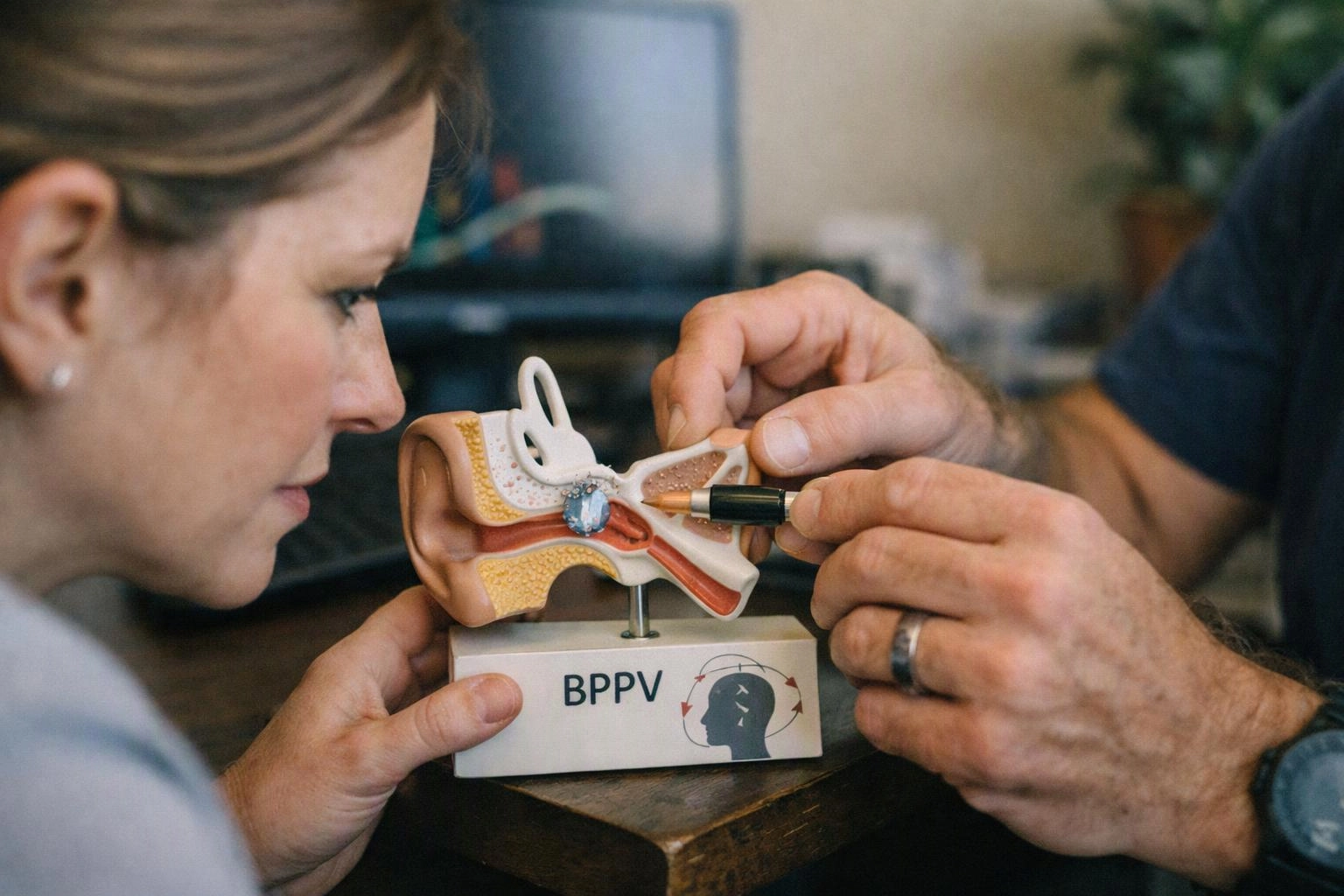
Benign Paroxysmal Positional Vertigo starts when tiny calcium crystals shift from their usual place in the inner ear. The crystals can enter a fluid-filled balance canal. Head movement then makes the fluid move in a way that sends the brain a false motion signal.
Related glossary terms: Vestibular Rehabilitation, Neurological Exam, Proprioception.
The result is a short spinning feeling during a position change. A clinician may observe eye movements during a head-position test. These movements can help show which ear and balance canal may be involved.
How Treatment Uses This Information
Canalith repositioning uses a planned series of head and body positions. The goal is to guide the crystals out of the affected canal. Vestibular rehabilitation may also address balance control when unsteadiness continues.
From the Advanced Injury Care Clinic team
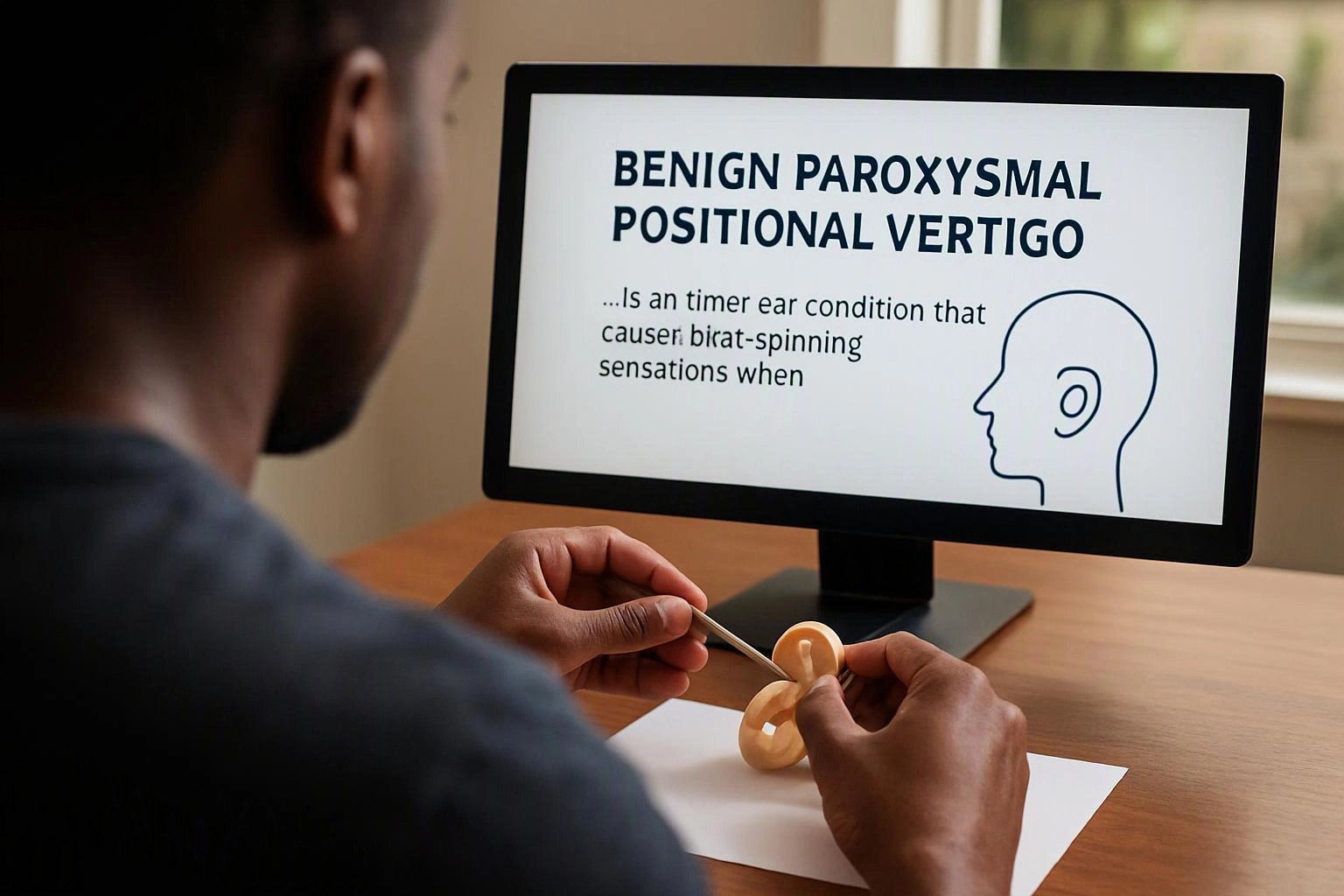
When we assess Benign Paroxysmal Positional Vertigo, we ask which head movements bring on symptoms and observe balance responses. We review the pattern before choosing a repositioning approach. Our team also checks for signs that may point to another cause of dizziness.
Benign Paroxysmal Positional Vertigo in Practice: A Real-World Example
A person may feel the room spin when rolling from one side of the bed to the other. During Vertigo Treatment, the movement pattern helps guide the clinical assessment and care plan.
Related Services
Related Terms
Vestibular Rehabilitation
Vestibular Rehabilitation is a therapy process that helps your brain and body respond to balance signals…
Neurological Exam
A Neurological Exam is a clinical assessment of nerve and brain function. It checks sensation, muscle…
Proprioception
Proprioception is the body's sense of position and movement. It helps you know where your limbs…
Gait Analysis
Gait analysis is the study of how you walk or run. It examines foot placement, stride…
Advanced Injury Care Clinic
Have Questions About Benign Paroxysmal Positional Vertigo?
Contact Advanced Injury Care Clinic for practical guidance on Benign Paroxysmal Positional Vertigo and related chiropractor work in Brentwood.