
What Is Proprioception?
Proprioception is the body's ability to sense joint position, movement, and force without relying on sight. Receptors in muscles, tendons, joints, and skin send information to the brain, which helps coordinate balance, posture, and controlled movement. This internal feedback supports walking, reaching, and rehabilitation exercises after injury.
Quick Facts About Proprioception
Category
Sensory and movement function
Used for
Balance, coordination, and controlled exercise
Common confusion
Not the same as muscle strength
Also called
Body position awareness
Often discussed with
Chiropractic Rehabilitation, Corrective Exercise Therapy
Key Takeaways About Proprioception
- It works through internal sensory feedback, not vision alone.
- Rehabilitation exercises can challenge position and movement control.
- Proprioception is different from flexibility or muscle strength.
How Proprioception Works
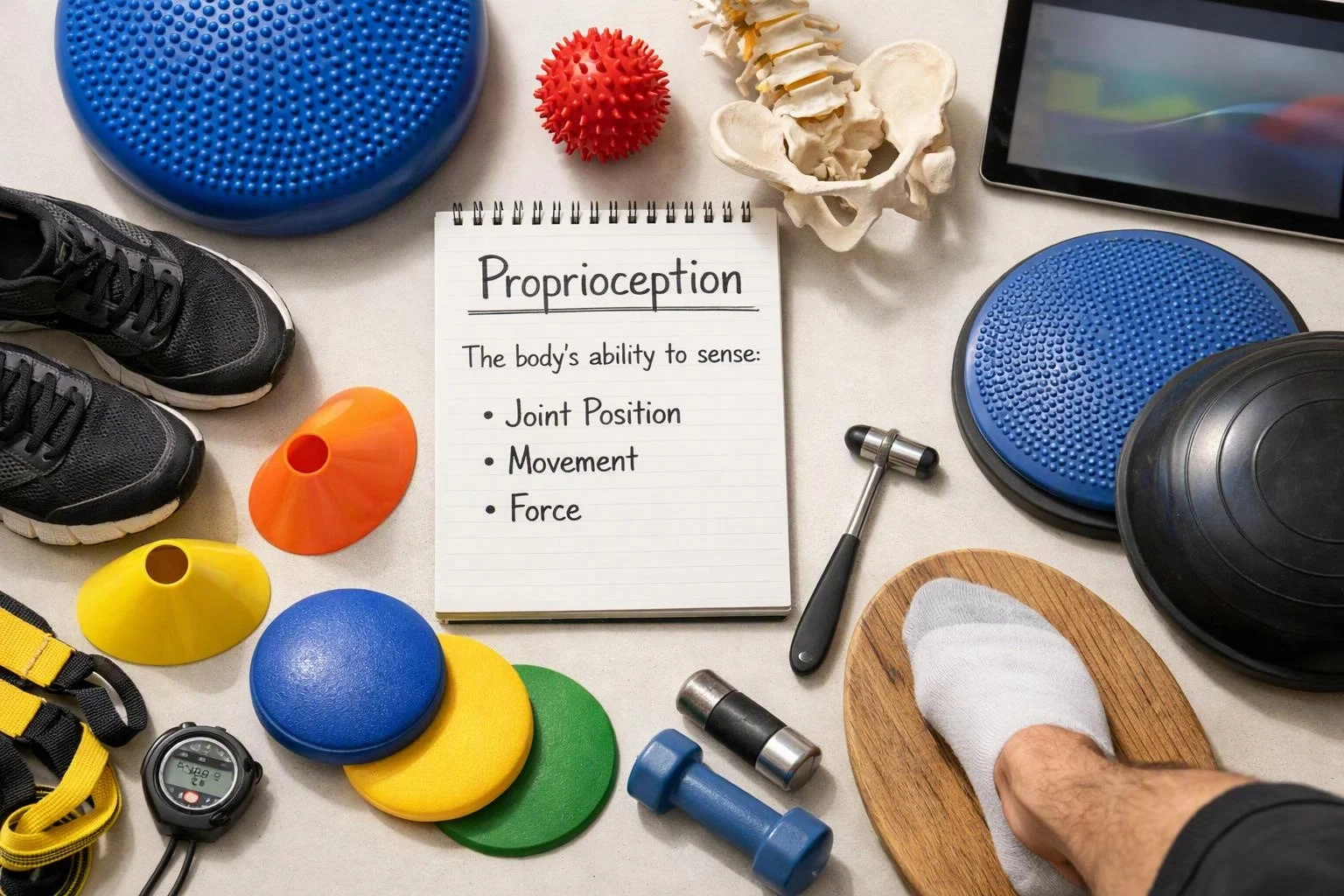
Proprioception begins when sensory receptors detect changes in muscle length, tendon tension, joint position, or pressure on the skin. Nerves carry those signals to the brain and spinal cord, where the information helps guide movement. Vision can support this process, but proprioceptive feedback also helps you adjust when you are not watching a body part.
Related glossary terms: Biomechanics, Core Stability, Gait Analysis.
Clinicians may observe how a person balances, changes position, controls a limb, or responds to a gentle movement challenge. In Chiropractic Rehabilitation, exercises can add unstable surfaces, altered foot positions, or slow controlled movements to test this sense during functional tasks. The goal is to practice accurate body control while the nervous system receives clear feedback from the moving joints and muscles.
From the Advanced Injury Care Clinic team
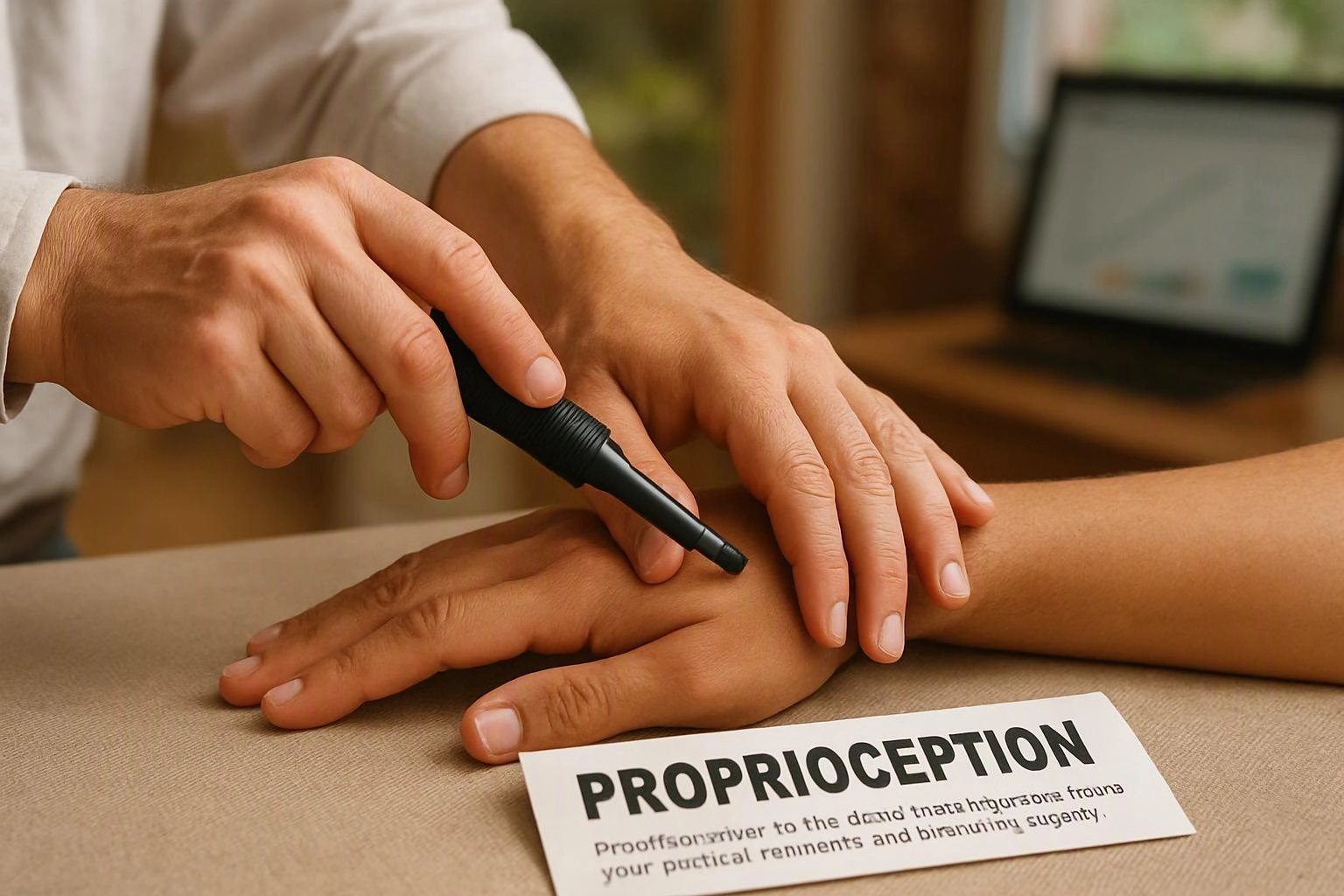
When we plan Chiropractic Rehabilitation, we check how a person controls position and movement during appropriate exercises. Our team may observe balance, limb awareness, and coordination during tasks that relate to the person’s functional goals. We adjust the challenge so movement remains controlled and meaningful.
Proprioception in Practice: A Real-World Example
A person recovering from an ankle injury may stand while shifting weight between both feet. The exercise challenges the ankle and surrounding muscles to sense position and help the body correct balance.
Related Terms
Biomechanics
Biomechanics is the study of how living bodies move and respond to force. It examines the…
Core Stability
Core Stability is the ability to control the trunk and pelvis while the body moves or…
Gait Analysis
Gait Analysis is a structured assessment of how you walk or run. It examines foot placement…
Joint Mobility
Joint Mobility is the available movement at a joint and the ease with which that joint…
Advanced Injury Care Clinic
Have Questions About Proprioception?
Contact Advanced Injury Care Clinic for practical guidance on Proprioception and related chiropractor work in Brentwood.