
What Is Vestibular Rehabilitation?
Vestibular Rehabilitation is a therapy process that helps your brain and body respond to balance signals from the inner ear, eyes, and muscles. It uses guided movements and balance tasks to improve steadiness, visual focus, and comfort during motion. Care plans are adjusted to match the person’s symptoms and functional goals.
Quick Facts About Vestibular Rehabilitation
Category
Balance and movement therapy
Used for
Dizziness, unsteadiness, and motion sensitivity
Common confusion
It is not general fitness training
Also called
Vestibular Therapy, Vestibular rehabilitation therapy
Often discussed with
Vertigo Treatment
Key Takeaways About Vestibular Rehabilitation
- It focuses on balance signals and movement responses.
- Exercises may include eye, head, walking, and balance tasks.
- It isn't the same as general strength training.
How Vestibular Rehabilitation Works
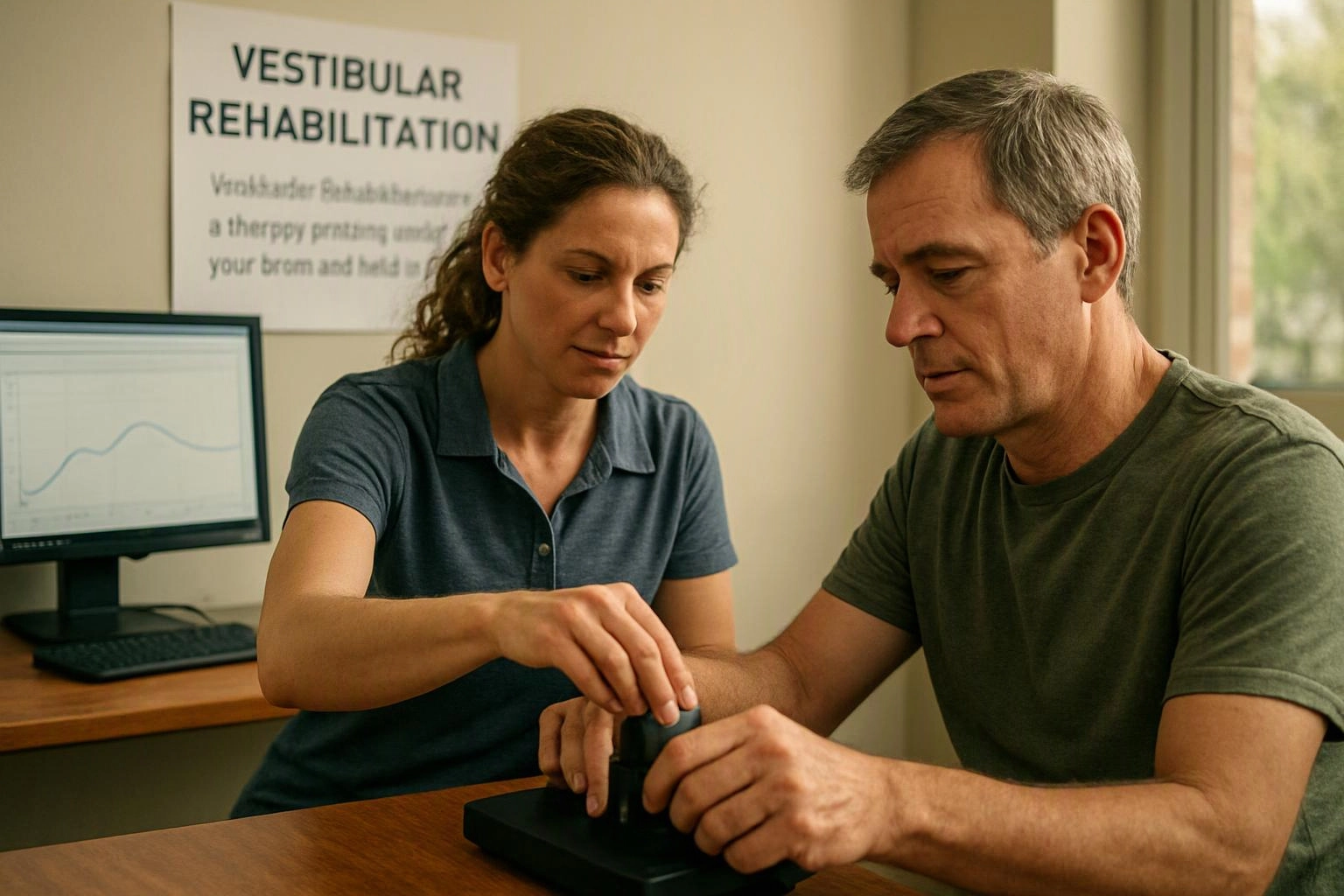
Vestibular Rehabilitation uses planned movements to help the nervous system handle balance signals. These signals come from the inner ear, eyes, joints, and muscles. A person may practice head movements, eye focus, standing, or walking tasks.
Related glossary terms: Benign Paroxysmal Positional Vertigo, Proprioception, Gait Analysis.
The clinician watches how symptoms change during each task. The plan may progress as movement becomes easier or balance improves. Exercises can target gaze stability, motion tolerance, or body awareness. The work may also include a review of walking patterns and daily activities.
Gaze stabilization exercises help a person keep an object clear while the head moves. Balance tasks challenge the body’s response to changes in position. The goal is better control during actions such as turning, looking up, or walking across a busy space.
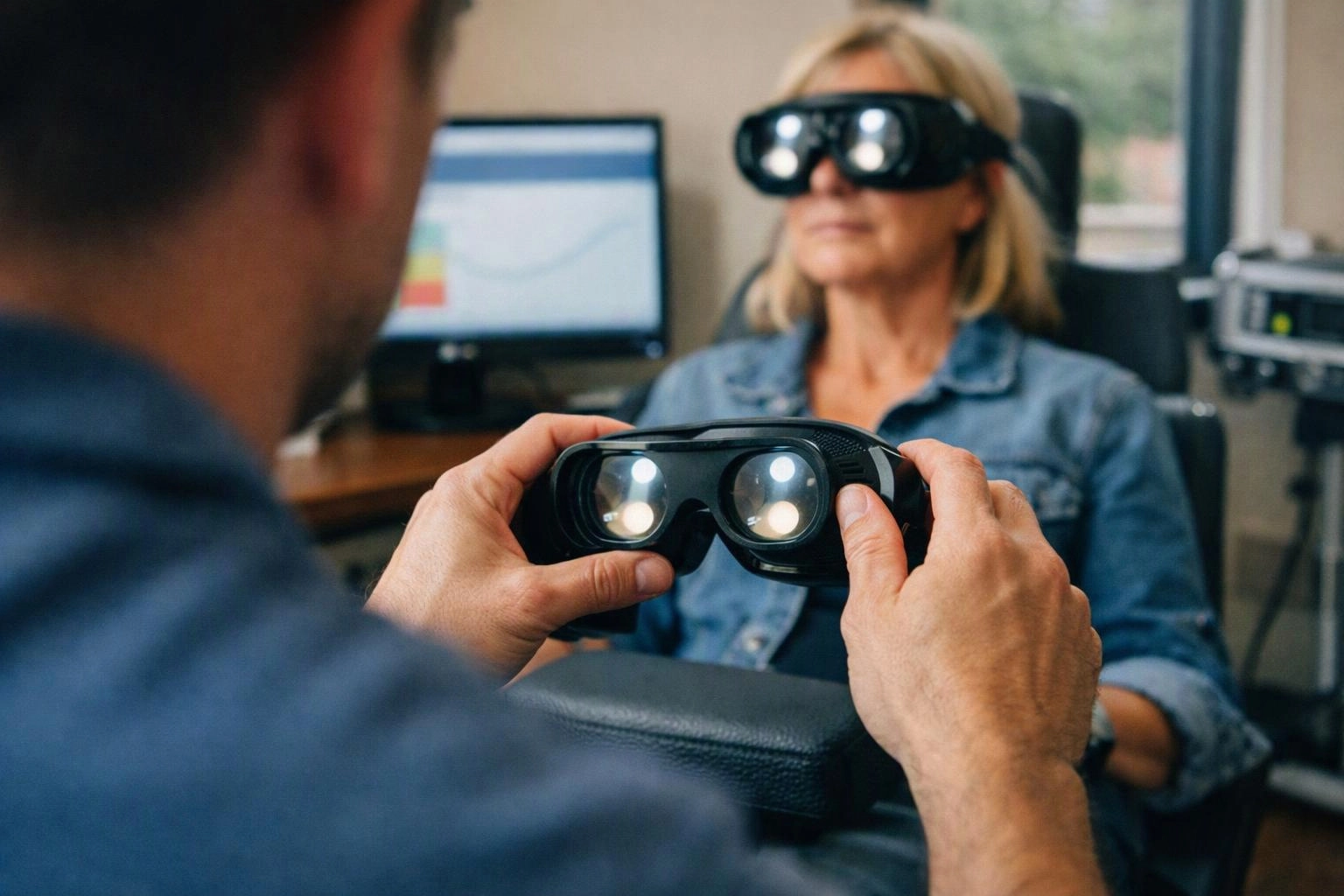
From the Advanced Injury Care Clinic team
When we assess Vestibular Rehabilitation needs, we review balance, eye focus, head movement, and walking responses. We use those findings to guide exercises within Vertigo Treatment. Our team also watches how symptoms affect ordinary tasks, such as turning, standing, or moving through a room.
Vestibular Rehabilitation in Practice: A Real-World Example
A person feels unsteady when turning the head while walking. During Vertigo Treatment, Vestibular Rehabilitation may include eye-focus drills and controlled walking tasks that match that movement.
Related Services
Related Terms
Benign Paroxysmal Positional Vertigo
Benign Paroxysmal Positional Vertigo is an inner-ear condition that causes brief spinning sensations when your head…
Proprioception
Proprioception is the body's sense of position and movement. It helps you know where your limbs…
Gait Analysis
Gait analysis is the study of how you walk or run. It examines foot placement, stride…
Neurological Exam
A Neurological Exam is a clinical assessment of nerve and brain function. It checks sensation, muscle…
Advanced Injury Care Clinic
Have Questions About Vestibular Rehabilitation?
Contact Advanced Injury Care Clinic for practical guidance on Vestibular Rehabilitation and related chiropractor work in Brentwood.