
What Is Disc Degeneration?
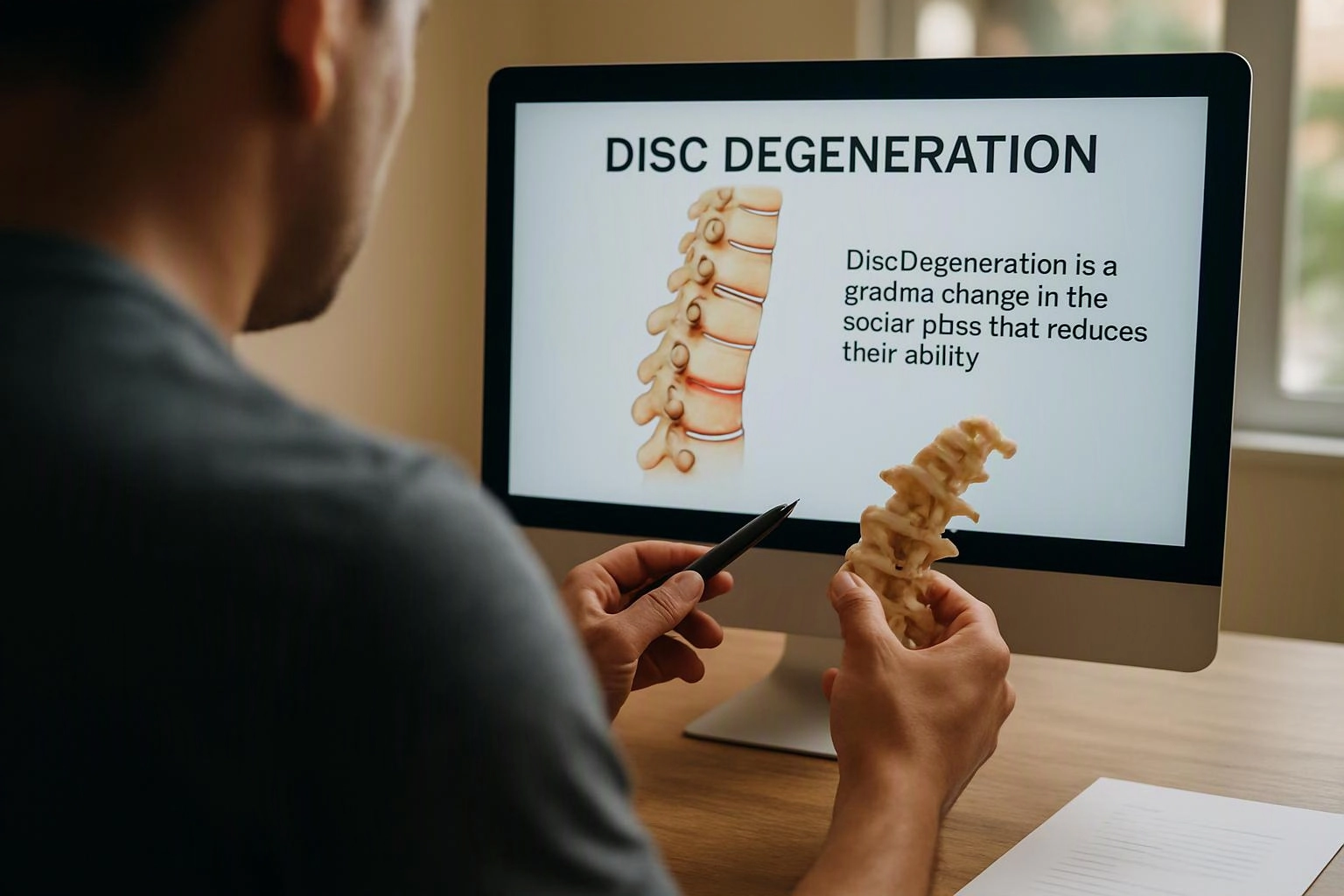
Disc Degeneration is a gradual change in the spinal discs that reduces their ability to cushion and support nearby vertebrae. Discs may lose water and become less flexible. These changes can occur with aging, repeated strain, or injury. Some people have disc degeneration without pain, while others develop back stiffness or discomfort.
Quick Facts About Disc Degeneration
Category
Spinal disc condition
Used for
Understanding back pain and stiffness
Common confusion
Not the same as a disc herniation
Also called
DDD, Degenerative Disc Disease
Often discussed with
Back Pain Treatment, Spinal Decompression Therapy
Key Takeaways About Disc Degeneration
- Disc changes do not always cause pain.
- Symptoms may include stiffness, aching, or reduced movement.
- Disc degeneration is not the same as a disc bulge.
How Disc Degeneration Works
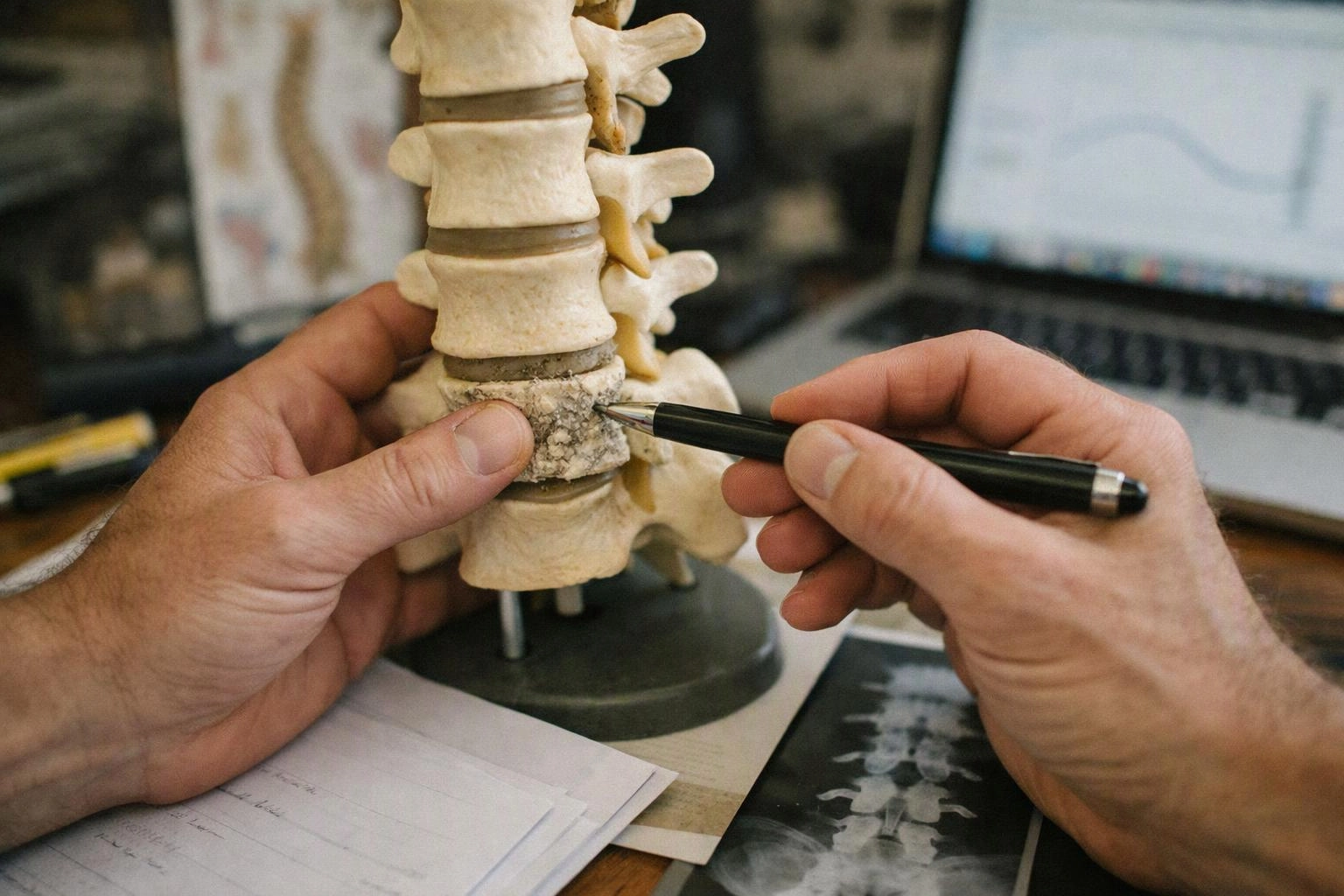
Disc Degeneration develops as the soft discs between the spinal bones change. A disc may lose water, become thinner, or develop small tears. These changes can reduce the disc’s cushioning role and may affect how the spine moves.
Related glossary terms: Disc Bulge, Annular Tear, Facet Joint.
Health professionals consider symptoms, movement, strength, and nerve findings when checking how disc changes relate to back pain. An X-Ray may show changes in disc height or nearby bone. Imaging findings alone do not show how much pain a person feels.
Back Pain Treatment may address movement limits and the strain placed on nearby joints and muscles. A disc change can occur with other conditions, such as a Facet Joint problem, so the full pattern matters.
From the Advanced Injury Care Clinic team
When we assess Disc Degeneration, we review the person’s symptoms, movement, and nerve findings together. We also look for signs that nearby joints or muscles contribute to back pain. Our Back Pain Treatment planning focuses on the person’s functional limits and response to examination.
Disc Degeneration in Practice: A Real-World Example
A person with disc degeneration may feel low back stiffness after sitting for a long time. Movement testing may show limited flexibility, while nearby muscles add to the discomfort.
Related Services
Related Terms
Disc Bulge
A disc bulge is a condition in which the outer part of a spinal disc extends…
Annular Tear
An Annular Tear is a small split in the annulus, the tough outer ring of a…
Facet Joint
A facet joint is a small joint at the back of the spine that connects nearby…
Lumbar Radiculopathy
Lumbar Radiculopathy is a condition in which a nerve root in the lower spine becomes irritated…
Advanced Injury Care Clinic
Have Questions About Disc Degeneration?
Contact Advanced Injury Care Clinic for practical guidance on Disc Degeneration and related chiropractor work in Brentwood.