
What Is Kyphosis?
Kyphosis is an excessive outward curve of the spine that rounds the upper back. The curve may develop from posture, spinal changes, growth-related conditions, or injury. Mild kyphosis may cause few signs, while a more noticeable curve can affect posture, movement, comfort, and how the shoulders and head align.
Quick Facts About Kyphosis
Category
Spinal alignment condition
Used for
Describing an excessive upper-back curve
Common confusion
Often confused with scoliosis
Also called
Roundback
Often discussed with
Scoliosis Treatment
Key Takeaways About Kyphosis
- Kyphosis mainly affects the spine's forward-and-back alignment.
- Posture and spinal structure both help explain its appearance.
- Kyphosis isn't the same as scoliosis, which curves sideways.
How Kyphosis Works
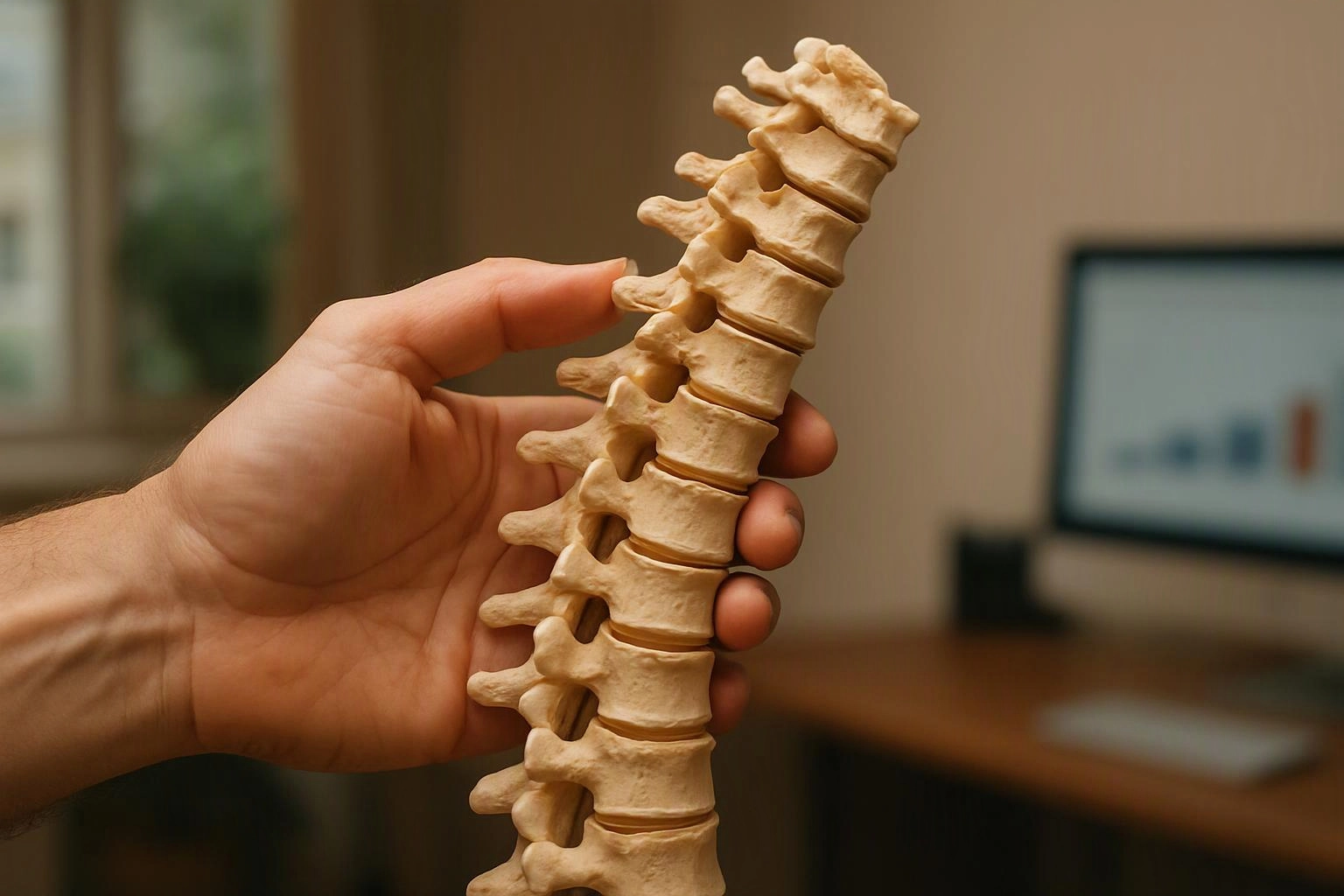
Kyphosis describes how the spine curves from the side. The upper spine normally has a gentle outward curve. Kyphosis becomes more noticeable when that curve increases and gives the upper back a rounded appearance.
Related glossary terms: Postural Assessment, Range of Motion, X-Ray.
A clinical assessment looks at posture, spinal movement, muscle balance, and related symptoms. A Postural Assessment may show whether the curve changes with position or movement. A fixed curve may point to changes in the spine itself. These findings help separate posture-related rounding from structural kyphosis.
Kyphosis may occur alone or alongside another spinal condition. Scoliosis affects side-to-side alignment, while kyphosis affects the forward-and-back curve. Care plans depend on the cause, the person’s movement, and the findings from the assessment.
From the Advanced Injury Care Clinic team
When we assess kyphosis, we observe standing posture and spinal movement together. We also check nearby joints and muscles because changes in the upper back can affect shoulder and neck motion. Our team connects these findings with the goals of Scoliosis Treatment.
Kyphosis in Practice: A Real-World Example
A person with a rounded upper back may show kyphosis during a posture check. The curve may look less pronounced when the person changes position, which helps distinguish a flexible posture pattern from a more fixed spinal curve.
Related Services
Related Terms
Postural Assessment
Postural Assessment is a structured review of how your body aligns and moves during standing, sitting…
Range of Motion
Range of Motion is the available movement at a joint, such as bending, straightening, turning, or…
X-Ray
An X-Ray is an imaging test that uses a controlled beam of radiation to create pictures…
Advanced Injury Care Clinic
Have Questions About Kyphosis?
Contact Advanced Injury Care Clinic for practical guidance on Kyphosis and related chiropractor work in Brentwood.