
What Is a Soft Tissue Injury?
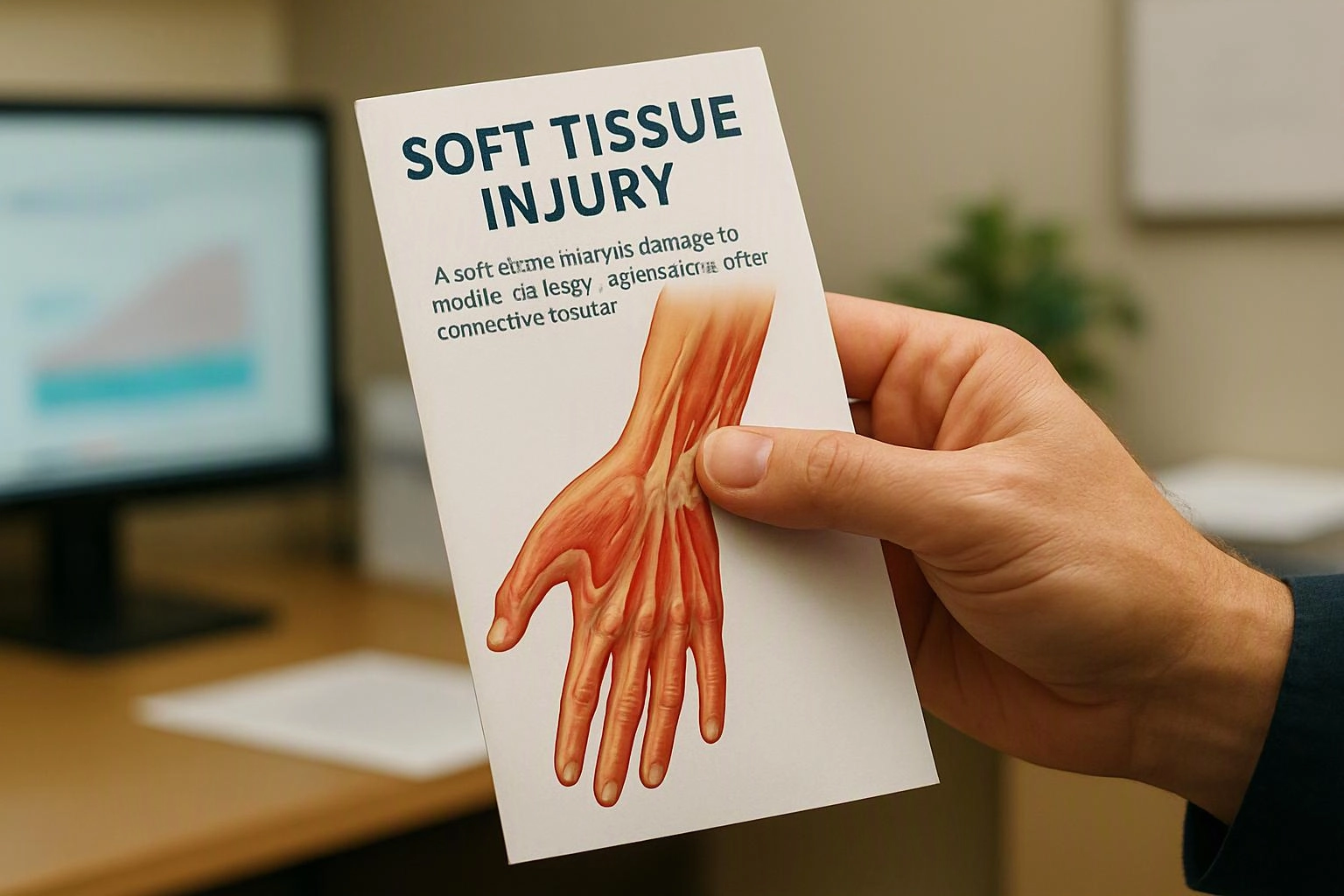
A soft tissue injury is damage to muscles, tendons, ligaments, or other connective tissues caused by force, overuse, or sudden movement. Common examples include sprains, strains, bruising, and irritation after a collision. Symptoms may include pain, swelling, tenderness, stiffness, reduced movement, or discomfort that appears during activity.
Quick Facts About Soft Tissue Injury
Category
Musculoskeletal injury
Used for
Describing damage to connective tissues
Common confusion
A fracture or nerve injury
Also called
Soft tissue damage, Soft-tissue damage
Often discussed with
Auto Accident Injury Treatment, Whiplash Injury Treatment
Key Takeaways About Soft Tissue Injury
- Soft tissue injuries affect structures outside the bones.
- Pain and movement changes can help guide the clinical assessment.
- A soft tissue injury is not the same as a fracture.
How Soft Tissue Injury Works

Soft tissue injury affects tissues that support and connect the body, including muscles, tendons, and ligaments. A sudden impact may stretch, compress, or tear these tissues. Repeated stress can also irritate tissue without a single noticeable event.
Related glossary terms: Sprain, Strain, Muscle Spasm.
Clinicians assess the affected area by reviewing how the injury happened and checking tenderness, swelling, strength, movement, and related symptoms. A sprain involves a ligament, while a strain involves a muscle or tendon. These terms describe specific types of soft tissue injury, so the correct label depends on the tissue involved and the findings from the examination.
From the Advanced Injury Care Clinic team
When we assess a soft tissue injury after an auto accident, we review the collision history and examine movement, tenderness, and changes in function. We also document findings that may help distinguish a muscle or ligament problem from symptoms involving the spine or nerves.
Soft Tissue Injury in Practice: A Real-World Example
A driver develops neck stiffness and shoulder tenderness after a rear-end collision. The examination may identify irritation or strain in the soft tissues, even when the person has no visible wound.
Related Terms
Sprain
A sprain is a soft-tissue injury that affects a ligament, the strong band connecting bones at…
Strain
A strain is an injury to a muscle or tendon caused by overstretching, excessive force, or…
Muscle Spasm
A Muscle Spasm is a sudden, involuntary tightening of muscle fibers that can cause pain, stiffness…
Range of Motion
Range of Motion is the amount a joint can move through its available directions. Clinicians assess…
Advanced Injury Care Clinic
Have Questions About Soft Tissue Injury?
Contact Advanced Injury Care Clinic for practical guidance on Soft Tissue Injury and related chiropractor work in Brentwood.