Signs You Need Chiropractic Care After a Car Accident
Signs you need chiropractic care after a car accident include neck pain, stiffness, headaches, back pain, reduced movement, numbness, or symptoms that worsen after the crash. Advanced Injury Care Clinic evaluates accident-related injuries and explains appropriate care.
Request an Estimate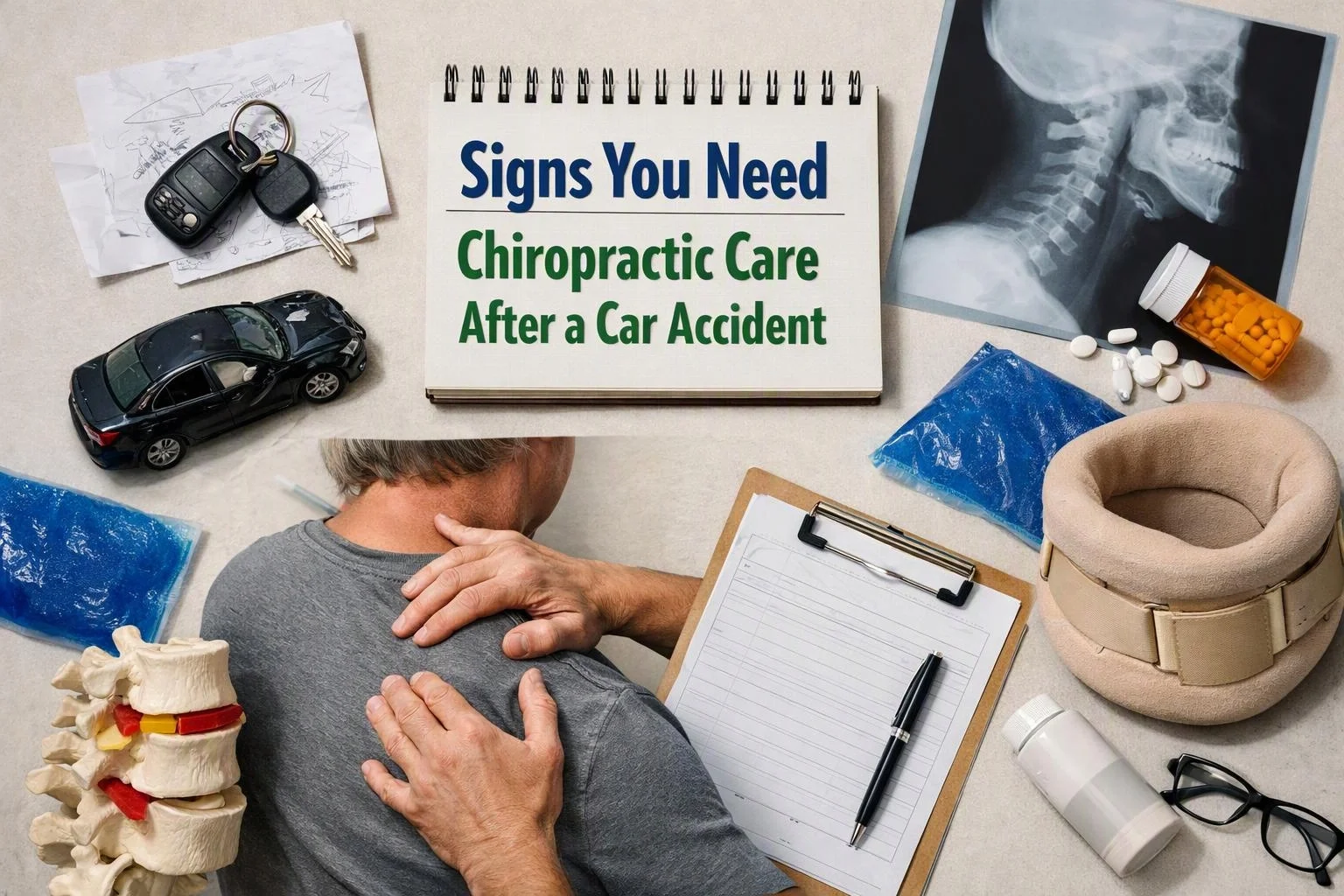
Why Car Accident Symptoms Should Not Be Ignored
Car accident symptoms should be evaluated when pain, stiffness, limited movement, or neurological changes appear after a collision because injury symptoms can develop or worsen after the initial shock. Advanced Injury Care Clinic reviews these concerns through a careful chiropractic evaluation.
A motor vehicle collision can affect muscles, ligaments, joints, and nerves. A soft-tissue injury may not be obvious immediately, and delayed symptoms can appear after the body leaves the stressful crash response.
Whiplash is one possible crash injury. We assess the areas involved, document your symptoms, and explain whether chiropractic care fits your post-accident care needs.
Warning Signs You May Need a Chiropractor After a Car Accident
The warning signs that may indicate a need for chiropractic evaluation include ongoing pain, restricted movement, headaches, muscle symptoms, and changes in sensation or strength. We use these symptoms to guide an injury assessment after a car crash.
Symptoms can overlap, so one sign does not confirm a specific diagnosis. Our team connects your reported symptoms with examination findings and recommends appropriate auto accident injury treatment.
How Whiplash Can Affect Your Neck and Upper Body
Whiplash is a neck injury that occurs when the head moves rapidly during a collision and can cause pain, stiffness, headaches, and restricted movement. The force can strain the cervical spine, neck muscles, ligaments, and nearby joints.
Whiplash may also cause shoulder pain, muscle guarding, and a reduced range of motion. We examine how your neck and upper body move and check for signs that the injury affects normal function.
Our whiplash injury treatment plan depends on your health history, examination findings, and symptoms. We explain each recommended step and adjust care as your condition changes.
When Accident Symptoms Require Prompt Medical Attention
Emergency medical attention is required for car accident symptoms such as confusion, loss of consciousness, progressive weakness, or difficulty walking before chiropractic care is considered. These signs may indicate a serious injury that needs urgent assessment.
A severe headache, repeated vomiting, or loss of sensation also requires prompt medical attention. Call emergency services or go to an emergency department when these symptoms occur.
We can coordinate post-accident care after urgent concerns have been addressed. Tell us about any new or worsening symptoms during your chiropractic evaluation.
What You Can Do Yourself and When to Call Us
You can document symptoms and avoid activities that increase pain, while we assess accident-related injuries and determine whether chiropractic care is appropriate. Simple records can help connect changes in symptoms with movement and daily activities.
The table below separates safe self-care from the work we complete during an auto accident injury treatment evaluation.
| Factor | What you can do yourself | What we do |
|---|---|---|
| Self-care | Avoid activities that increase pain and follow medical instructions you have received. | We review your symptoms and identify movements that may need modification. |
| Symptom tracking | Record when symptoms began, what worsens them, and whether they change. | We compare your report with examination findings during the chiropractic assessment. |
| Medical records | Bring relevant medical records, imaging reports, and collision information. | We document relevant findings and explain the next steps in your treatment plan. |
| Pain with movement | Do not force painful movements or return to demanding activity without guidance. | We assess movement and recommend care based on your injury symptoms. |
What to Expect During an Accident Injury Evaluation
An accident injury evaluation reviews the collision, symptoms, movement, and neurological function so we can explain the findings and outline appropriate care. Our team begins with your health history and collision details.
We complete a physical examination that may include a range-of-motion assessment and neurological screening. These findings help us consider muscle, joint, ligament, and nerve involvement.
We then discuss a treatment plan that matches your condition and goals. When appropriate, the plan may include whiplash injury treatment as part of broader auto accident injury treatment.
How to Take the Next Step After a Car Accident
Advanced Injury Care Clinic helps patients discuss accident-related symptoms, understand available treatment, and arrange an evaluation for chiropractic care. We provide licensed chiropractic care and explain upfront pricing before treatment begins.
Bring your symptom notes and relevant medical records to your appointment. We can discuss Auto Accident Injury Treatment and whether whiplash injury treatment is appropriate for your findings.
Our team offers Free Consultations so you can discuss your concerns and understand the next step. Contact Advanced Injury Care Clinic to arrange your chiropractic evaluation.
Questions About Chiropractic Care After a Car Accident
Can you see a chiropractor if you do not feel pain immediately after a car accident?
Yes, you can request an evaluation even when pain is not immediate after a car accident. Advanced Injury Care Clinic reviews the collision, checks for developing injury symptoms, and explains whether chiropractic care is appropriate.
Should you see a chiropractor after a minor car accident?
Yes, a chiropractic evaluation can be useful after a minor car accident when symptoms appear or when movement changes. We assess your condition and help determine whether post-accident care is needed.
Can a chiropractor diagnose whiplash after a car accident?
Yes, we can evaluate symptoms and examination findings associated with whiplash after a car accident. We explain what the assessment shows and refer you for medical attention when symptoms require another level of care.
What should you bring to a car accident injury evaluation?
Bring your symptom notes, collision details, relevant medical records, and imaging reports to a car accident injury evaluation. These details help us understand your injury symptoms and prepare an appropriate treatment plan.
Can chiropractic care help with stiffness after a collision?
Yes, chiropractic care may help address stiffness after a collision when the findings support treatment. We assess range of motion, surrounding tissues, and related symptoms before recommending care.