
What Is the Cervical Spine?
Cervical Spine is the upper section of the spinal column that supports the head and connects the skull with the upper back. It contains neck vertebrae, discs, joints, muscles, ligaments, and nerves. Together, these structures help the neck move, protect the spinal cord, and coordinate sensation and movement in the head, neck, and arms.
Quick Facts About Cervical Spine
Category
Upper spinal anatomy
Used for
Neck movement and nerve protection
Common confusion
The cervical spine is not the entire neck
Also called
Neck vertebrae, Cervical spinal column
Often discussed with
Neck Pain Relief, Whiplash Injury Treatment
Key Takeaways About Cervical Spine
- The cervical spine has movable joints and shock-absorbing discs.
- Neck movement depends on bones, muscles, joints, and nerve function.
- Neck pain does not always begin in the spinal bones.
How Cervical Spine Works
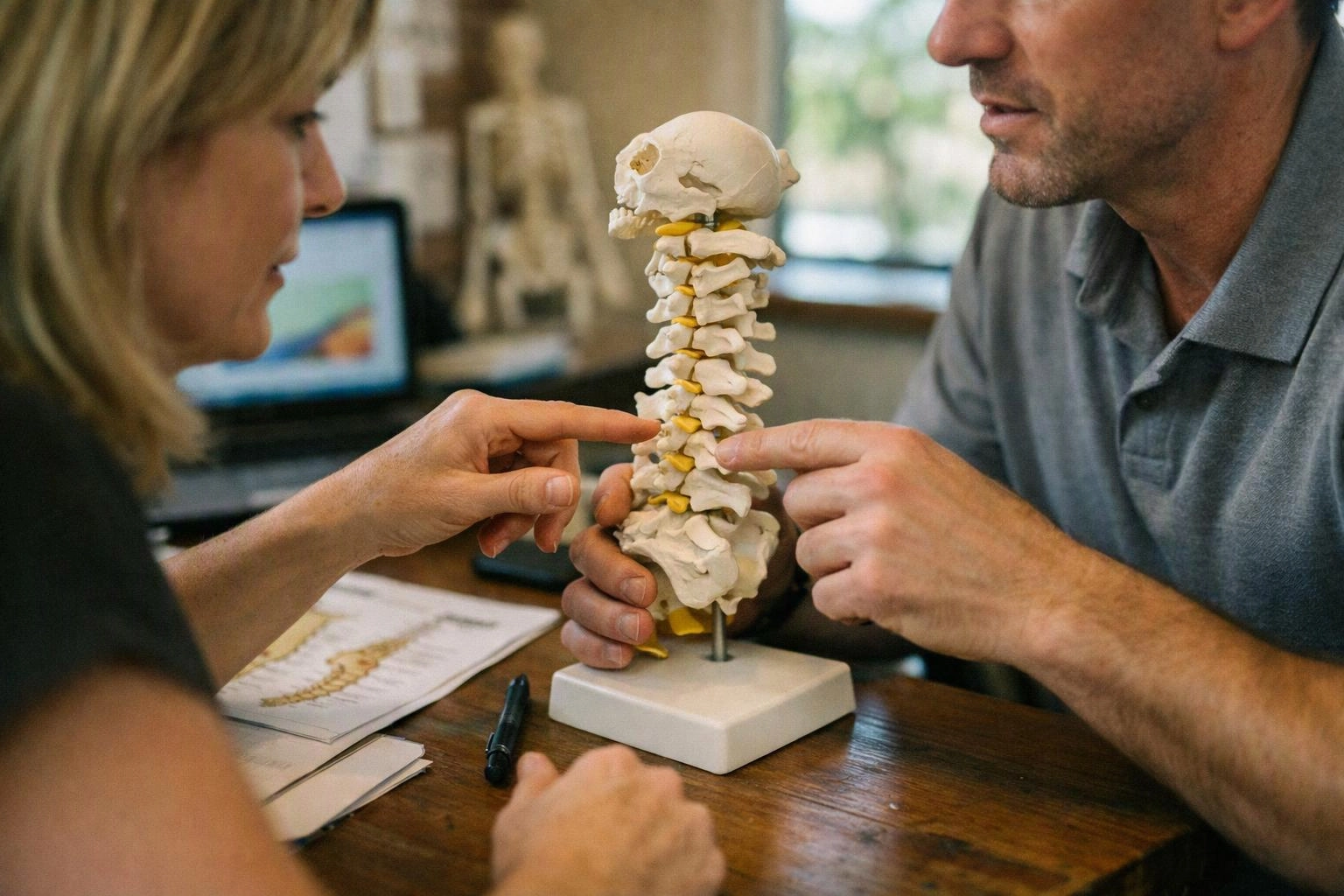
Cervical spine function depends on the coordinated action of vertebrae, discs, facet joints, muscles, ligaments, and nerves. The vertebrae form a supportive column, while the discs help distribute pressure during ordinary movement. Facet joints guide motion such as turning, bending, and looking upward.
Related glossary terms: Cervical Radiculopathy, Facet Joint, Forward Head Posture.
The spinal cord passes through the vertebral canal, and nerve roots leave the spine through openings between neighboring vertebrae. These nerves help carry signals to and from the shoulders, arms, and hands. During a neck pain evaluation, a clinician may assess posture, range of motion, muscle control, reflexes, and sensory changes. Findings from these checks help distinguish local neck problems from symptoms linked to nerve irritation.
From the Advanced Injury Care Clinic team
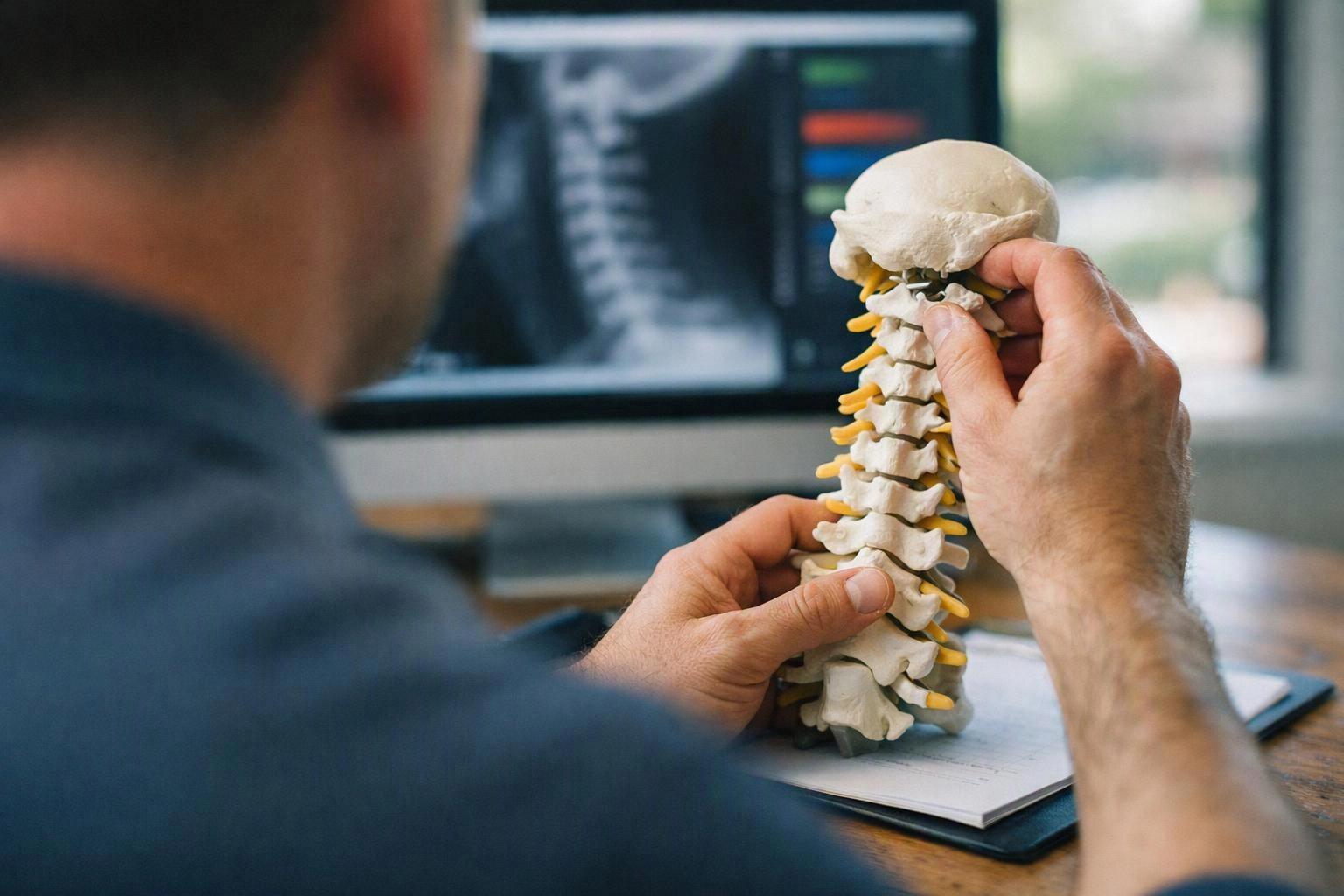
When we assess the cervical spine during Neck Pain Relief care, we review neck motion, posture, muscle control, and reported symptoms together. Our team considers whether discomfort appears local or follows a pattern associated with nerve irritation. These findings guide the care plan and help us monitor changes over time.
Cervical Spine in Practice: A Real-World Example
A person develops neck stiffness after a rear-end collision and notices discomfort when turning the head. During Neck Pain Relief care, the cervical spine is assessed alongside nearby muscles, joints, and nerve-related symptoms to clarify the pattern.
Related Services
Related Terms
Cervical Radiculopathy
Cervical Radiculopathy is a neck-related nerve condition that occurs when a nerve root near the cervical…
Facet Joint
A facet joint is a small paired joint at the back of the spine that connects…
Forward Head Posture
Forward Head Posture is a postural pattern in which the head rests ahead of the shoulders…
Range of Motion
Range of Motion is the amount a joint can move through its available directions. Clinicians assess…
Advanced Injury Care Clinic
Have Questions About Cervical Spine?
Contact Advanced Injury Care Clinic for practical guidance on Cervical Spine and related chiropractor work in Brentwood.