What to Expect From Corrective Exercise Therapy
Corrective exercise therapy is a personalized movement-based plan that begins with an assessment, progresses through guided exercises and includes home practice; Advanced Injury Care Clinic explains how we evaluate movement, adjust exercises and monitor your response.
Request an Estimate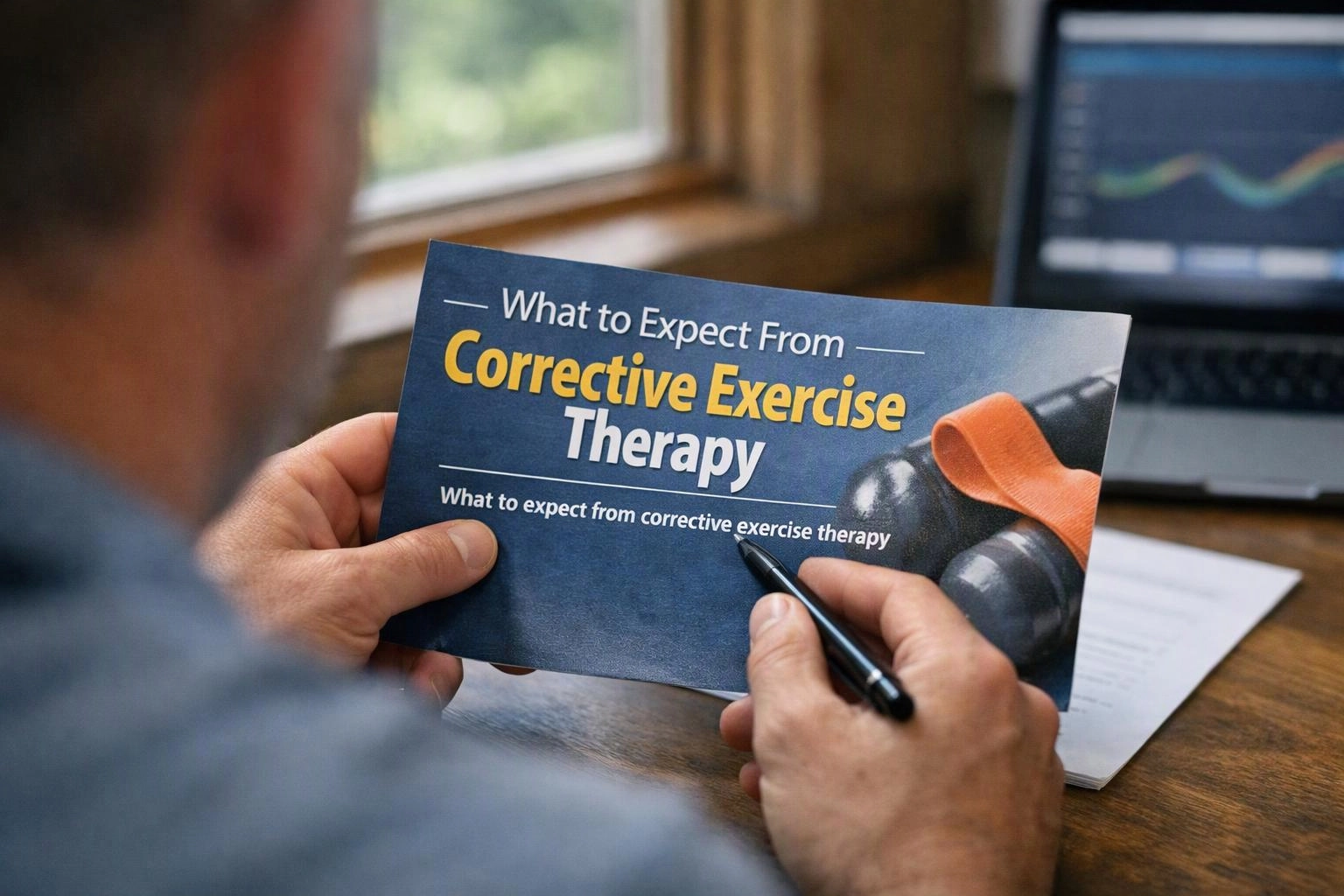
What Is Corrective Exercise Therapy?
Corrective exercise therapy is a guided movement program that uses assessment-based exercises to address movement limitations and support functional goals.
We begin with a movement assessment that considers posture, range of motion, coordination and body mechanics. These findings help us understand how your musculoskeletal function relates to daily activities and your treatment goals.
Our approach may complement chiropractic care by connecting hands-on care with therapeutic exercise and movement retraining. We use the findings from your assessment to choose exercises that fit your current abilities.
What Happens During Your First Corrective Exercise Consultation?
The first corrective exercise consultation establishes your goals, reviews relevant health information and examines how you move before exercises are selected.
The initial consultation is also a chance to ask how the care plan may fit with chiropractic adjustment or other rehabilitation goals. We use your feedback during the visit to make the plan clear and practical.
How We Build and Adjust Your Exercise Plan
Exercise prescription uses exercises matched to your movement findings, and we adjust the plan according to your technique, comfort and response.
Mobility exercises may address restricted movement or flexibility. Stability exercises may support joint control and core stability. Motor control exercises may help you coordinate movement with better body mechanics.
Strengthening exercises are selected when strength or muscle balance is part of the movement concern. We watch your exercise technique and make changes when the form, effort or symptom response shows that a different challenge is more suitable.
Exercise progression is guided by your response rather than by a fixed script. Our team may change the exercise, position, resistance, repetitions or home instructions as your functional movement improves.
How to Prepare for a Corrective Exercise Consultation
Preparing a symptom and activity history helps us connect your goals with the movement concerns examined during the consultation.
You do not need to prepare a perfect exercise history. Clear information about your symptoms and routine gives us a useful starting point for the movement assessment.
What to Practice at Home Between Visits
The home exercise program reinforces the movement patterns addressed in care, while your response helps us decide whether exercises need clarification or adjustment.
Practice each exercise as we demonstrate it, with attention to exercise technique and controlled movement. Stop to review the instructions if the form becomes unclear or the exercise feels different from what we taught you.
Adherence is easier when home practice fits your normal routine. Use activity modification when needed, and note how your symptoms respond during and after exercise.
Bring questions to your next visit. We can review your form, clarify the instructions and adjust the care plan when your home experience shows that a change is needed.
Corrective Exercise Therapy Maintenance Timeline
A corrective exercise timeline connects each phase of care with a practical action. We use progress monitoring throughout the plan so the exercises continue to match your movement needs.
The periods below are general care phases, not promises about how quickly a person will progress. Our team adjusts the plan according to exercise form, comfort and symptom response.
| Time period | What to focus on |
|---|---|
| Immediate phase | Learn the exercise technique, understand the purpose of each movement and report unexpected symptoms. |
| First Week | Practice the home instructions, observe symptom response and use activity modification when advised. |
| First Month | Review movement quality, discuss daily activities and allow us to refine mobility, stability, motor control or strength work. |
| Ongoing | Continue useful exercises, maintain functional movement and attend progress reviews when your goals or symptoms change. |
Warning Signs to Report After an Exercise Session
New or worsening symptoms after corrective exercise should be reported to Advanced Injury Care Clinic so we can review the exercise response and guide the next step.
Some muscle effort or mild temporary awareness can occur during movement practice, but symptoms that concern you should not be ignored. Contact our team when you notice:
How Corrective Exercise Fits With Chiropractic Care
Corrective exercise therapy complements chiropractic care by applying movement strategies that support the functional goals identified during assessment.
Chiropractic care may address spinal movement, joint mobility and soft tissue concerns identified during your evaluation. Exercise rehabilitation adds active practice so you can work on movement control between visits.
We connect these parts of care through a shared plan. The exercises may focus on mobility, stability, strength, flexibility or coordination based on your functional movement findings.
Our team can also explain how exercise practice relates to daily activities and body mechanics. You can learn more about our Corrective Exercise Therapy service when discussing your care options.
When to Ask About Corrective Exercise Therapy
Advanced Injury Care Clinic can discuss corrective exercise therapy when movement limitations or activity-related concerns are part of your chiropractic care goals.
A consultation may be useful when recurring discomfort affects exercise, work, household tasks or other daily activities. It may also help when you want a clearer plan for mobility, strength, coordination or functional movement.
We review your concerns, complete a movement assessment and explain which exercise strategies may fit your care plan. Contact us to discuss your goals and ask about .
Questions About Corrective Exercise Therapy
Can corrective exercise therapy be combined with chiropractic treatment?
Yes, Advanced Injury Care Clinic can combine corrective exercise therapy with chiropractic treatment when the plan supports your assessment findings and functional goals.
What should I wear to a corrective exercise consultation?
Wear comfortable clothing that allows you to move freely and allows our team to observe posture, range of motion and exercise form.
Should I stop an exercise if it causes pain?
Yes, stop the exercise and contact our team when it causes sharp pain, worsening symptoms, swelling, numbness, weakness or loss of movement.
How do I know whether my home exercises need to be adjusted?
Your home exercises may need adjustment when the technique is unclear, symptoms change, the movements no longer match your goals or the exercises are difficult to complete as instructed.
Advanced Injury Care Clinic can review your movement concerns, explain the exercise process and help connect home practice with your chiropractic care goals.
Contact us to discuss corrective exercise therapy and ask about Free Consultations.
Related Resources
Corrective Exercise and Chiropractic Rehabilitation: What Comes After Treatment?
Why It MattersBenefits of Corrective Exercise Therapy for Posture, Strength, and Lasting Pain Relief
When You Need ItWhen Back Pain Needs a Chiropractic Evaluation: Warning Signs
When You Need ItSigns Poor Posture Is Causing Neck Pain and Needs Correction