
Skip to content

Corrective Exercise Therapy in Mount Juliet, Tennessee

Resistance bands are checked during movement work in Mount Juliet. We use them to guide form, build control, and support your recovery.

Upfront, Transparent PricingServing 18 CommunitiesMon-Fri: 9 am–7 pm, Sat: 9 am–2 pm, Sun: ClosedFast Scheduling

Quick Summary: Corrective Exercise Therapy in Mount Juliet, Tennessee

Corrective Exercise Therapy in Mount Juliet is provided by Advanced Injury Care Clinic for movement limits, pain, and injury-related weakness. The service includes exercise instruction, form correction, and personalized chiropractic care for patients in Brentwood, Williamson County, Mount Juliet, and nearby Nashville-area communities.

  • What we do: Advanced Injury Care Clinic provides Corrective Exercise Therapy in Mount Juliet, Tennessee through guided exercise instruction, movement coaching, and form correction.
  • What is included: Movement assessment, corrective exercises, soft-tissue techniques, therapeutic modalities, and progress re-examination.
  • What you get: The patient leaves with a clearer exercise plan that supports comfort, mobility, and safer daily movement.

Why does my movement still feel weak after an injury?

Weak movement can continue when pain, stiffness, or poor form changes how the body moves. Corrective exercise therapy checks those patterns and builds control through guided practice.

Corrective Exercise Therapy for Movement Goals in Mount Juliet

Corrective exercise therapy is for patients who need more than short-term symptom relief. It focuses on how the body moves during daily tasks, work, sport, or recovery after an accident.

The key decision is whether guided exercise fits your current condition. Our team reviews your health history, symptoms, and movement before choosing exercises. Some patients also receive spinal adjustments, soft tissue therapy, or therapeutic modalities as part of an individualized plan.

This page focuses on what happens during guided exercise work, especially instruction, form checks, and progress tracking. The service isn't a substitute for urgent medical care when symptoms suggest a serious injury.

  • Bring a clear description of the movement that causes discomfort.
  • Share prior injuries, accident details, and current activity limits.
  • Expect exercise selection to follow the findings from your evaluation.
  • Ask how each exercise fits your daily movement goals.
A folded teal towel and black straps rest on a padded exam table in a quiet room

Service Overview

Corrective Exercise Therapy is a guided treatment service that uses focused exercises to improve movement, strength, and control.

  • Chiropractic adjustments address joint movement, while corrective exercises help you practice better movement between visits.
  • Advanced Injury Care Clinic provides this care for Mount Juliet patients and surrounding Nashville-area communities.

What Corrective Exercise Therapy Includes for Your Movement Goals

Advanced Injury Care Clinic provides comprehensive Corrective Exercise Therapy in Mount Juliet. Here's what you get:

  • We review your symptoms, health history, and movement concerns before exercise instruction begins.
  • We teach corrective exercises that match your present movement control and comfort.
  • We watch your form so you understand how each movement should feel.
  • We use movement coaching to connect exercises with daily activities.
  • We review progress during follow-up care and adjust the exercise plan when needed.

How We Approach Corrective Exercise Therapy

Movement checks guide exercise choice

Your movement findings guide the exercises we teach. The plan isn't fixed if your form, comfort, or control changes.

Form correction happens during practice

We watch how you perform each movement and explain the adjustment in plain language. This helps you understand the exercise, not just copy it.

Chiropractic care can support the plan

Spinal adjustments, soft-tissue techniques, and therapeutic modalities may be used when they fit your assessment. Corrective exercise therapy is the wrong fit when urgent medical evaluation is needed first.

Process

How We Deliver Guided Exercise Care

1

Review symptoms and movement goals

We discuss your health history, pain pattern, injury details, and daily movement concerns before selecting exercises.

2

Check movement and exercise form

Our team observes the way you bend, reach, balance, or perform a guided movement. We note limits that affect exercise choice.

3

Teach controlled exercise technique

We demonstrate each exercise and explain the body position, pace, and movement goal in clear terms.

4

Coach movement during practice

You practice while we watch your form and offer changes that help you control the movement.

5

Track progress and adjust care

Follow-up checks help us review your movement response and update the personalized treatment plan when needed.

What Guided Exercise Can Change for Daily Movement

Focused practice may improve movement control when pain or stiffness affects daily tasks.

Form correction helps you understand which body positions support safer exercise.

A written or explained exercise plan gives you a clear way to practice between visits.

Movement coaching may help connect treatment goals with work, sport, and home activities.

Progress checks help our team decide when an exercise needs to change.

How Exercise Methods Serve Different Movement Goals

These options address different parts of a personalized chiropractic care plan.

Care methodMain focusHow we use it
Corrective exercise therapyMovement control and exercise formWe teach, observe, and adjust guided exercises
Spinal adjustmentsJoint movementWe use adjustments when they fit the evaluation
Soft-tissue techniquesMuscle and soft-tissue tensionWe apply hands-on techniques when they suit the treatment plan

The Advanced Injury Care Clinic Standard

  • Individualized Care
  • Thorough Assessments
  • Clear Communication
  • Comfortable Techniques

Questions About Guided Exercise Care

What should I expect during corrective exercise therapy?

Resistance bands may guide movement checks, but the visit centers on instruction, form correction, and movement coaching. We review your symptoms first, then demonstrate exercises that fit your ability. You practice while our team watches your form and explains changes. Follow-up care can include progress tracking and updates to your personalized treatment plan.

What should be ready before corrective exercise therapy starts?

Your symptom history, injury details, and movement goals should be ready before exercise instruction begins. Bring information about tasks that cause discomfort, such as bending or reaching. Previous treatment details can also help. Our team uses that information with the exam to choose a suitable starting point.

Which condition changes the time needed for exercise coaching?

Your movement control, pain level, injury history, and form affect how much coaching the exercise requires. A complex movement pattern can need more explanation and practice. Our team checks those factors during the visit and adjusts the plan to your response. No fixed duration applies to every patient.

What should I ask before agreeing to corrective exercise therapy?

Ask which movement problem the exercises address and how progress will be checked. You can also ask how the exercises fit your daily activities and what changes should prompt a call. Our team explains the plan, related chiropractic care, and practical self-care steps before treatment begins.

Can corrective exercises help after whiplash or back pain?

Corrective exercises may help restore controlled movement after whiplash or back pain when the assessment supports them. The plan depends on symptoms, function, and movement findings. We may combine exercise instruction with spinal adjustments, soft-tissue techniques, or therapeutic modalities. Individual response differs, so progress guides each change.

Do I need an X-ray before starting these exercises?

An X-ray isn't needed for every exercise plan, and our team decides whether imaging is clinically indicated. The health history and physical exam guide that decision. Tell us about recent accidents, severe symptoms, or prior imaging so we can review the safest next step before exercise coaching.

How does corrective exercise differ from stretching at home?

Corrective exercise uses a movement goal, guided form checks, and progress review instead of relying on stretching alone. Our team watches how you move and changes the exercise when your control or symptoms change. Home practice can support the plan, but the exercise should match the findings from your assessment.
Contact

Discuss Corrective Exercise Therapy in Mount Juliet

Your first deliverable is a consultation focused on your symptoms, movement goals, and exercise needs. Contact Advanced Injury Care Clinic to discuss care in Mount Juliet and surrounding Nashville-area communities.

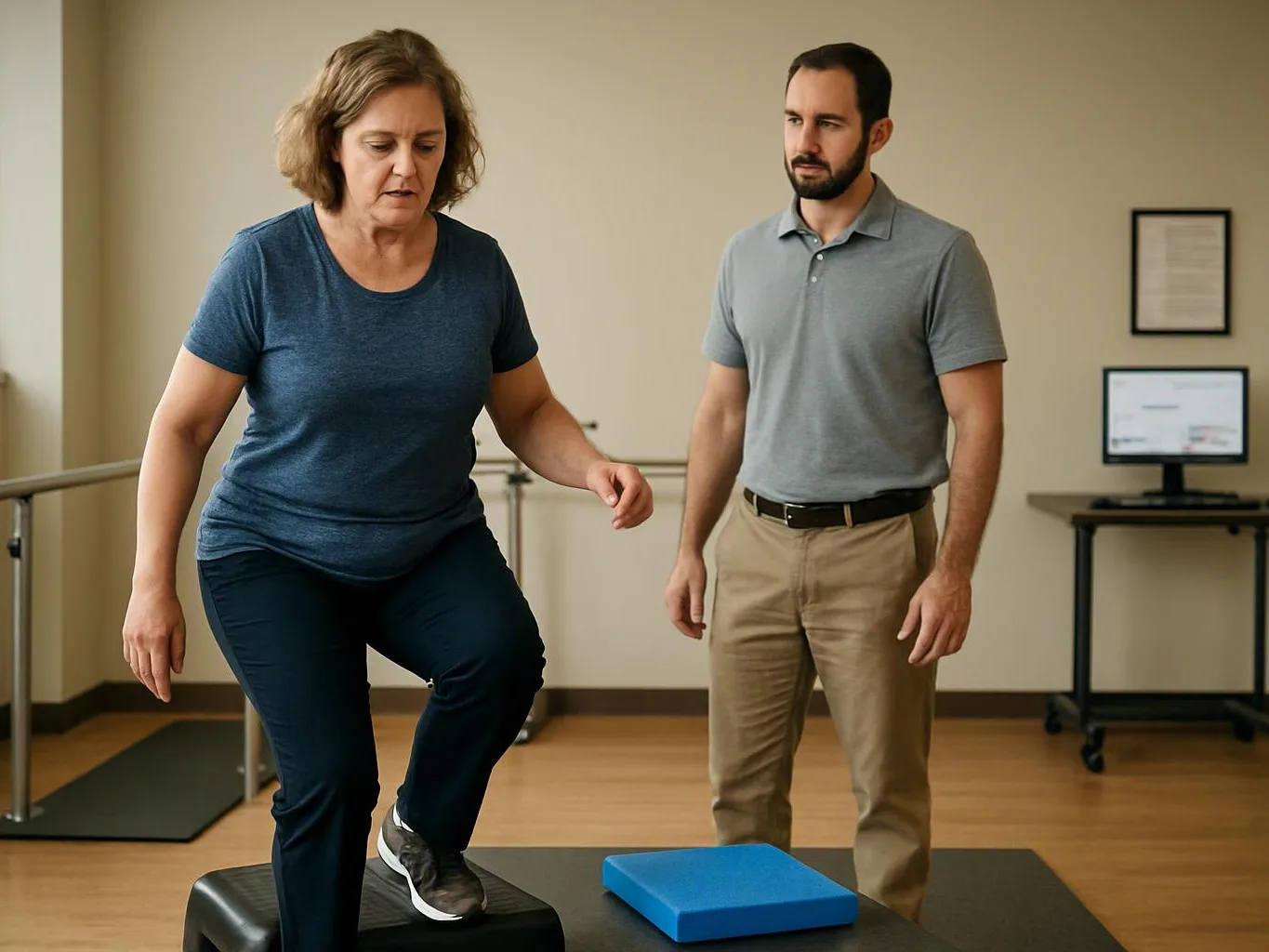
A woman steps onto a black exercise platform while a man watches in a therapy room

ZIP Codes We Serve in Mount Juliet, Tennessee

3712137122

Corrective Exercise Therapy in Other Areas

The health and wellness information on this website is for general informational purposes only and is not medical advice. It does not create a provider-patient relationship. Always consult a qualified licensed provider in Brentwood, Tennessee, United States about your specific condition before making care decisions. Individual results vary.

(615) 265-0412