
What Is Anterior Pelvic Tilt?
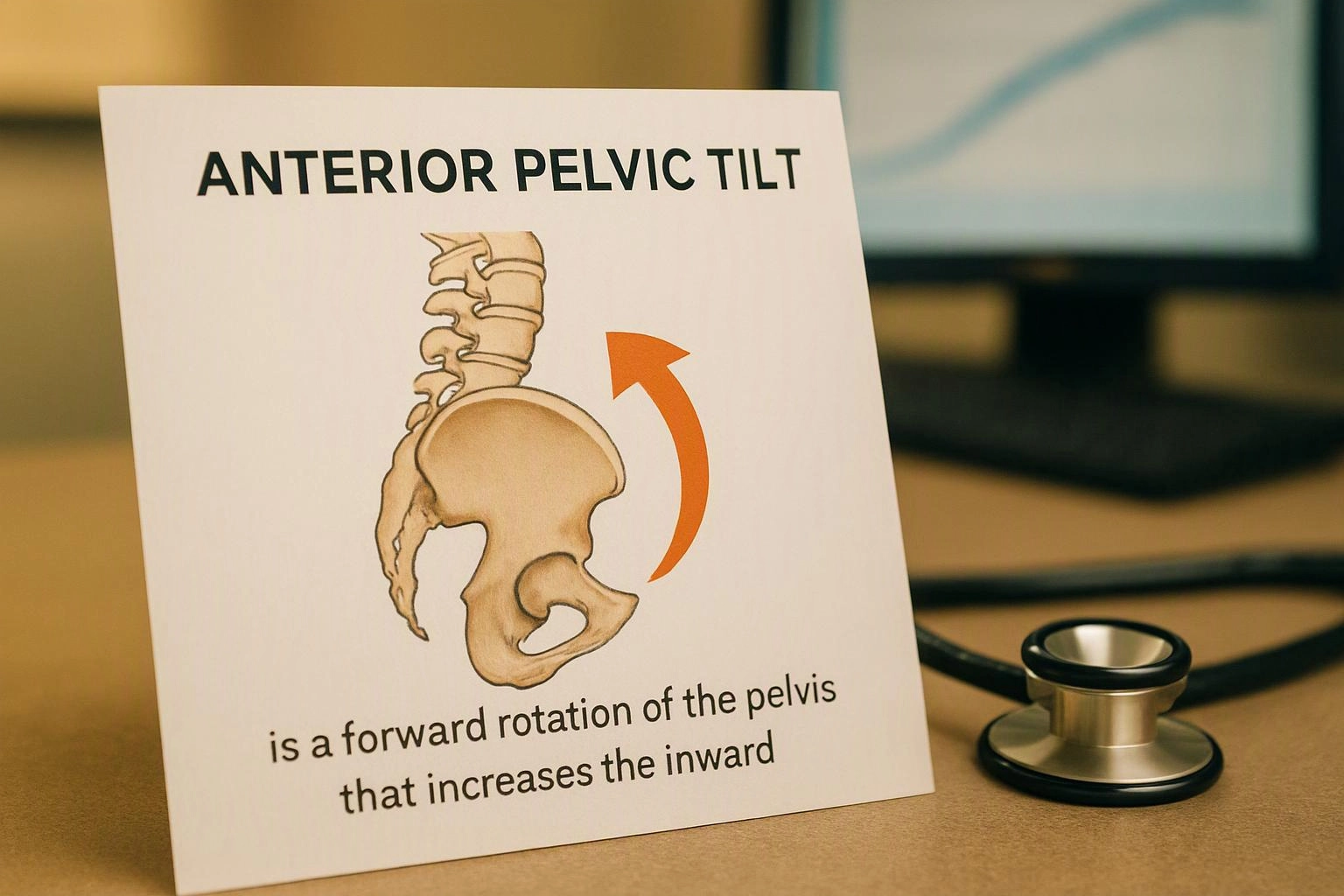
Anterior Pelvic Tilt is a forward rotation of the pelvis that increases the inward curve of the lower back. The front of the pelvis moves downward while the back rises. This position may reflect posture, muscle balance, movement habits, or structural factors, and it can appear during standing, walking, or other activities.
Quick Facts About Anterior Pelvic Tilt
Category
Postural alignment pattern
Used for
Posture assessment and correction planning
Common confusion
Not a diagnosis of back pain
Also called
Forward pelvic tilt, Anterior pelvic rotation
Often discussed with
Postural Correction, Corrective Exercise Therapy
Key Takeaways About Anterior Pelvic Tilt
- The pelvis rotates forward around the hip joints.
- Posture and movement patterns can show different degrees of tilt.
- Anterior pelvic tilt is not the same as low-back pain.
How Anterior Pelvic Tilt Works

Anterior Pelvic Tilt changes the position of the pelvis in relation to the hips and lower spine. As the pelvis rotates forward, the lumbar spine may show a deeper inward curve. The amount of visible tilt can vary with stance, hip position, muscle control, and movement habits.
Related glossary terms: Posture Assessment, Lumbar Spine, Muscle Imbalance.
A posture assessment may compare the position of the pelvis with the rib cage, hips, knees, and feet. A clinician may observe standing posture and simple movements to see whether the position stays fixed or changes with control. Posture Assessment can help identify whether pelvic positioning is part of a broader movement pattern. Core Stability describes the trunk control that may affect how a person maintains pelvic alignment.
From the Advanced Injury Care Clinic team
When we assess Anterior Pelvic Tilt, we observe standing alignment and movement together. Our team considers the pelvis, lumbar spine, hips, and trunk control as connected parts of the posture pattern. We use those findings to shape Postural Correction work around the person’s movement needs.
Anterior Pelvic Tilt in Practice: A Real-World Example
A person who sits for extended periods may stand with the front of the pelvis lower than the back, creating a more pronounced lower-back curve. During Postural Correction, the clinician may examine how that position changes during walking, hip movement, and trunk control.
Related Services
Related Terms
Posture Assessment
Posture Assessment is a structured review of how your body aligns and moves during standing, sitting…
Lumbar Spine
Lumbar Spine is the lower section of the vertebral column, located between the thoracic spine and…
Muscle Imbalance
Muscle imbalance is a difference in strength, flexibility, endurance, or control between muscles that support the…
Core Stability
Core Stability is the ability to control the trunk and pelvis while the body moves or…
Advanced Injury Care Clinic
Have Questions About Anterior Pelvic Tilt?
Contact Advanced Injury Care Clinic for practical guidance on Anterior Pelvic Tilt and related chiropractor work in Brentwood.