
What Is Core Stability?
Core Stability is the ability to control the trunk and pelvis while the body moves or holds a position. It depends on coordinated action from the abdominal, back, hip, and pelvic muscles. Good core stability helps transfer force between the upper and lower body during tasks such as lifting, walking, reaching, and changing direction.
Quick Facts About Core Stability
Category
Movement control
Used for
Trunk and pelvic control
Common confusion
Not the same as abdominal strength
Also called
Core strength, Trunk stability
Often discussed with
Corrective Exercise Therapy, Chiropractic Rehabilitation
Key Takeaways About Core Stability
- Control matters more than maximum muscle strength.
- Breathing and posture influence trunk control.
- Core stability is not the same as visible abdominal definition.
How Core Stability Works
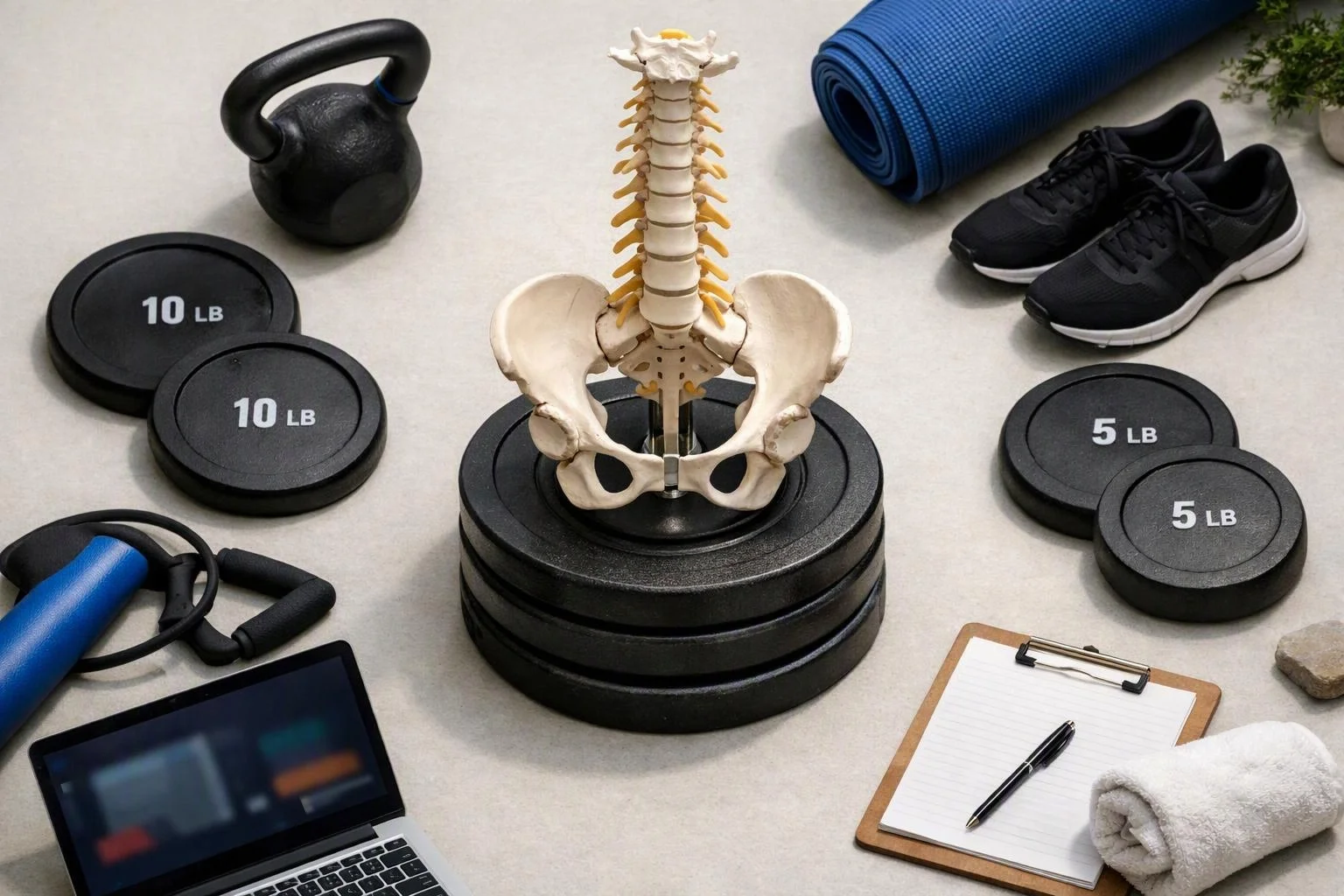
Core Stability works through coordinated muscle activity that keeps the spine and pelvis controlled during movement. The abdominal wall, back muscles, diaphragm, and pelvic muscles adjust their effort as your position changes. This control creates a steady base for the hips, shoulders, and limbs.
Related glossary terms: Biomechanics, Muscle Imbalance, Posture Assessment.
Corrective exercise therapy may assess core stability during a bridge, squat, hinge, or single-leg task. The clinician observes whether the pelvis shifts, the trunk leans, or breathing changes under effort. Exercises then focus on controlled movement, steady breathing, and gradual coordination. Proprioception supports this process by helping the body sense position and movement. Biomechanics describes how those movements distribute force across the body.
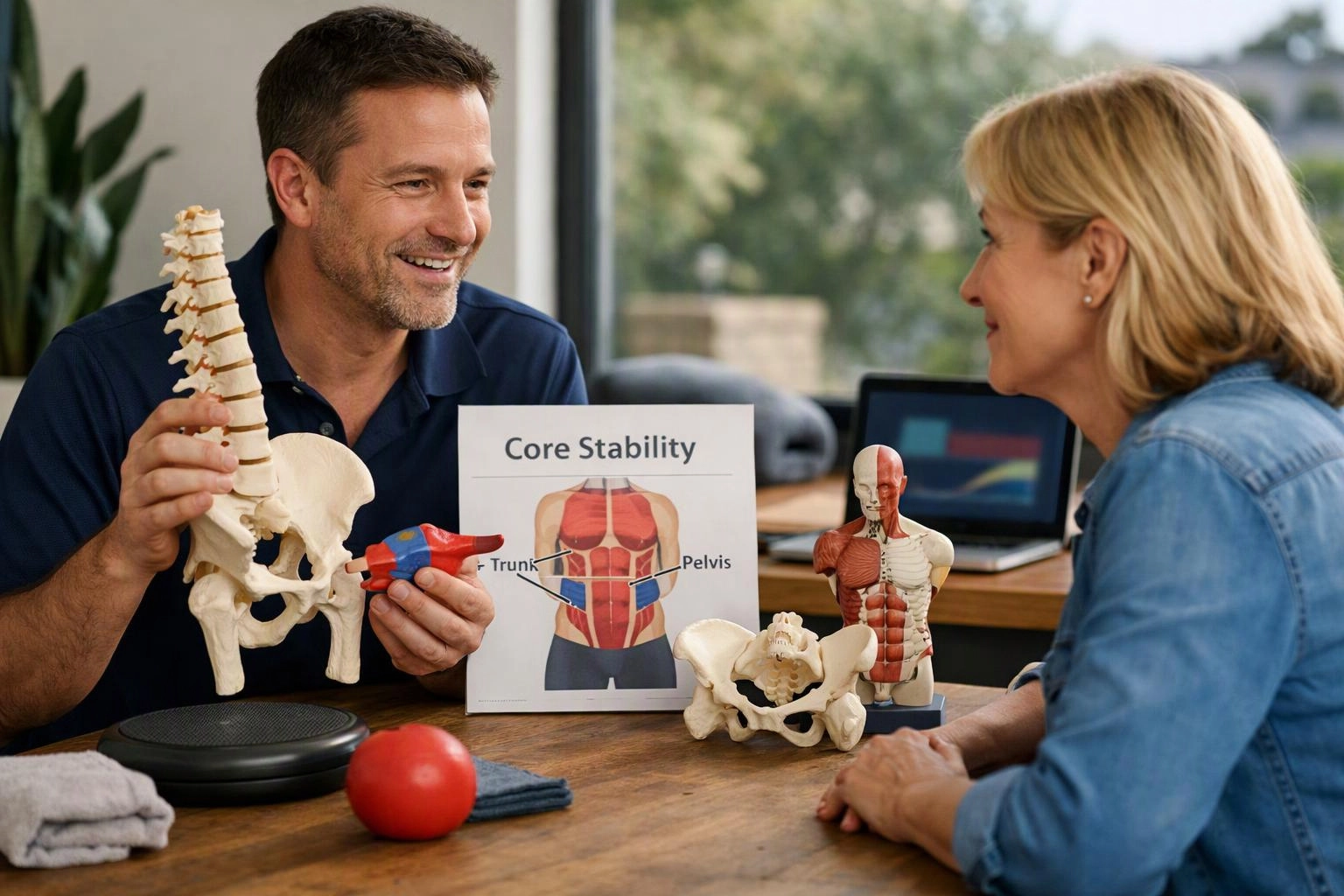
From the Advanced Injury Care Clinic team
When we assess core stability, we watch how the trunk and pelvis respond during controlled movements. Our team considers breathing, posture, balance, and compensations such as excessive arching or shifting. We then connect the findings to corrective exercise therapy, so each movement has a clear purpose.
Core Stability in Practice: A Real-World Example
A person returning to normal activity after back strain may perform a controlled hip hinge during corrective exercise therapy. The clinician watches whether the person keeps the trunk steady while the hips move, then adjusts the exercise to improve control.
Related Terms
Biomechanics
Biomechanics is the study of how living bodies move and respond to force. It examines the…
Muscle Imbalance
Muscle imbalance is a difference in strength, flexibility, endurance, or control between muscles that support the…
Posture Assessment
Posture Assessment is a structured review of how your body aligns and moves during standing, sitting…
Proprioception
Proprioception is the body's ability to sense joint position, movement, and force without relying on sight…
Advanced Injury Care Clinic
Have Questions About Core Stability?
Contact Advanced Injury Care Clinic for practical guidance on Core Stability and related chiropractor work in Brentwood.