
What Is Posture Assessment?
Posture Assessment is a structured review of how your body aligns and moves during standing, sitting, walking, or other activities. A clinician observes head, shoulder, spinal, pelvic, and lower-limb positions, then notes movement patterns that may relate to muscle balance, joint motion, or daily habits. The findings guide postural care.
Quick Facts About Posture Assessment
Category
Clinical movement and alignment review
Used for
Planning postural correction care
Common confusion
Not a standalone diagnosis
Also called
Postural evaluation, Posture Screening
Often discussed with
Postural Correction, Corrective Exercise Therapy
Key Takeaways About Posture Assessment
- It reviews alignment during stillness and movement.
- Observations help connect posture with daily activities.
- It is not the same as a medical diagnosis.
How Posture Assessment Works
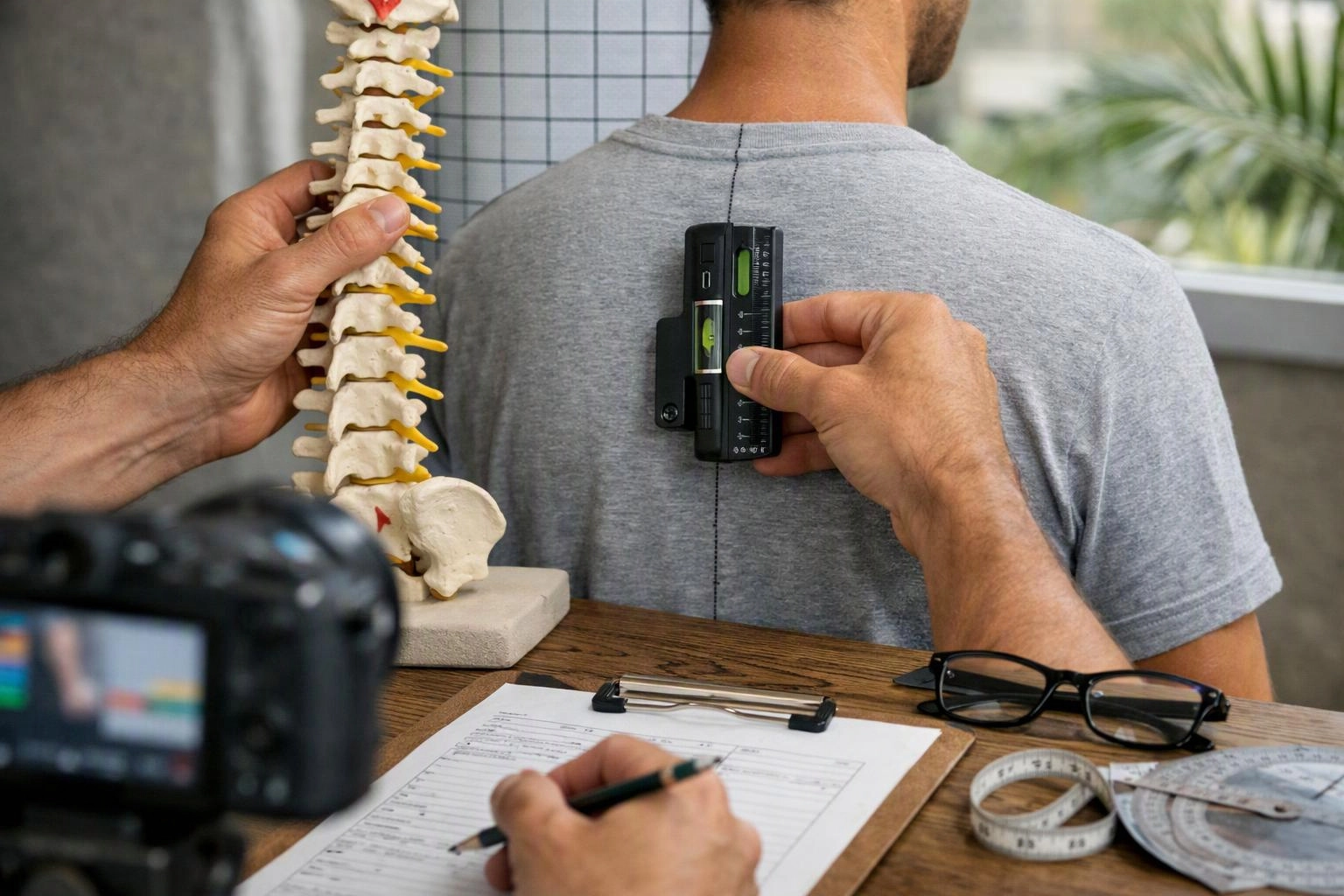
Posture Assessment begins with observation of body alignment during positions and movements that reflect daily life. The clinician may review the head, shoulders, spine, pelvis, knees, and feet from different views. Notes may also cover weight distribution, ease of movement, and visible differences between sides.
Related glossary terms: Forward Head Posture, Muscle Imbalance, Range of Motion.
The assessment connects these observations with your history, work demands, exercise habits, or repeated positions. A standing pattern may look different from a seated pattern, so context helps explain what the findings mean. The results support decisions about Postural Correction, movement instruction, or related care. A posture assessment records patterns for care planning, but it does not replace a diagnostic examination when symptoms require one.
From the Advanced Injury Care Clinic team
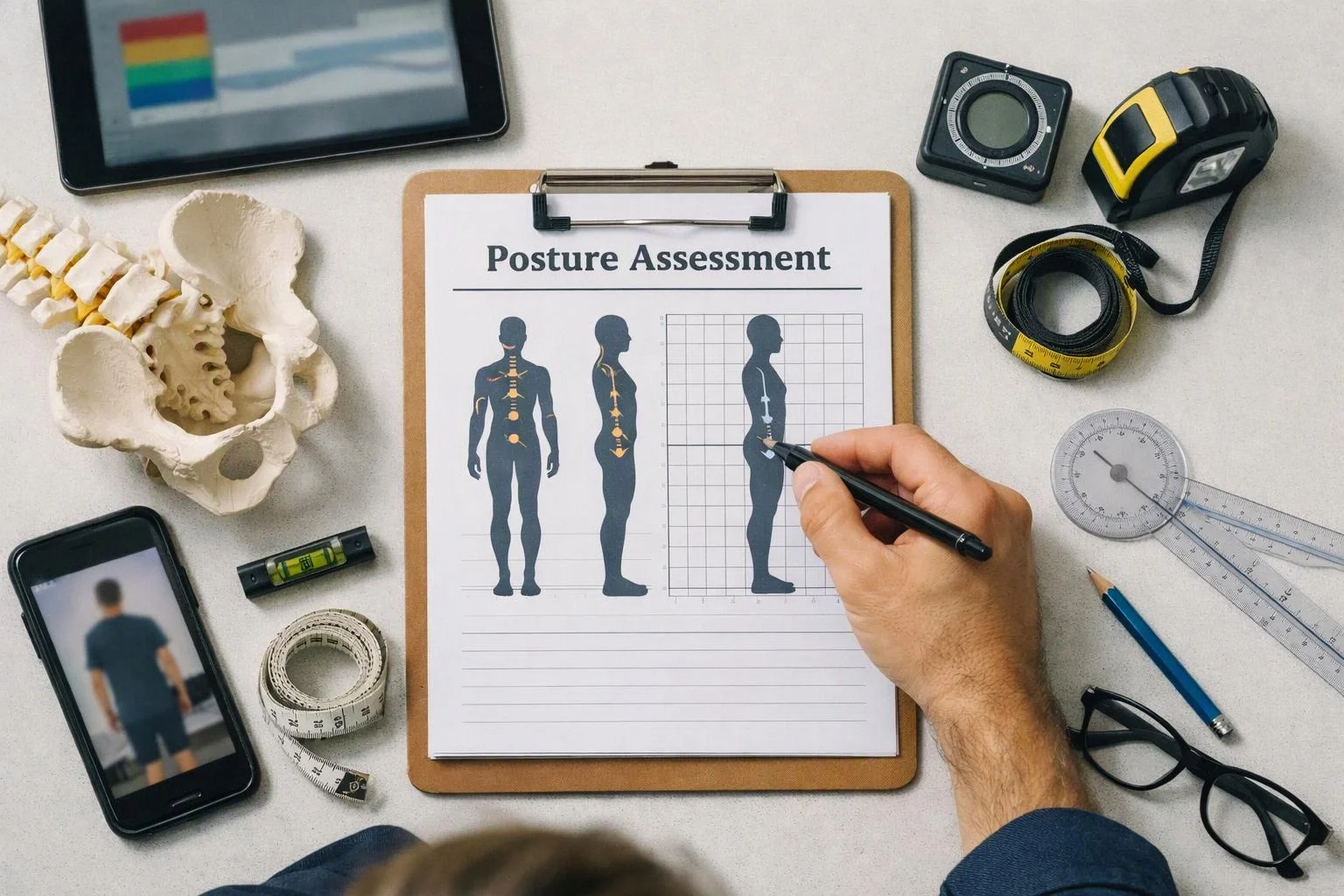
When we perform a Posture Assessment, we observe alignment in positions that reflect the person’s routine. We compare still posture with movement and connect those observations to the goals of our Postural Correction service. Our team uses the findings to shape practical care discussions.
Posture Assessment in Practice: A Real-World Example
A person who spends much of the day at a desk may show a forward head position and uneven shoulder height during a Posture Assessment. The findings can guide postural correction work that addresses sitting habits, movement control, and related muscle balance.
Related Services
Related Terms
Forward Head Posture
Forward Head Posture is a postural pattern in which the head rests ahead of the shoulders…
Muscle Imbalance
Muscle imbalance is a difference in strength, flexibility, endurance, or control between muscles that support the…
Range of Motion
Range of Motion is the amount a joint can move through its available directions. Clinicians assess…
Biomechanics
Biomechanics is the study of how living bodies move and respond to force. It examines the…
Advanced Injury Care Clinic
Have Questions About Posture Assessment?
Contact Advanced Injury Care Clinic for practical guidance on Posture Assessment and related chiropractor work in Brentwood.