
What Is Core Stabilization?
Core Stabilization is a corrective exercise approach that trains the muscles around the abdomen, back, pelvis, and hips to support controlled movement. It focuses on steady trunk control during simple tasks and exercise. The goal is to help you keep your spine and pelvis aligned while your arms or legs move.
Quick Facts About Core Stabilization
Category
Corrective exercise method
Used for
Trunk control during movement
Common confusion
Not simply abdominal strengthening
Also called
Core Stability, Core control
Often discussed with
Corrective Exercise Therapy
Key Takeaways About Core Stabilization
- It trains control around the trunk, pelvis, and hips.
- Exercises focus on steady movement and body position.
- Core stabilization is not the same as building visible abdominal muscles.
How Core Stabilization Works
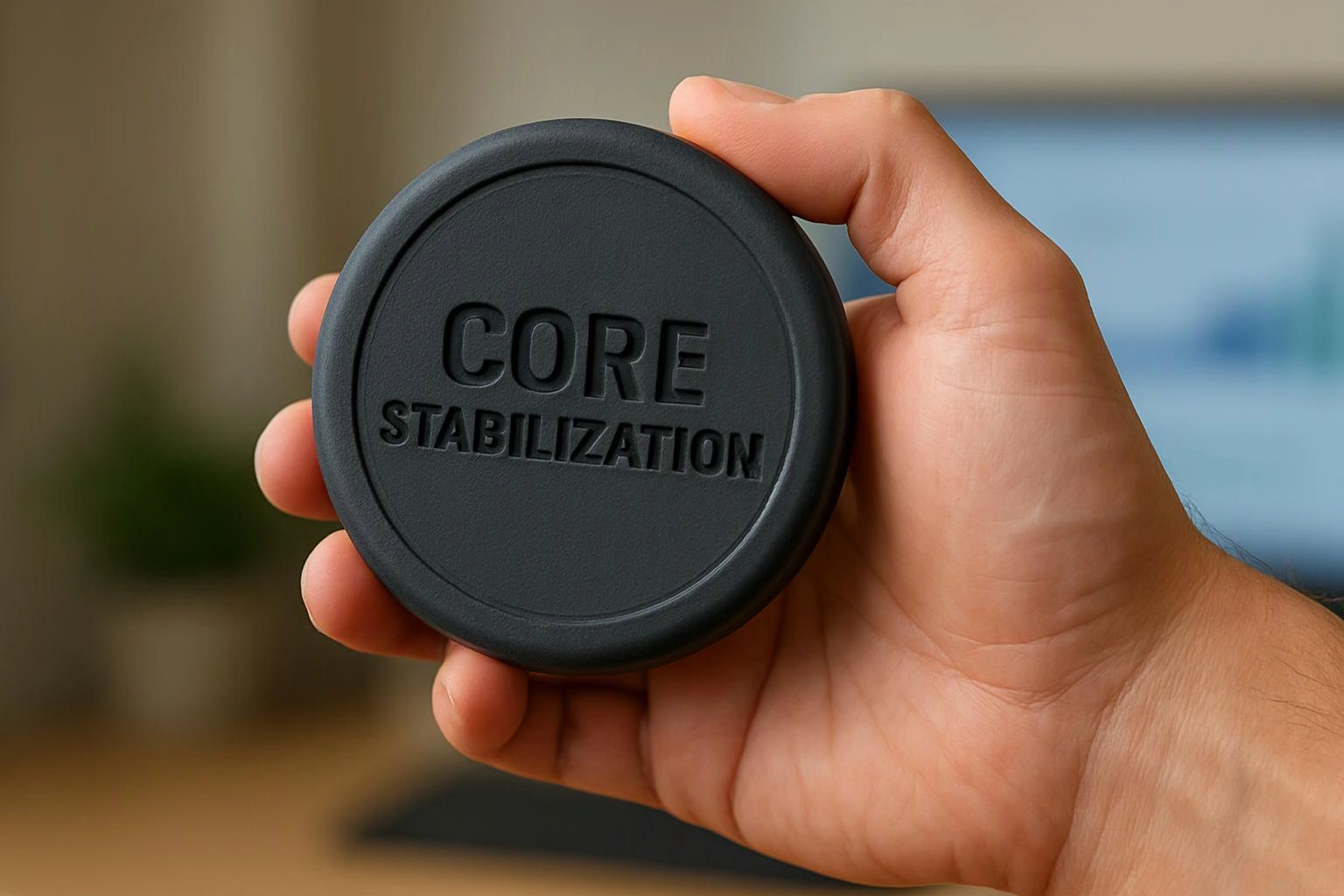
Core Stabilization trains the body to control the trunk while the arms and legs move. Exercises may involve breathing, bracing, balance, or slow changes in position. The focus stays on control and alignment, not speed.
Related glossary terms: Proprioception, Postural Assessment, Anterior Pelvic Tilt.
A provider may watch how the pelvis, spine, and ribs move during an exercise. The exercise can then be adjusted by changing the position, support, or movement range. Proprioception also plays a role because body awareness helps you notice changes in balance and posture.
Corrective Exercise Therapy may use core stabilization during tasks that resemble daily movement. A person might hold the trunk steady while lifting an arm, stepping, or changing position. Good form matters more than adding resistance.
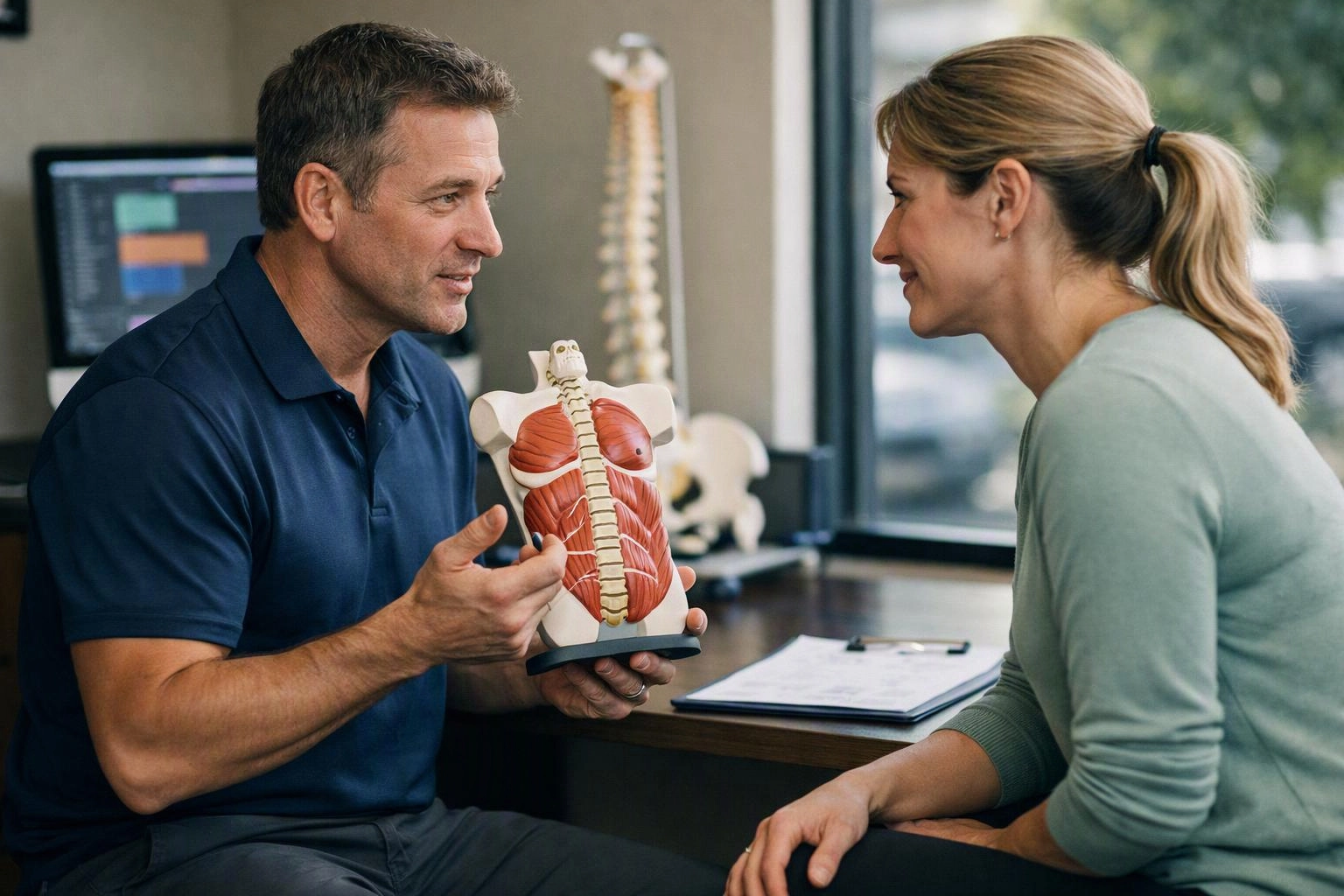
From the Advanced Injury Care Clinic team
When we use Core Stabilization in Corrective Exercise Therapy, we watch how the trunk and pelvis respond to movement. We adjust the position or range when control changes. Our team also looks for smooth breathing and steady movement instead of focusing only on strength.
Core Stabilization in Practice: A Real-World Example
A person may practice keeping the pelvis steady while lifting one foot from the floor. The exercise can progress by adding arm movement after trunk control becomes consistent.
Related Services
Related Terms
Proprioception
Proprioception is the body's sense of position and movement. It helps you know where your limbs…
Postural Assessment
Postural Assessment is a structured review of how your body aligns and moves during standing, sitting…
Anterior Pelvic Tilt
Anterior Pelvic Tilt is a posture pattern in which the front of the pelvis rotates forward…
Range of Motion
Range of Motion is the available movement at a joint, such as bending, straightening, turning, or…
Advanced Injury Care Clinic
Have Questions About Core Stabilization?
Contact Advanced Injury Care Clinic for practical guidance on Core Stabilization and related chiropractor work in Brentwood.