
What Is Biomechanics?
Biomechanics is the study of how living bodies move and respond to force. It examines the interaction of bones, joints, muscles, and external loads during actions such as standing, walking, bending, or lifting. In postural care, biomechanics helps describe how alignment and movement patterns may place stress on specific areas.
Quick Facts About Biomechanics
Category
Movement and body mechanics
Used for
Assessing posture and movement patterns
Common confusion
Not limited to static posture
Also called
Body mechanics
Often discussed with
Postural Correction, Corrective Exercise Therapy
Key Takeaways About Biomechanics
- It examines movement, alignment, and force as connected factors.
- Posture changes how joints and muscles share physical demands.
- Biomechanics is broader than posture alone.
How Biomechanics Works
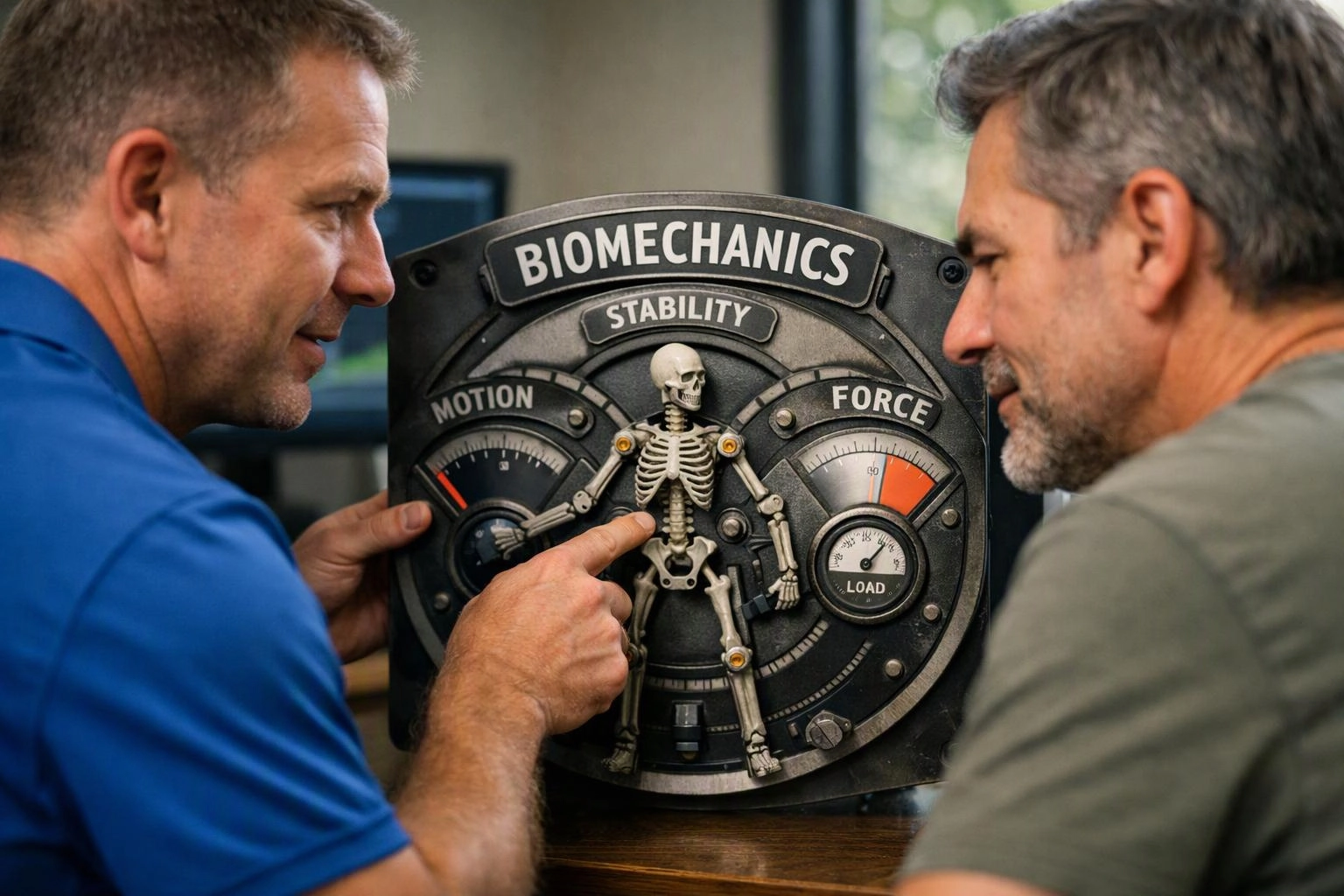
Biomechanics describes how body parts move together and manage force during a task. Assessment may consider alignment, joint motion, muscle activity, balance, and the direction of applied force. These observations show how a movement pattern distributes physical demand across the body.
Related glossary terms: Posture Assessment, Forward Head Posture, Range of Motion.
In postural correction, a practitioner may observe how the head, spine, pelvis, and lower limbs relate during standing or walking. Posture assessment provides information about alignment at rest, while movement observation shows how alignment changes during activity. Range of motion checks can add context by showing whether a joint moves freely or follows a restricted pattern. The findings guide discussion of movement habits and appropriate corrective strategies.
From the Advanced Injury Care Clinic team
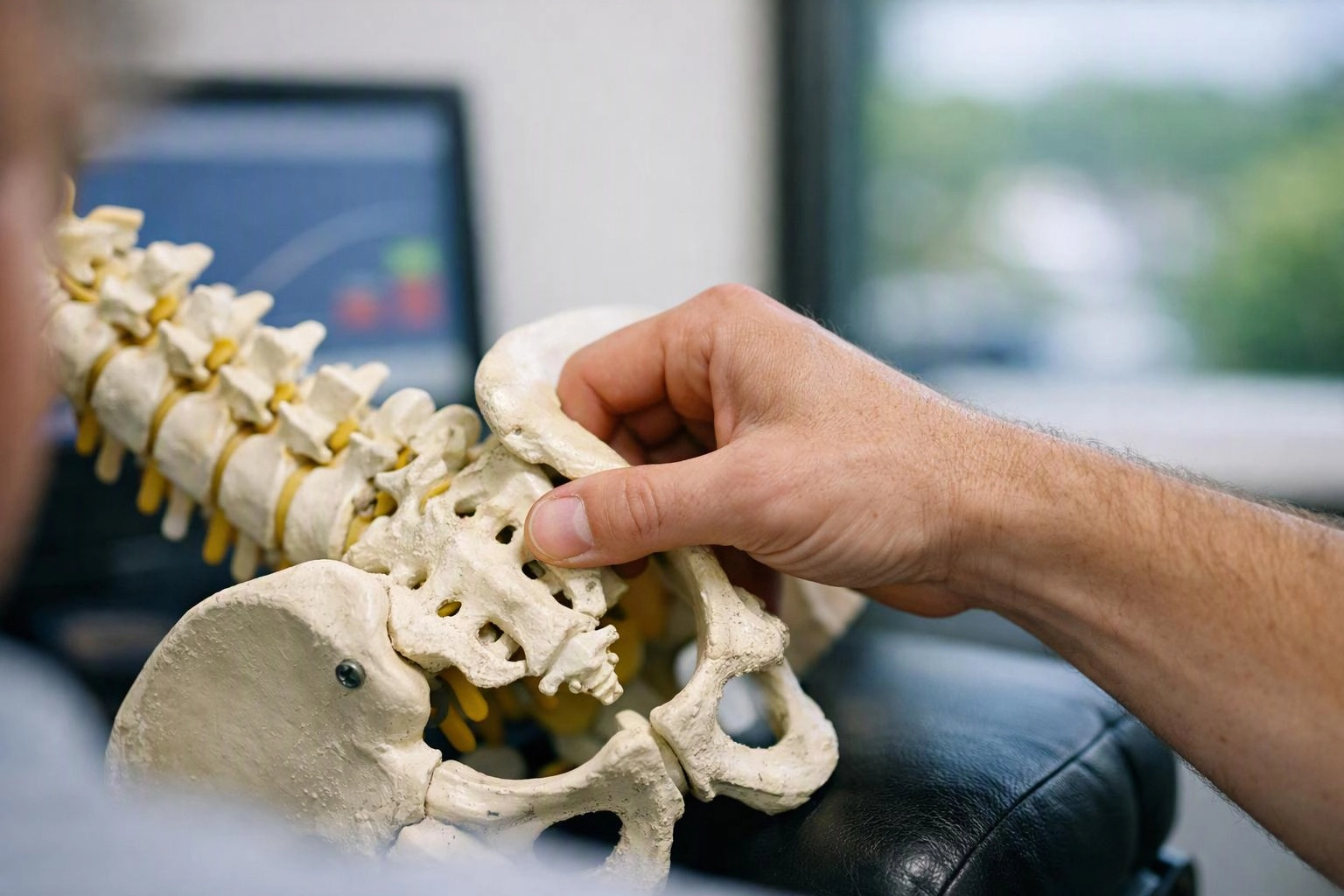
When we assess biomechanics, we observe posture and movement together instead of relying on a single position. Our team considers how the spine, pelvis, and limbs coordinate during common actions. We use those observations to shape postural correction work around the person’s movement pattern.
Biomechanics in Practice: A Real-World Example
A person may stand with the head forward and the pelvis positioned unevenly. During postural correction, biomechanics helps describe how those positions affect movement through the spine and lower limbs during standing or walking.
Related Services
Related Terms
Posture Assessment
Posture Assessment is a structured review of how your body aligns and moves during standing, sitting…
Forward Head Posture
Forward Head Posture is a postural pattern in which the head rests ahead of the shoulders…
Range of Motion
Range of Motion is the amount a joint can move through its available directions. Clinicians assess…
Joint Mobility
Joint Mobility is the available movement at a joint and the ease with which that joint…
Advanced Injury Care Clinic
Have Questions About Biomechanics?
Contact Advanced Injury Care Clinic for practical guidance on Biomechanics and related chiropractor work in Brentwood.