
What Is Joint Mobility?
Joint Mobility is the available movement at a joint and the ease with which that joint moves through its usable range. Mobility depends on the joint surfaces, surrounding muscles, connective tissues, and nervous system. A mobility assessment considers movement quality, comfort, control, and side-to-side differences during active or guided motion.
Quick Facts About Joint Mobility
Category
Movement and joint function
Used for
Movement assessment and rehabilitation planning
Common confusion
Mobility differs from flexibility and stability
Also called
Joint range of motion, Articular mobility
Often discussed with
Chiropractic Rehabilitation
Key Takeaways About Joint Mobility
- Mobility includes movement quality, not only the size of a range.
- A clinician may compare active and guided joint movement.
- Mobility is not the same as flexibility or muscle strength.
How Joint Mobility Works
Joint Mobility describes how a joint moves during a controlled task. The movement may involve one joint, several connected joints, or the spine. A clinician observes the available range, the path of motion, resistance, and the person’s control. Active movement shows how the person moves independently, while guided movement helps separate joint limits from muscle control.
Related glossary terms: Range of Motion, Biomechanics, Muscle Imbalance.
Range of Motion is one part of a mobility check, but the quality of movement also matters. A joint may reach a broad position while producing compensation elsewhere in the body. Rehabilitation may pair mobility work with strength, balance, or coordination exercises so the available movement supports a useful task. The findings can help guide exercise selection and track changes during care.
From the Advanced Injury Care Clinic team
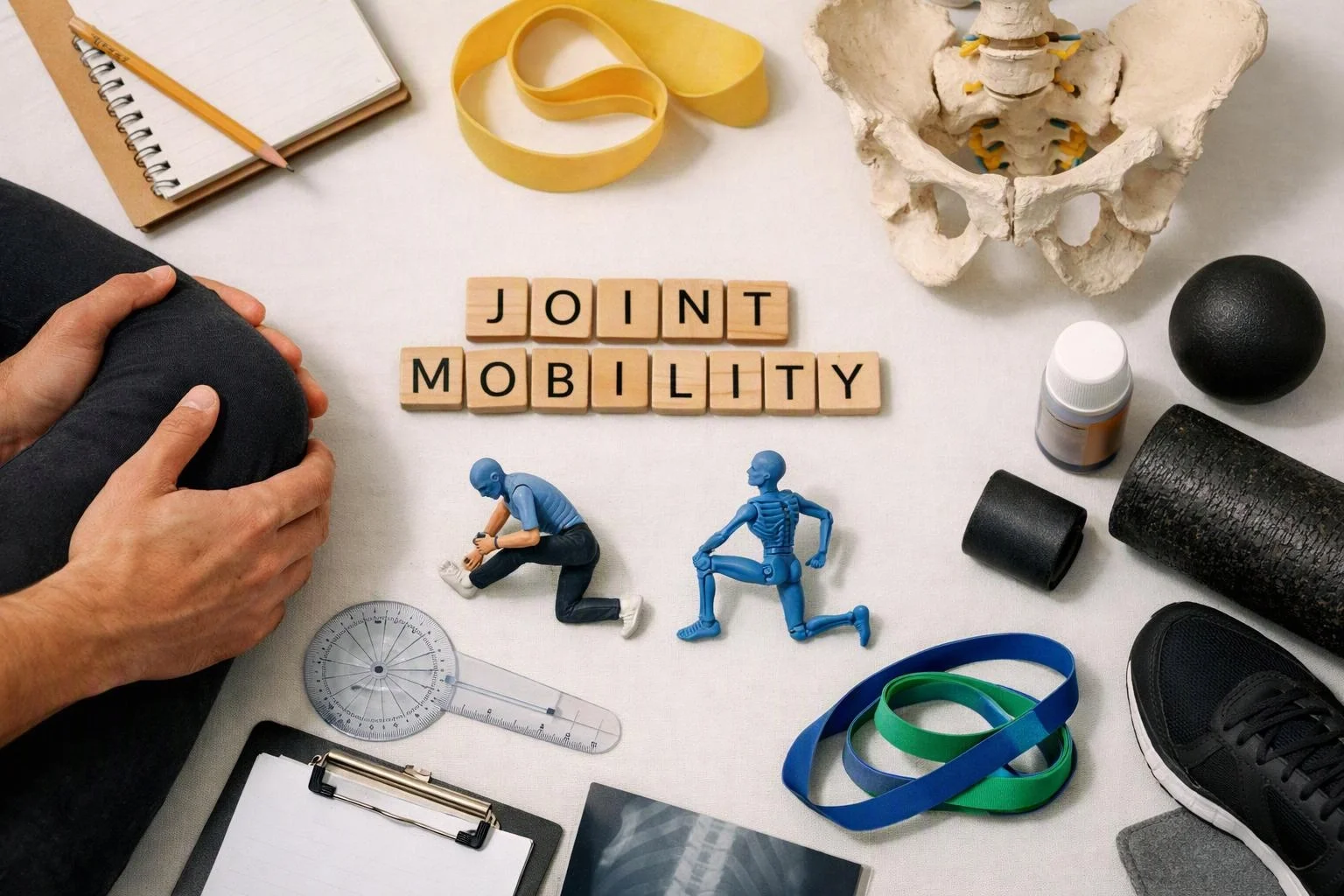
When we assess joint mobility, we observe active movement and compare it with guided movement when appropriate. Our team also checks movement control, nearby muscle tension, and how the joint behaves during rehabilitation tasks. These details help us choose exercises that match the person’s current function.
Joint Mobility in Practice: A Real-World Example
A person recovering from a motor vehicle collision may have limited neck rotation and turn the shoulders to compensate. During Chiropractic Rehabilitation, the clinician observes the neck movement and selects controlled exercises that address mobility and movement control.
Related Services
Related Terms
Range of Motion
Range of Motion is the amount a joint can move through its available directions. Clinicians assess…
Biomechanics
Biomechanics is the study of how living bodies move and respond to force. It examines the…
Muscle Imbalance
Muscle imbalance is a difference in strength, flexibility, endurance, or control between muscles that support the…
Proprioception
Proprioception is the body's ability to sense joint position, movement, and force without relying on sight…
Advanced Injury Care Clinic
Have Questions About Joint Mobility?
Contact Advanced Injury Care Clinic for practical guidance on Joint Mobility and related chiropractor work in Brentwood.