
What Is the Sacroiliac Joint?
The sacroiliac joint is a strong connection between the sacrum at the base of the spine and the ilium of the pelvis. This joint transfers forces between the upper body and legs while allowing limited movement. Pregnancy can change nearby ligaments and body mechanics, which may affect comfort around this area.
Quick Facts About Sacroiliac Joint
Category
Pelvic joint
Used for
Load transfer and pelvic movement
Common confusion
Often confused with sciatic nerve pain
Also called
SI Joint, sacroiliac articulation
Often discussed with
Prenatal Chiropractic Care
Key Takeaways About Sacroiliac Joint
- It connects the sacrum with each side of the pelvis.
- Nearby muscles and ligaments help support its movement.
- Sacroiliac joint discomfort isn't the same as sciatic nerve pain.
How Sacroiliac Joint Works
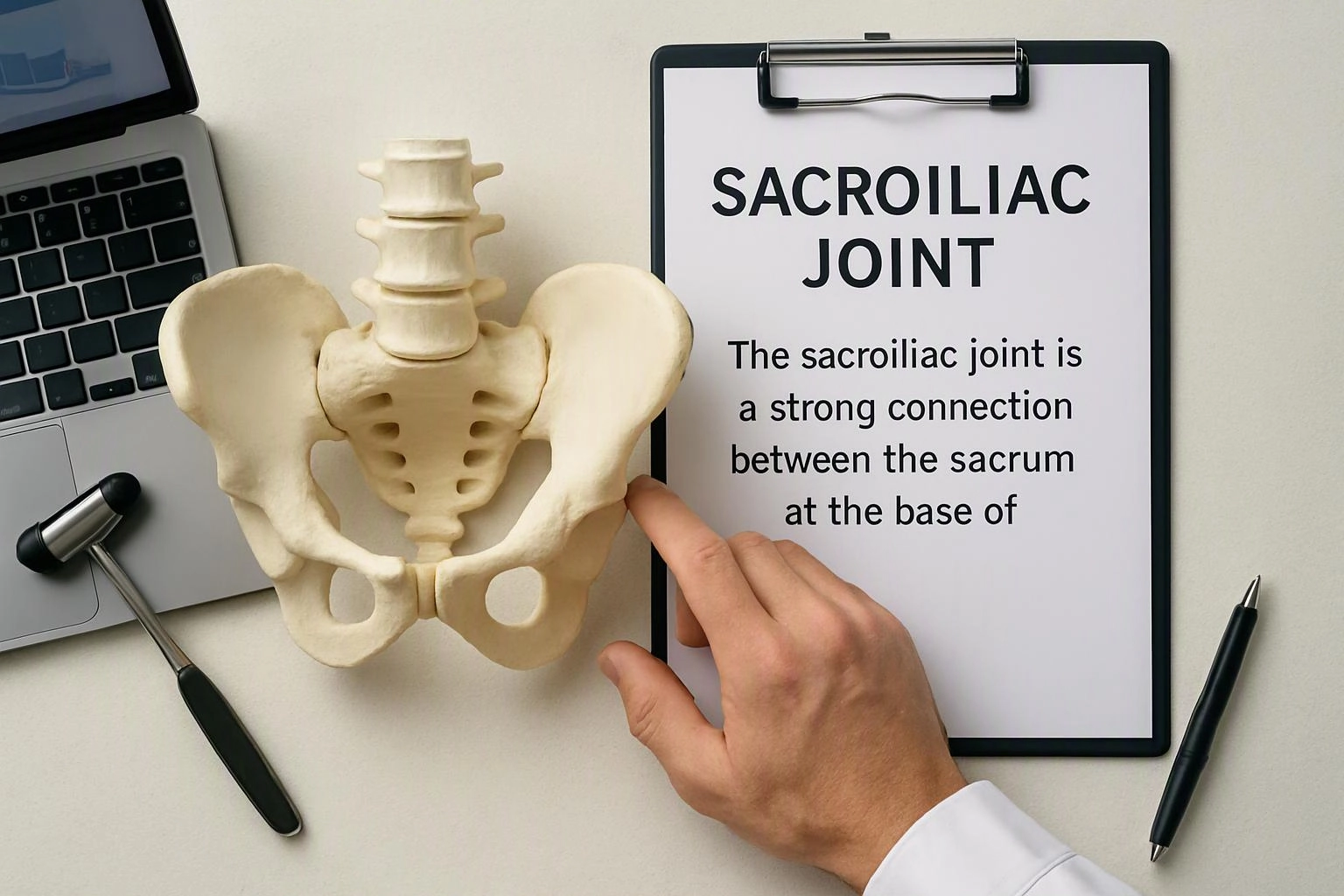
Sacroiliac Joint movement helps connect the spine and pelvis during standing, walking, and turning. The sacrum meets the pelvic bones at this joint. Strong ligaments and nearby muscles help limit motion and keep the area stable.
Related glossary terms: Anterior Pelvic Tilt, Pelvic Floor Dysfunction, Range of Motion.
During pregnancy, hormone changes can affect ligament support around the pelvis. A growing abdomen can also shift posture and movement patterns. A clinician may consider the joint's location, nearby muscle tension, walking pattern, and reported symptoms when assessing the area.
How It Relates to Prenatal Care
Prenatal chiropractic care may address movement around the pelvis with techniques selected for the person's stage of pregnancy and comfort. The sacroiliac joint is only one part of an assessment. The lumbar spine, hips, muscles, and nerves may also contribute to symptoms.

From the Advanced Injury Care Clinic team
When we assess the sacroiliac joint during prenatal care, we consider pelvic motion, posture, nearby muscles, and the person's comfort. We also look at how pregnancy-related changes may affect movement. Our team keeps the assessment focused on the whole pelvic region, not one structure alone.
Sacroiliac Joint in Practice: A Real-World Example
A pregnant person may feel discomfort near one side of the low back or buttock while turning in bed or walking. During prenatal chiropractic care, the assessment may review pelvic movement, hip motion, and nearby muscle tension before care is selected.
Related Services
Related Terms
Anterior Pelvic Tilt
Anterior Pelvic Tilt is a posture pattern in which the front of the pelvis rotates forward…
Pelvic Floor Dysfunction
Pelvic floor dysfunction is a problem with the muscles and tissues that support the bladder, bowel…
Range of Motion
Range of Motion is the available movement at a joint, such as bending, straightening, turning, or…
Referred Pain
Referred Pain is a discomfort felt in one body area even though the source lies elsewhere…
Advanced Injury Care Clinic
Have Questions About Sacroiliac Joint?
Contact Advanced Injury Care Clinic for practical guidance on Sacroiliac Joint and related chiropractor work in Brentwood.