
What Is Pelvic Floor Dysfunction?
Pelvic Floor Dysfunction is a condition in which the pelvic floor muscles do not coordinate, relax, or contract normally. These muscles support pelvic organs and help control bladder and bowel function. Dysfunction may involve excessive tension, weakness, poor timing, or pain, and pregnancy can change the demands placed on this muscle group.
Quick Facts About Pelvic Floor Dysfunction
Category
Pelvic muscle coordination problem
Used for
Understanding pelvic support and movement concerns
Common confusion
It does not always mean weak muscles
Also called
Pelvic floor disorder, Pelvic Floor Muscle Dysfunction
Often discussed with
Prenatal Chiropractic Care
Key Takeaways About Pelvic Floor Dysfunction
- Muscles may be tight, weak, painful, or poorly coordinated.
- Pregnancy can increase demands on the pelvic floor.
- Pelvic floor dysfunction is not limited to muscle weakness.
How Pelvic Floor Dysfunction Works
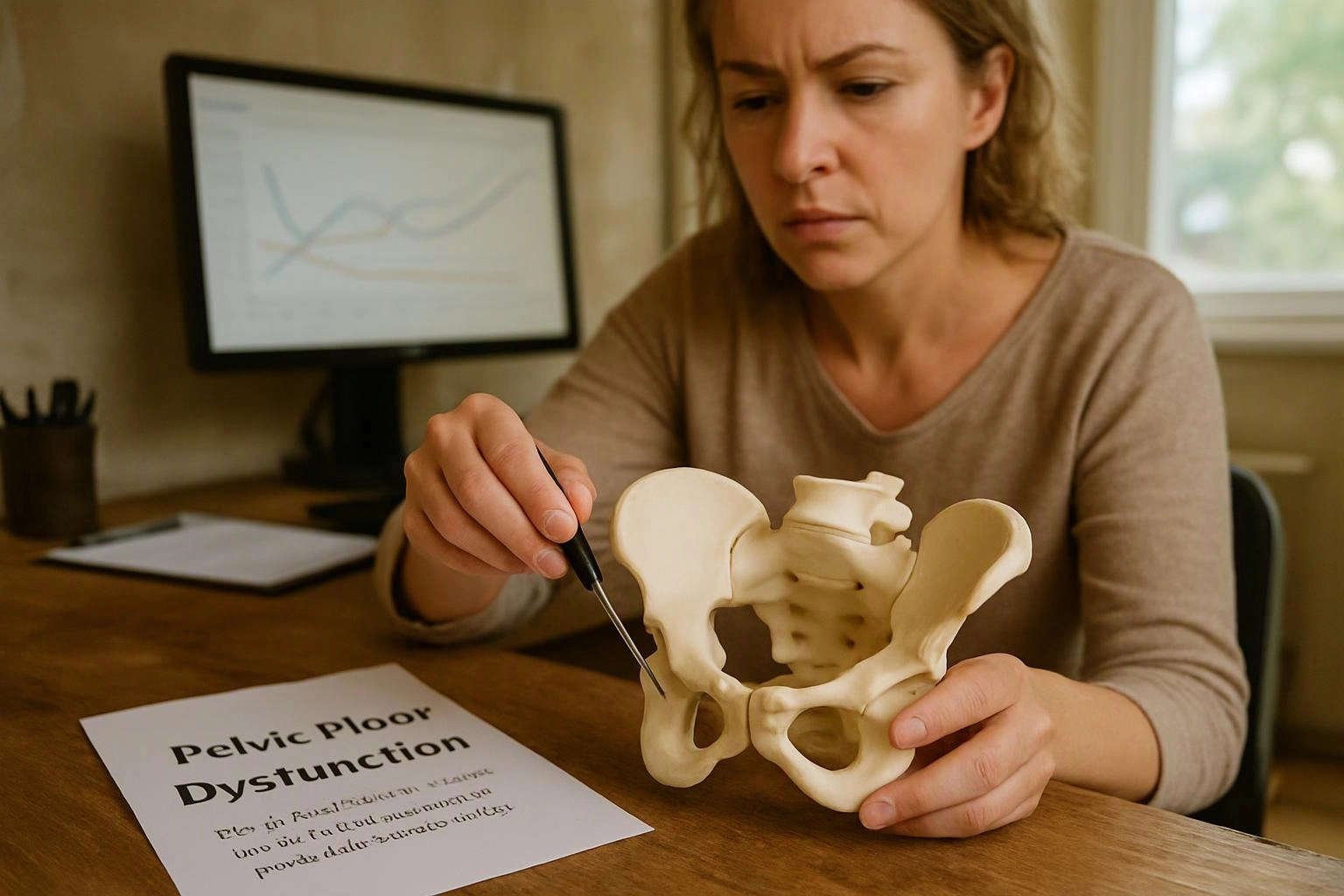
Pelvic Floor Dysfunction affects how the pelvic floor muscles contract, relax, and coordinate with nearby muscles. The pelvic floor supports pelvic organs and works with the abdominal wall, diaphragm, hips, and lower back during movement. A person may have excessive muscle tension, reduced strength, delayed timing, or discomfort.
Related glossary terms: Anterior Pelvic Tilt, Core Stability, Joint Mobility.
Pregnancy can alter posture, breathing patterns, joint loading, and pressure through the abdomen. Those changes may affect how the pelvic floor responds during walking, lifting, coughing, or changing position. Core stability and joint mobility are related concepts, but neither term alone describes pelvic floor function. Assessment focuses on movement patterns, reported symptoms, and how the body manages load.
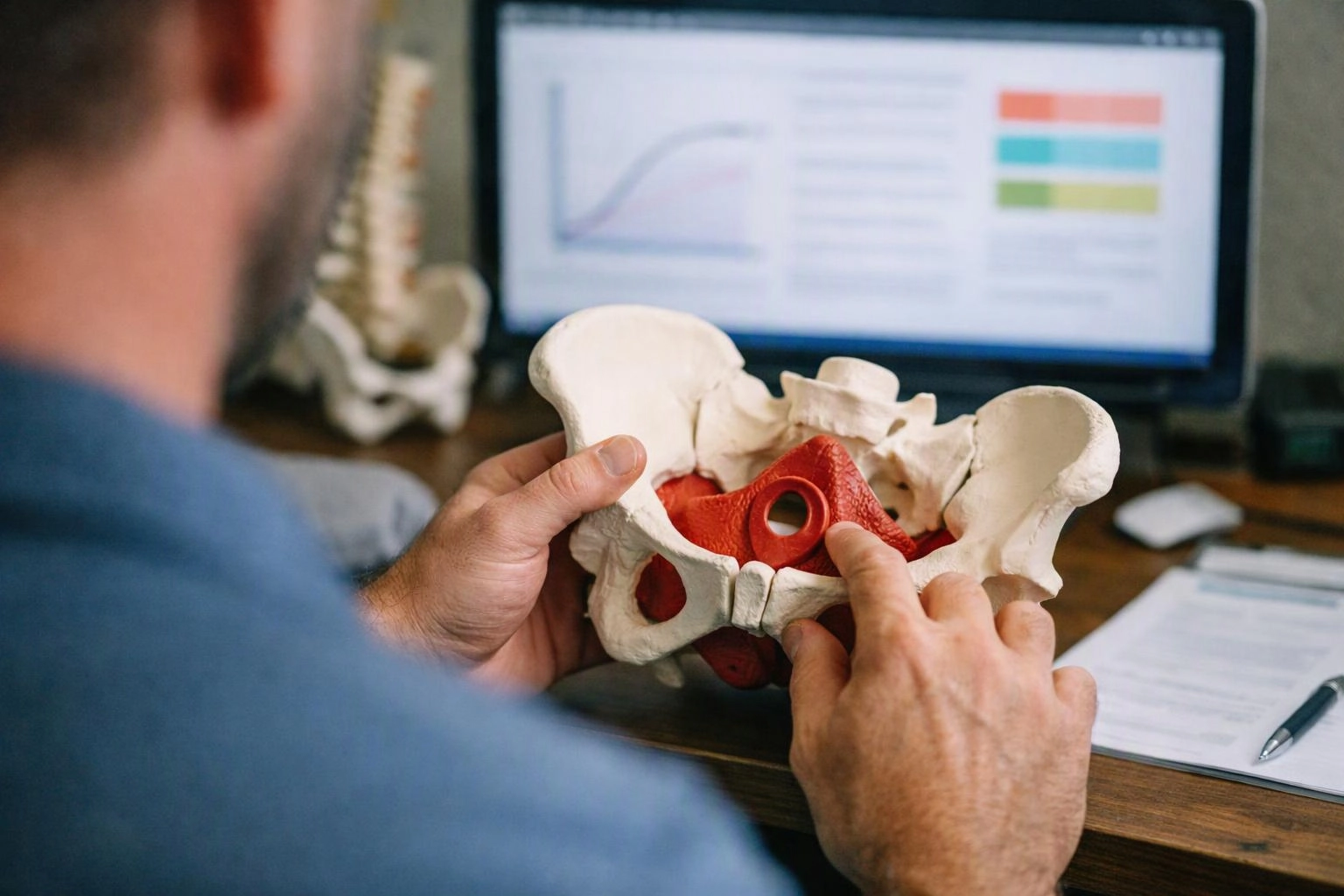
From the Advanced Injury Care Clinic team
When we discuss pelvic floor dysfunction during prenatal care, we review posture, movement, breathing patterns, and reported discomfort. Our team considers how the pelvis, lower back, hips, and surrounding muscles work together. We also recognize when concerns call for evaluation by another qualified healthcare professional.
Pelvic Floor Dysfunction in Practice: A Real-World Example
A pregnant person may notice pelvic pressure or discomfort while standing, walking, or changing position. Prenatal chiropractic care may examine how spinal and pelvic movement relates to those symptoms without assuming that muscle weakness is the cause.
Related Services
Related Terms
Anterior Pelvic Tilt
Anterior Pelvic Tilt is a forward rotation of the pelvis that increases the inward curve of…
Core Stability
Core Stability is the ability to control the trunk and pelvis while the body moves or…
Joint Mobility
Joint Mobility is the available movement at a joint and the ease with which that joint…
Muscle Imbalance
Muscle imbalance is a difference in strength, flexibility, endurance, or control between muscles that support the…
Advanced Injury Care Clinic
Have Questions About Pelvic Floor Dysfunction?
Contact Advanced Injury Care Clinic for practical guidance on Pelvic Floor Dysfunction and related chiropractor work in Brentwood.