
What Is Torticollis?
Torticollis is a condition that causes the head to tilt toward one side while the chin turns toward the opposite side. Tight neck muscles, joint irritation, or changes present at birth can contribute to this position. In infants, torticollis may affect head movement, feeding posture, and the development of balanced neck control.
Quick Facts About Torticollis
Category
Neck movement condition
Used for
Describing an uneven head and neck position
Common confusion
Often confused with general neck stiffness
Also called
Wry neck, Cervical dystonia
Often discussed with
Pediatric Chiropractic Care
Key Takeaways About Torticollis
- The head tilts one way while the chin turns the other way.
- Infant torticollis may affect feeding posture and head control.
- Torticollis is not the same as ordinary poor posture.
How Torticollis Works
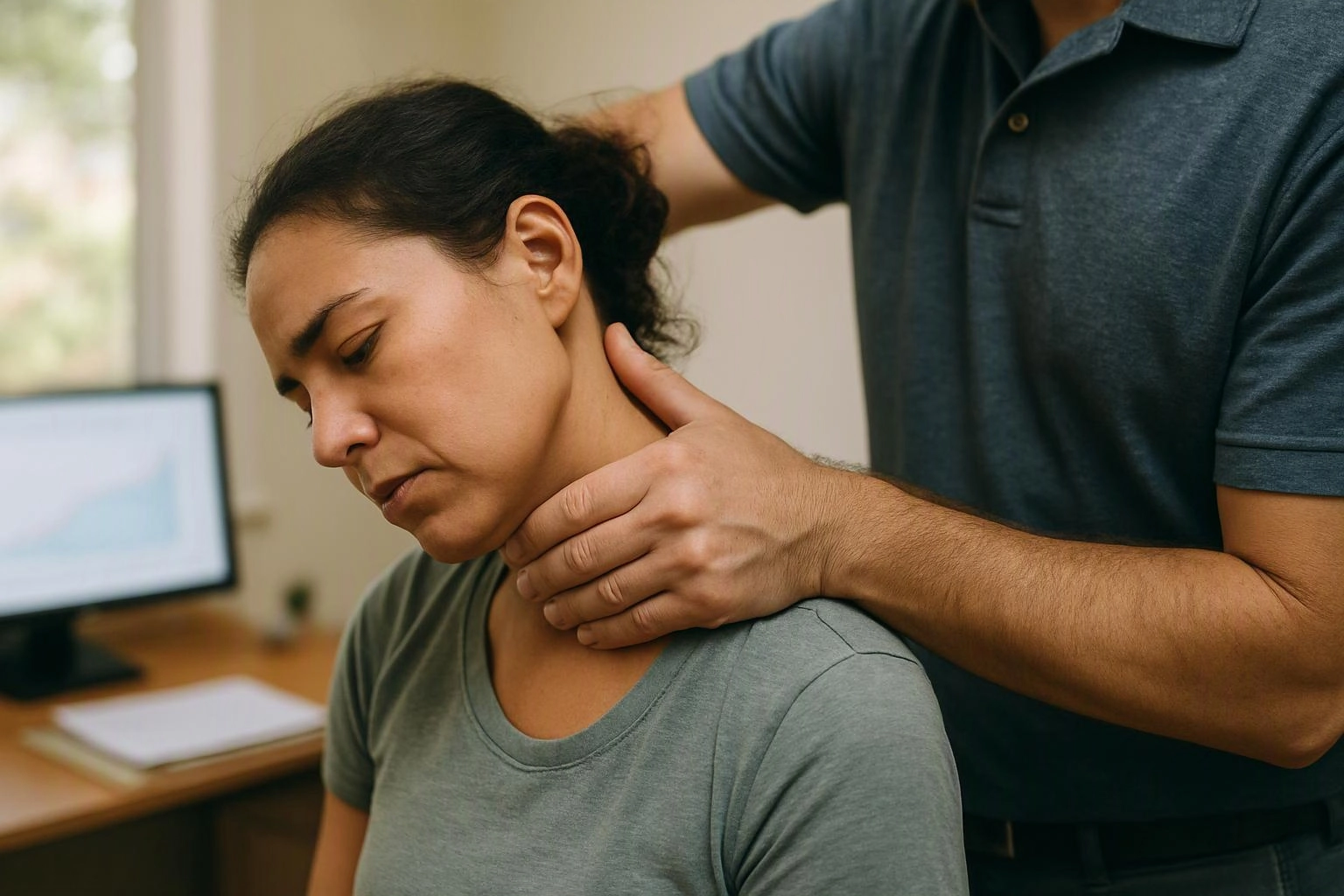
Torticollis changes the balance of movement across the neck. One side may feel tighter, while the opposite side may show limited control or reduced motion. The head position can become more noticeable during feeding, sleep positioning, carrying, or attempts to follow a moving object.
Related glossary terms: Range of Motion, Muscle Spasm, Joint Mobility.
Healthcare professionals assess torticollis by observing head alignment, active movement, passive movement, and muscle activity. In pediatric care, the assessment also considers how the child turns toward sound or visual targets. Range of motion findings help describe which directions are comfortable and which directions appear restricted. Care may include gentle, age-appropriate movement activities and monitoring of changes over time.

From the Advanced Injury Care Clinic team
When we assess torticollis in pediatric chiropractic care, we observe head position, neck movement, muscle tension, and the child’s responses during natural activities. We also consider feeding posture and how the child follows sound or movement. Our findings help guide gentle, age-appropriate care and communication with the child’s caregivers.
Torticollis in Practice: A Real-World Example
A baby consistently turns the face toward one side during feeding and resists looking the other way. During pediatric chiropractic care, the team observes the baby’s head position, neck movement, and comfort during gentle handling.
Related Services
Related Terms
Range of Motion
Range of Motion is the amount a joint can move through its available directions. Clinicians assess…
Muscle Spasm
A Muscle Spasm is a sudden, involuntary tightening of muscle fibers that can cause pain, stiffness…
Joint Mobility
Joint Mobility is the available movement at a joint and the ease with which that joint…
Posture Assessment
Posture Assessment is a structured review of how your body aligns and moves during standing, sitting…
Advanced Injury Care Clinic
Have Questions About Torticollis?
Contact Advanced Injury Care Clinic for practical guidance on Torticollis and related chiropractor work in Brentwood.