
What Is An Adhesion?
An adhesion is a band of fibrous scar tissue that connects tissues that normally move separately. Adhesions can form after injury, surgery, inflammation, or prolonged tissue irritation. In massage therapy, the term describes a possible source of restricted tissue glide, tenderness, or reduced movement, but hands-on assessment cannot confirm the underlying tissue change alone.
Quick Facts About Adhesion
Category
Soft tissue condition
Used for
Describing restricted tissue glide
Common confusion
Muscle tightness or ordinary soreness
Also called
Scar adhesion, Scar-tissue adhesion
Often discussed with
Massage Therapy
Key Takeaways About Adhesion
- Adhesions connect tissues that normally move independently.
- Massage addresses tissue movement and comfort around suspected restrictions.
- Tight muscle tissue is not automatically an adhesion.
How Adhesion Works
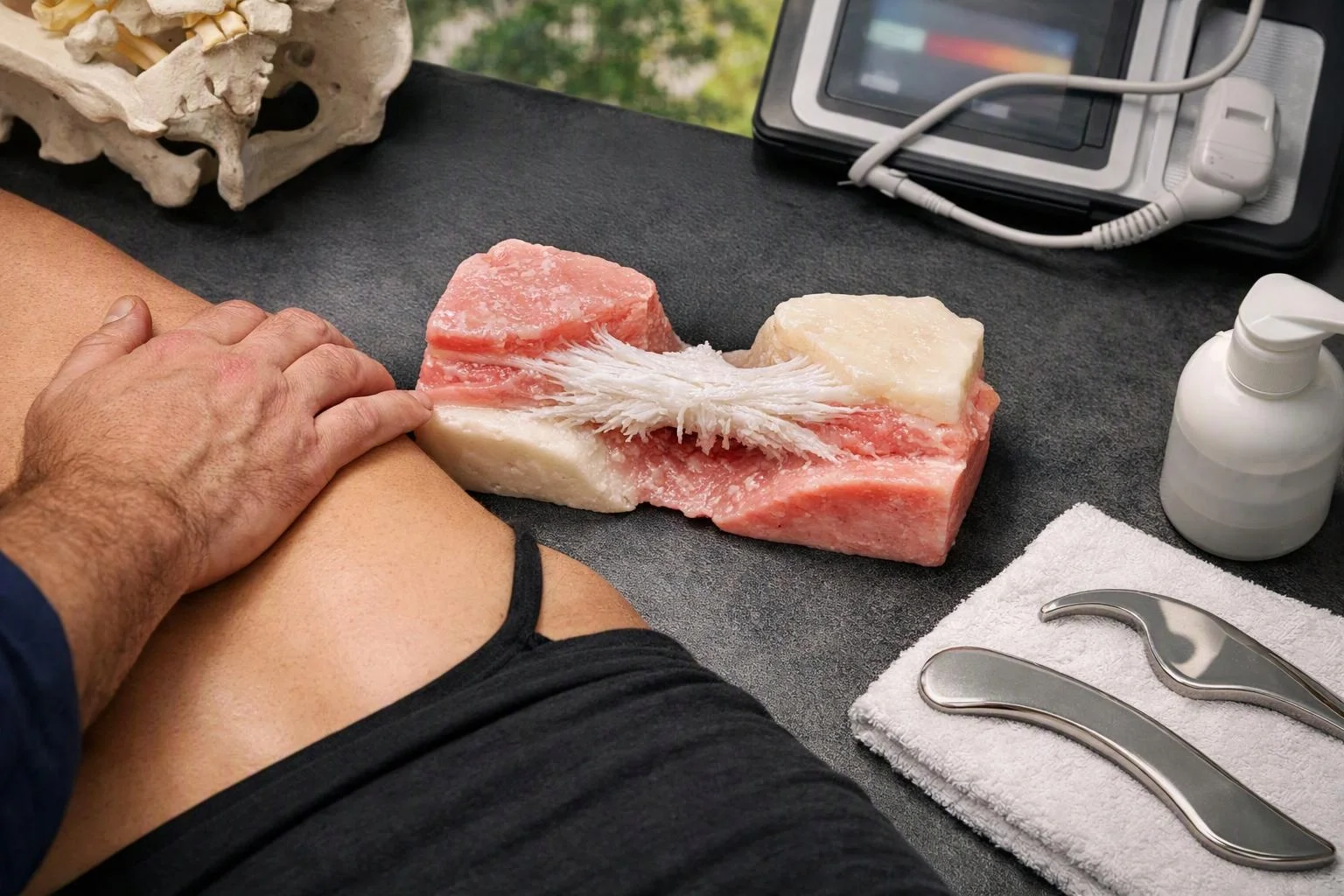
An adhesion develops when healing tissue forms a fibrous connection between nearby surfaces. The connection can reduce normal sliding between skin, fascia, muscle, or other soft tissues. Movement may feel restricted in one direction, and pressure may reveal tenderness or a firm area.
Related glossary terms: Soft Tissue Injury, Myofascial Release, Range of Motion.
Massage therapy does not directly confirm the presence of an adhesion through touch alone. A massage therapist assesses tissue mobility, sensitivity, movement patterns, and the way symptoms change during hands-on work. Techniques such as myofascial release may address surrounding tension and improve comfort, while range of motion checks show whether movement changes during the session. Persistent, severe, or unexplained symptoms may require evaluation by an appropriate medical professional.
From the Advanced Injury Care Clinic team
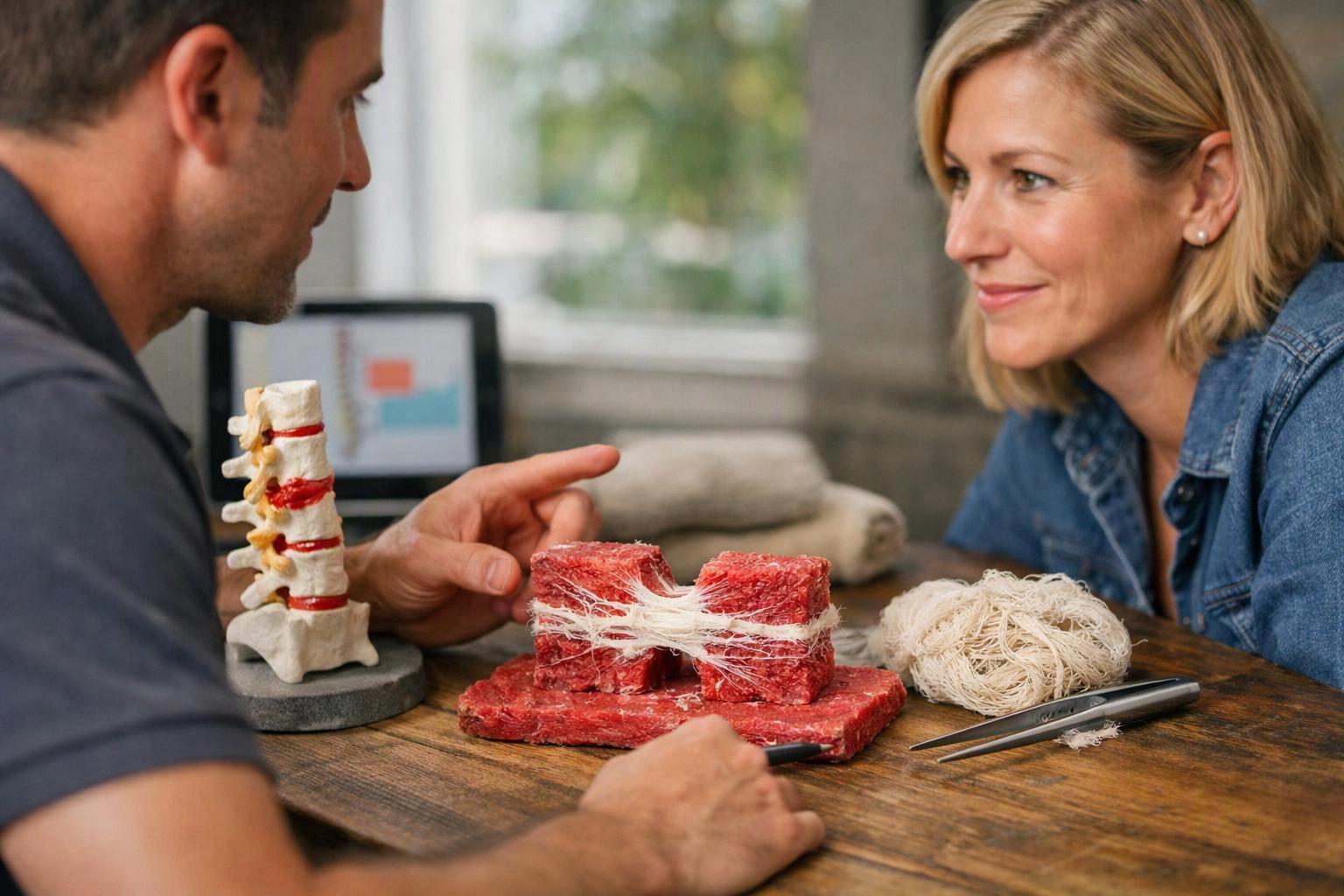
When we assess a suspected adhesion during massage therapy, we compare tissue movement, sensitivity, and nearby joint motion. We adjust pressure to the person’s response and document changes in comfort or mobility without treating touch alone as proof of a scar-tissue connection.
Adhesion in Practice: A Real-World Example
A person with an old abdominal scar may notice pulling during a stretch or trunk rotation. During massage therapy, the therapist may assess nearby tissue movement and work around the area to support comfort and easier motion.
Related Services
Related Terms
Soft Tissue Injury
A soft tissue injury is damage to muscles, tendons, ligaments, or other connective tissues caused by…
Myofascial Release
Myofascial Release is a hands-on soft-tissue technique that applies sustained pressure and gentle movement to areas…
Range of Motion
Range of Motion is the amount a joint can move through its available directions. Clinicians assess…
Joint Mobility
Joint Mobility is the available movement at a joint and the ease with which that joint…
Advanced Injury Care Clinic
Have Questions About Adhesion?
Contact Advanced Injury Care Clinic for practical guidance on Adhesion and related chiropractor work in Brentwood.