
What Is the Atlas?
Atlas is the uppermost cervical vertebra in the neck. The atlas supports the skull and forms a joint with the axis, the vertebra below it. Its ring-like shape helps the head move through nodding and limited rotation while protecting nearby spinal structures.
Quick Facts About Atlas
Category
Upper cervical vertebra
Used for
Skull support and head movement
Common confusion
Often confused with the axis or the skull
Also called
C1 vertebra, First cervical vertebra
Often discussed with
Chiropractic Adjustment
Key Takeaways About Atlas
- The atlas has a ring-like structure without a typical vertebral body.
- Its joints help coordinate head movement with the upper neck.
- The atlas is not the same structure as the skull or axis.
How Atlas Works
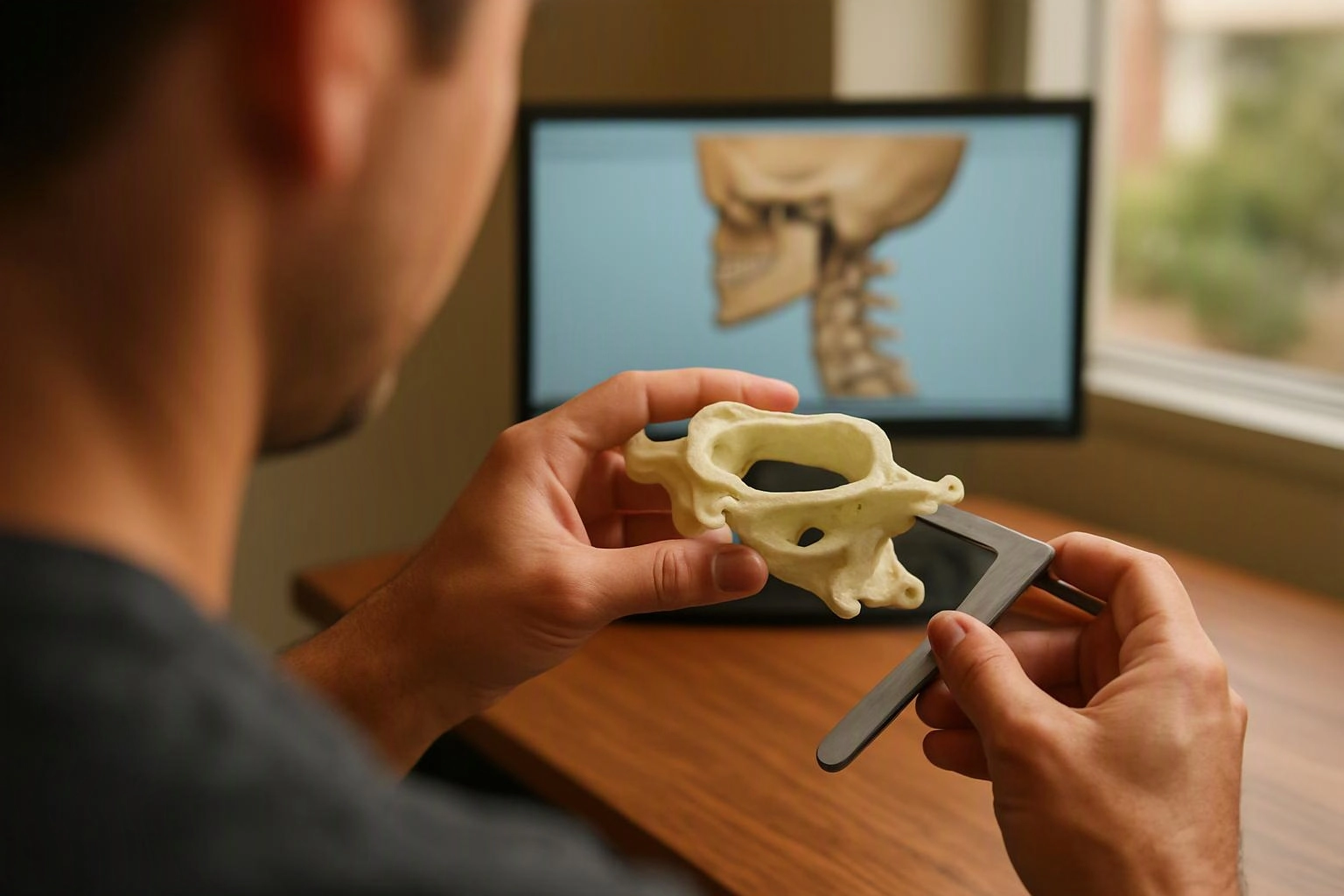
The atlas is shaped like a ring and sits beneath the skull. Its upper surfaces meet the skull, while its lower surfaces connect with the axis. These joints distribute the load of the head and guide movement through the upper neck.
Related glossary terms: Cervical Spine, Joint Mobility, Range of Motion.
The atlas contributes most directly to nodding and helps the head rotate with the axis. Its structure differs from the lower cervical vertebrae because it lacks a typical vertebral body. The cervical spine provides the surrounding framework, while muscles and ligaments help control alignment and motion.
Practical meaning
- Clinicians assess the atlas as part of the upper neck.
- Movement findings are considered alongside posture, symptoms, and other examination results.
From the Advanced Injury Care Clinic team
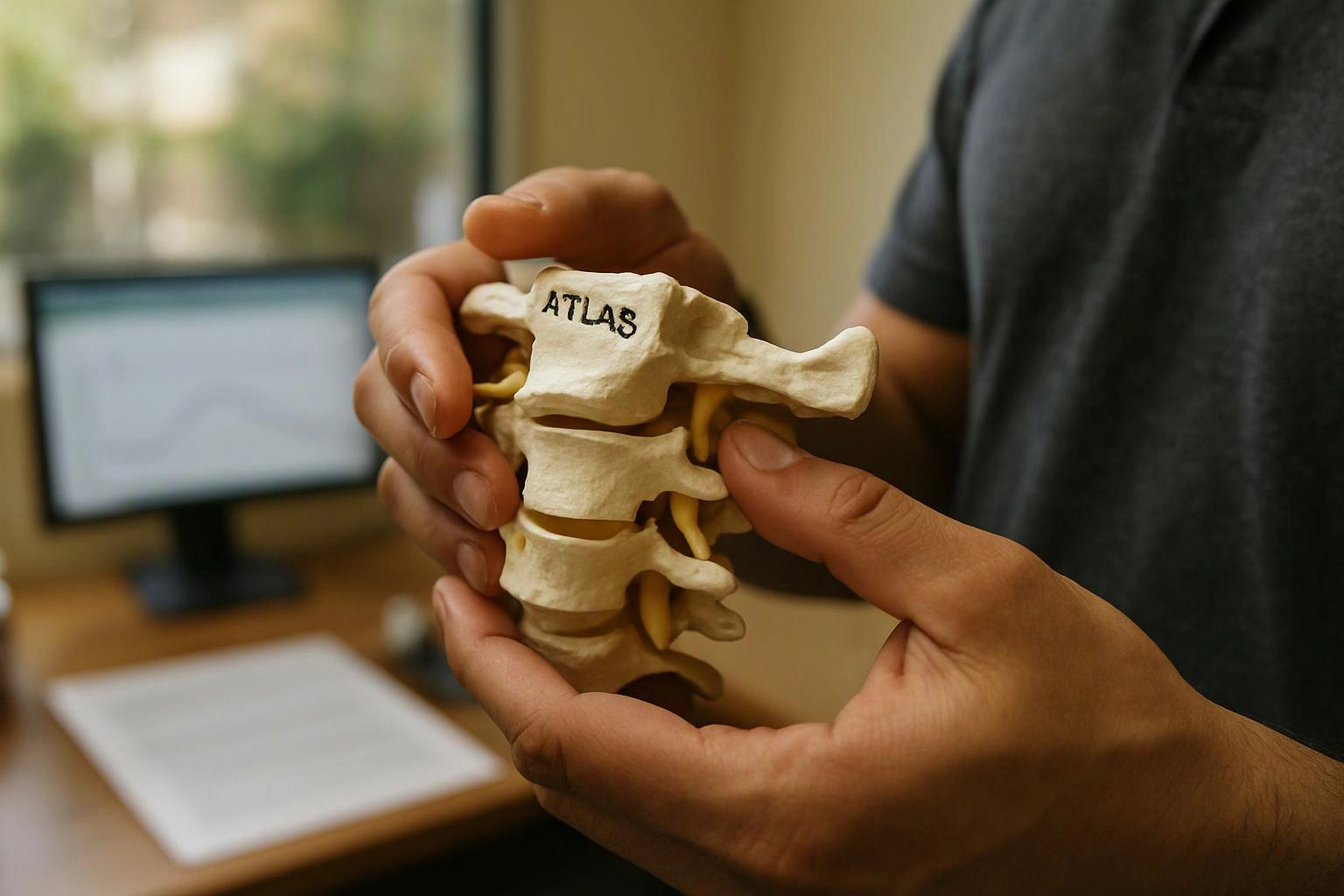
When we assess the atlas during a Chiropractic Adjustment, we examine upper-neck movement and the relationship between the skull, atlas, and nearby joints. Our team considers these findings with the broader examination, including posture and reported symptoms, before selecting an appropriate technique.
Atlas in Practice: A Real-World Example
A person with neck stiffness may have limited upper-neck motion during head nodding. During a Chiropractic Adjustment evaluation, the practitioner examines atlas movement alongside the cervical spine and surrounding muscles.
Related Services
Related Terms
Cervical Spine
Cervical Spine is the upper section of the spinal column that supports the head and connects…
Joint Mobility
Joint Mobility is the available movement at a joint and the ease with which that joint…
Range of Motion
Range of Motion is the amount a joint can move through its available directions. Clinicians assess…
Posture Assessment
Posture Assessment is a structured review of how your body aligns and moves during standing, sitting…
Advanced Injury Care Clinic
Have Questions About Atlas?
Contact Advanced Injury Care Clinic for practical guidance on Atlas and related chiropractor work in Brentwood.