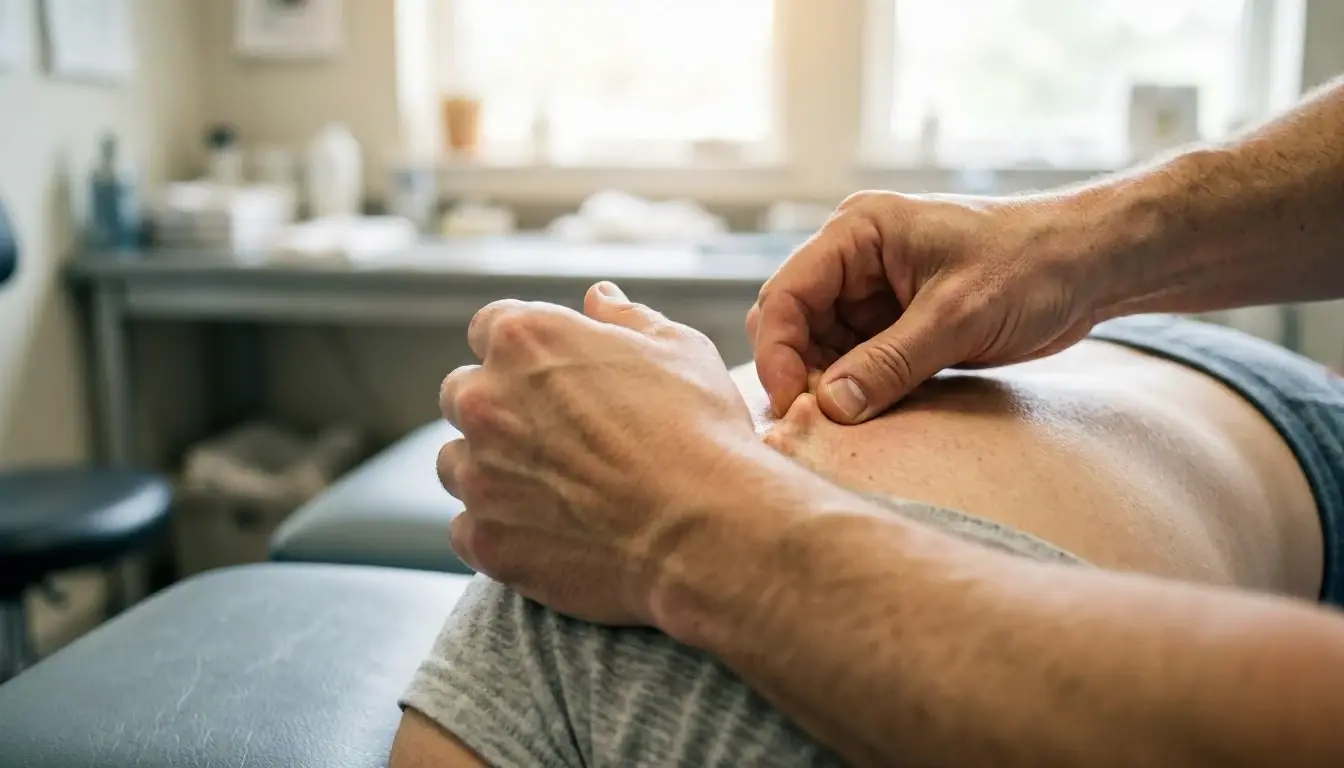
Chiropractic Subluxation is a partial dislocation or misalignment of a spinal joint that disrupts nerve function, potentially causing pain, reduced mobility. Or other health issues. Chiropractors identify and correct subluxations to restore proper alignment and support the body’s natural healing processes.
Category
Spinal health concept
Used for
Identifying and correcting joint misalignments
Common confusion
Often mistaken for medical dislocations, which are more severe
Also called
Vertebral Subluxation, Spinal Subluxation
Often discussed with
Car Accident Injury Treatment, Neck Pain Treatment

Chiropractic subluxation means some back bones move wrong. They shift out of place or can't move right.
Related glossary terms: Chiropractic Adjustment, Chiropractic Care, Spinal Stenosis.
A subluxation isn't like a full dislocation. That's when a joint comes all the way out. This is just a small shift.
It can still mess up how nerves talk to the body. This may cause pain or tight muscles. It can lead to other health problems too.
Subluxations can happen from falls or car crashes. They can also come from bad posture. Everyday stress can cause them too.
Chiropractors care about subluxations a lot. They show how the spine affects health. Even small shifts can cause big problems.
A subluxation in the lower back may cause sciatic pain. One in the neck can lead to headaches. Shoulder pain can come from it too.
You might not feel a subluxation right away. It can get worse over time. That's why regular spine checks matter.
Chiropractors check for subluxations in many ways. They use their hands to feel your spine. They ask about your health history.
They may use X-rays or other pictures. They look for sore spots. They check for stiff or tight muscles.
They also test nerves. They look at reflexes and strength. This helps find where nerves are bothered.
Once found, they fix subluxations with adjustments. These are gentle pushes on the spine. They put bones back in place.
The goal isn't just to stop pain. It helps the body work better. It can help the body heal too.
When spine joints move right, nerves work better. Muscles can relax. Swelling may go down too.
Some people feel better right away. Others need a few visits. Chiropractors may give exercises too.
They might suggest stretches or desk changes. These help keep your spine healthy. They stop future problems.

Subluxations matter because small spine shifts affect health. Pain is one sign. But they can cause other issues too.
They may make you tired or upset your stomach. They can even weaken your immune system.
Fixing subluxations early stops bigger problems. It can prevent long-term pain. It may stop joint damage too.
It can also help you move better. You can do daily tasks without pain. Staying active gets easier.
For local customers, chiropractic care offers a drug-free way. It doesn't use surgery. This helps people who don't want medicine.
It's good for problems that don't get better with usual care. Subluxations come from daily habits too.
Sitting too long or carrying heavy bags can cause them. Knowing this helps you change habits. It keeps your spine healthy longer.
Subluxations matter more when your spine is stressed. This can happen after accidents.
Car crashes or sports injuries can shift spine bones. Even small hits can move them.
People with tough jobs need to watch for this. Construction workers and nurses lift a lot.
Athletes push their bodies hard. Over time, this can cause subluxations. Regular care helps prevent injuries.
Subluxations can affect long-term problems too. Arthritis and scoliosis are examples. Headaches can come from them too.
Chiropractic care may help these issues. It improves joint movement. It eases nerve irritation.
Pregnancy can also cause subluxations. Weight changes stress the spine. Posture shifts put extra pressure on it.
In Brentwood, TN, people stay active. Outdoor fun is common. Fixing subluxations early helps stay mobile.
It stops long-term pain. It keeps you enjoying life.
A medical dislocation is a complete separation of joint surfaces, often requiring emergency care. Chiropractic Subluxation is a partial misalignment that may still allow some joint movement but disrupts nerve function.
Spinal stenosis is a narrowing of the spinal canal that compresses nerves, often due to aging or arthritis. Chiropractic Subluxation involves joint misalignment, which may contribute to nerve irritation but isn’t the same as structural narrowing.
Muscle strain involves overstretched or torn muscle fibers, usually from injury or overuse. Chiropractic Subluxation affects spinal joints and nerves. Though muscle tension can result from or contribute to subluxations.
Chiropractic Subluxation isn’t just about pain—it’s about how joint function affects the nervous system. Even minor misalignments can create subtle but cumulative effects on health, which is why regular spinal check-ups can be valuable for prevention.
After a minor car accident, a patient notices stiffness in their neck and occasional headaches but assumes it’s just muscle soreness. A chiropractor identifies a subluxation in the cervical spine, where vertebrae are slightly misaligned. After a few adjustments, the patient’s range of motion improves. And the headaches decrease, showing how subluxations can contribute to symptoms even without severe injury.
Chiropractic Adjustment is a hands-on procedure where a licensed chiropractor applies controlled force to a specific joint in the spine or other body part. The goal is to improve spinal motion, reduce nerve irritation. And restore proper function. Adjustments are often used to relieve pain, improve mobility.
Chiropractic Care is a health care profession focused on diagnosing and treating musculoskeletal disorders, particularly those related to the spine. Chiropractors use hands-on spinal manipulation and other non-surgical techniques to improve alignment, reduce pain. And support the body’s natural ability to heal. It emphasizes drug-free, holistic approaches to enhance overall wellness and mobility.
Spinal Stenosis is a narrowing of the spaces within the spine, which can put pressure on the nerves that travel through it. This condition most commonly occurs in the lower back (lumbar stenosis) and neck (cervical stenosis). Spinal Stenosis often develops slowly over time due to aging, arthritis. Or wear-and-tear on the spine, leading to pain, numbness. Or weakness in the legs, arms. Or back.
Herniated Disc is a spinal condition where the soft, gel-like center of a spinal disc pushes through a tear in the tougher outer layer. This can irritate nearby nerves, causing pain, numbness. Or weakness in the back, arms. Or legs. Herniated discs often occur in the lower back or neck and may result from aging, injury.
Sacroiliac Joint Dysfunction is a condition where the sacroiliac joints, located where the spine meets the pelvis, become painful due to improper movement or alignment. These joints support the upper body's weight and help absorb shock during walking or running. Dysfunction often causes lower back, hip. Or buttock pain that worsens with activity.
ChiropractorBrentwood.link
Contact ChiropractorBrentwood.link for practical guidance on Chiropractic Subluxation and related chiropractor work in Brentwood.