
Skip to content

Kinesiology Taping in Forest Hills, Tennessee

Incorrect placement can limit tape support in Forest Hills. We assess the skin, movement goal, and tape position before treatment.

Upfront, Transparent PricingServing 18 CommunitiesMon-Fri: 9 am–7 pm, Sat: 9 am–2 pm, Sun: ClosedFast Scheduling

Quick Summary: kinesiology taping in Forest Hills, Tennessee

Kinesiology Taping in Forest Hills is provided by Advanced Injury Care Clinic for soft-tissue support, movement concerns, and injury-care plans. We serve Forest Hills and surrounding communities through personalized chiropractic care.

  • What we do: Advanced Injury Care Clinic provides Kinesiology Taping for patients in Forest Hills, Tennessee as part of chiropractic injury care.
  • What is included: Our care includes skin checks, tape placement, movement review, and guidance for common adhesion concerns.
  • What you get: Kinesiology Taping gives the customer a properly assessed tape application that fits the treatment goal.

Why does kinesiology tape become less effective after placement?

Incorrect placement, skin irritation, poor adhesion, and excess moisture can reduce kinesiology tape support. A skin and movement check helps identify the right next step.

Kinesiology Taping for Forest Hills Injury Care

Kinesiology taping is suited to patients who need added support during a broader injury-care plan. We use it alongside evaluations, soft-tissue techniques, corrective exercises, and practical guidance when those steps fit the patient’s needs.

Customers choosing this service should focus on placement, skin response, and adhesion. Tape is not a replacement for a full assessment, especially when pain follows an automobile accident, sports injury, workplace incident, or ongoing strain.

Forest Hills patients can discuss these factors during a consultation with our chiropractic care team. The main decision is whether tape supports the care goal and whether the skin can tolerate the application.

  • Share the body area that needs support and the movement that feels limited.
  • Tell our team about skin sensitivity, irritation, or a past reaction to adhesive.
  • Ask how moisture, activity, and tape position may affect adhesion.
  • Discuss whether taping fits with adjustments, exercises, or soft-tissue therapy.
A teal strap, orange ball, metal bottle, and black textured foam roller rest on a light surface

Service Overview

Kinesiology Taping is a supportive treatment method that uses elastic tape on the skin to assist movement and soft-tissue care.

  • Kinesiology tape supports a care plan, while spinal adjustments and soft tissue therapy address other parts of musculoskeletal treatment.
  • Advanced Injury Care Clinic provides this service for patients in Forest Hills and nearby communities.

What customers gain from a careful tape application

Correct placement may provide added support during selected movements.

A skin check helps reduce avoidable irritation during treatment.

Good adhesion helps the tape stay in contact with the skin during normal activity.

A consultation helps you decide whether taping fits your wider care plan.

Forest Hills patients can discuss taping alongside chiropractic treatment close to home.

Process

How we apply kinesiology tape

1

Review the movement concern

We ask about the body area, symptoms, activity, and movement that needs support.

2

Check the skin

Our team looks for irritation or sensitivity that could affect adhesive contact and comfort.

3

Choose the tape position

We select placement based on the body area and the goal discussed during the assessment.

4

Apply the kinesiology tape

We place the tape with care, checking contact and movement as the application progresses.

5

Explain what to watch for

We discuss signs of irritation, poor adhesion, and excess moisture that may affect the application.

How we approach kinesiology taping decisions

Placement follows the treatment goal

Customers receive an assessment before tape is applied, so placement relates to the body area and desired movement support. Incorrect placement can make the service less useful.

Skin condition guides the application

Skin irritation can affect suitability and comfort. Our team checks the skin and discusses concerns before applying adhesive tape.

Adhesion receives practical attention

Poor adhesion and excess moisture can limit contact with the skin. We explain what to watch for and how those concerns affect the care plan.

Taping has a clear limit

Kinesiology taping is not the right job for every complaint. A full evaluation may be more suitable when symptoms need assessment beyond surface support.

What kinesiology taping includes for your care plan

Advanced Injury Care Clinic provides comprehensive Kinesiology Taping in Forest Hills. Here's what you get:

  • We review the painful or restricted area before applying kinesiology tape.
  • We check the skin for irritation or other concerns that could affect application.
  • We select a tape placement approach based on the treatment goal and body area.
  • We apply the tape with attention to contact, direction, and movement.
  • We explain signs that suggest poor adhesion or skin irritation.
  • We connect the taping plan with other appropriate injury-care services.

Tape concerns and the next assessment

This table compares common tape problems with the part of the application our team reviews.

Tape concernWhat we checkPossible care decision
Incorrect placementBody area, direction, and movement goalReview placement and treatment fit
Skin irritationRedness, itching, soreness, or sensitivityDiscuss suitability before another application
Poor adhesionSkin contact and lifting edgesReview application and care instructions
Excess moistureDamp skin and slipping tapeAssess whether contact can be maintained

The Advanced Injury Care Clinic Standard

  • Individualized Care
  • Thorough Assessments
  • Clear Communication
  • Comfortable Techniques

Questions about kinesiology taping and tape placement

What problems can make kinesiology tape less effective?

Incorrect placement can make kinesiology tape less effective. Skin irritation, poor adhesion, and excess moisture can also limit support. Our team checks the body area, skin contact, and movement goal before applying tape. Patients should mention itching, lifting edges, slipping tape, or discomfort so we can review whether the application fits the care plan.

What should be ready before taping starts?

The treatment goal and affected body area should be ready for review before taping starts. Customers should share skin sensitivity, recent injury details, and movements that feel difficult. Clean, dry skin supports better contact. Our team uses this information to decide whether taping fits the planned chiropractic care.

Which skin condition changes the taping decision?

Active skin irritation can change whether kinesiology tape is suitable. Redness, itching, soreness, or a past adhesive reaction should be discussed before application. Our team checks the skin and considers the treatment goal together. A different care step may be more appropriate when the skin cannot tolerate adhesive contact.

How does excess moisture affect tape adhesion?

Excess moisture can weaken contact between kinesiology tape and the skin. Sweat or damp skin may cause edges to lift or the tape to slip during movement. Our team checks adhesion concerns during the application discussion. Customers should report early lifting so we can review the placement and care plan.

What should a customer ask before agreeing to taping?

Customers should ask what movement goal the tape supports and how skin concerns affect suitability. They can also ask how taping fits with adjustments, exercises, or soft-tissue therapy. Our team explains the planned placement and the signs of irritation or poor adhesion to watch for after application.

Who provides kinesiology taping for injury care?

Advanced Injury Care Clinic provides kinesiology taping as part of chiropractic injury care. Our team reviews the affected area, checks the skin, and connects tape placement with the patient’s treatment goal. Care plans may also include evaluations, corrective exercises, soft-tissue techniques, or practical guidance when appropriate.
Contact

Discuss kinesiology taping in Forest Hills

Kinesiology taping can provide a properly assessed layer of support when placement, skin contact, and movement goals fit the care plan. Contact Advanced Injury Care Clinic to request a Free Consultation.

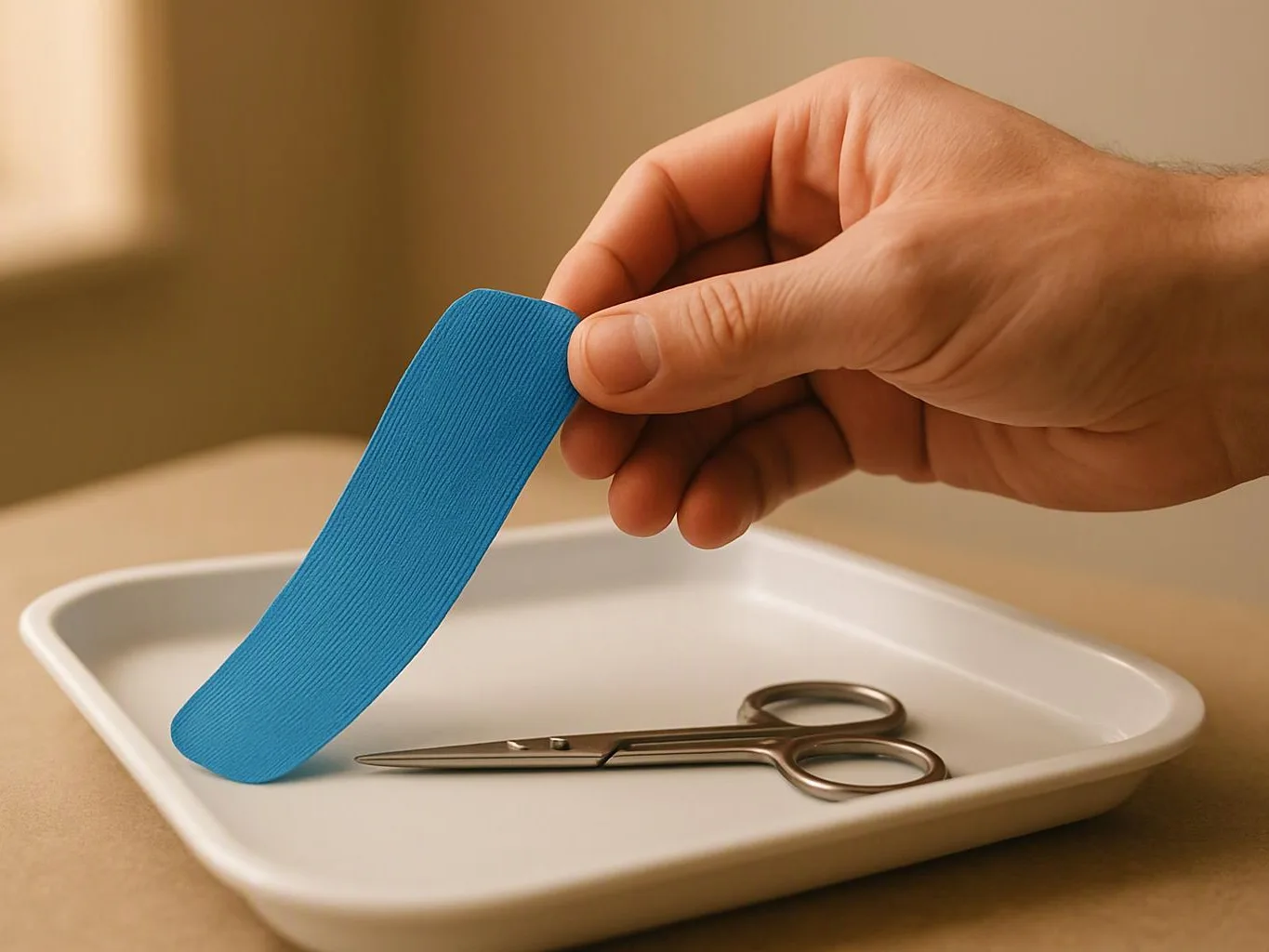
A hand holds a blue adhesive strip above a tray with small scissors on a table

The health and wellness information on this website is for general informational purposes only and is not medical advice. It does not create a provider-patient relationship. Always consult a qualified licensed provider in Brentwood, Tennessee, United States about your specific condition before making care decisions. Individual results vary.

(615) 265-0412